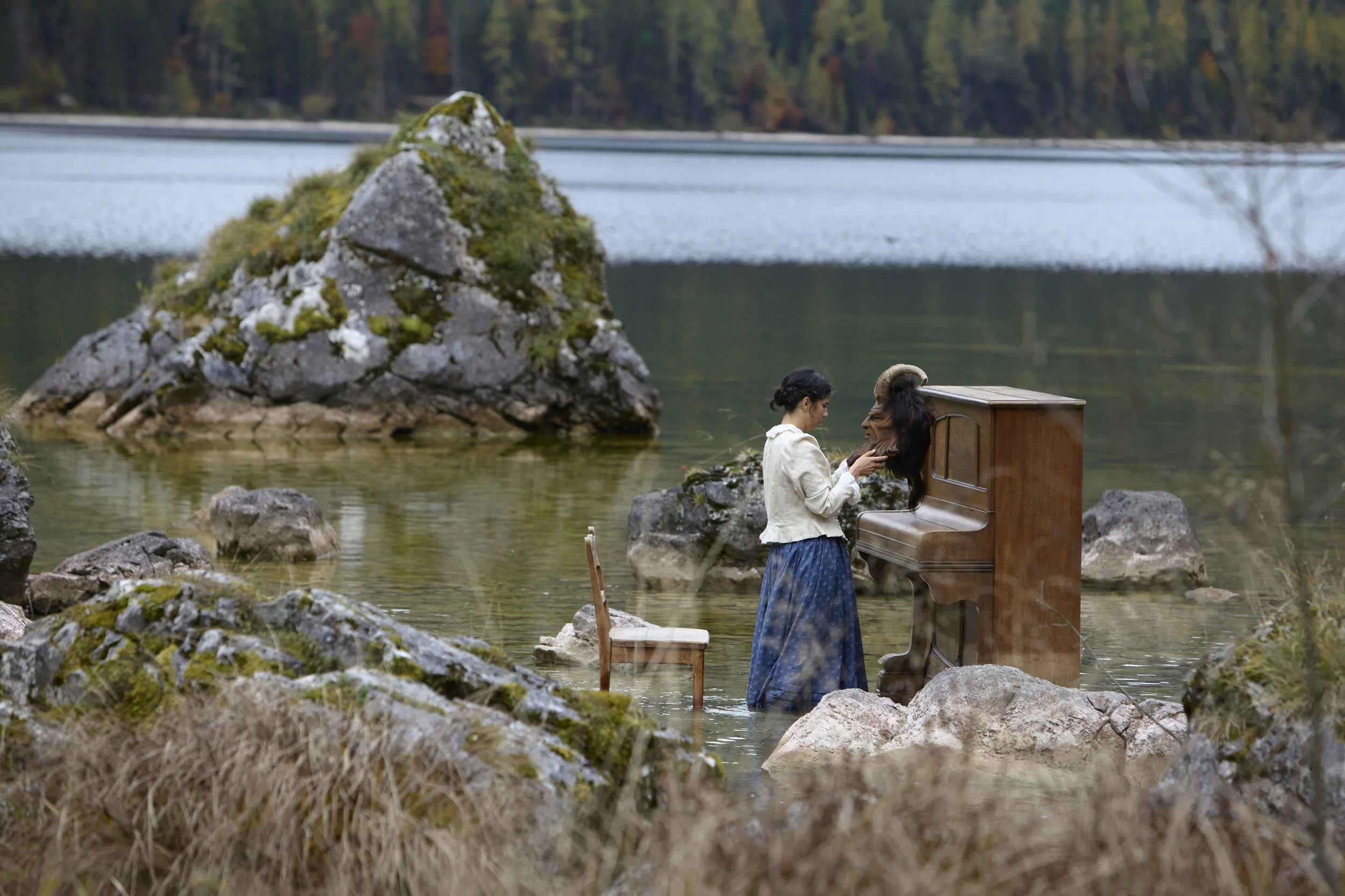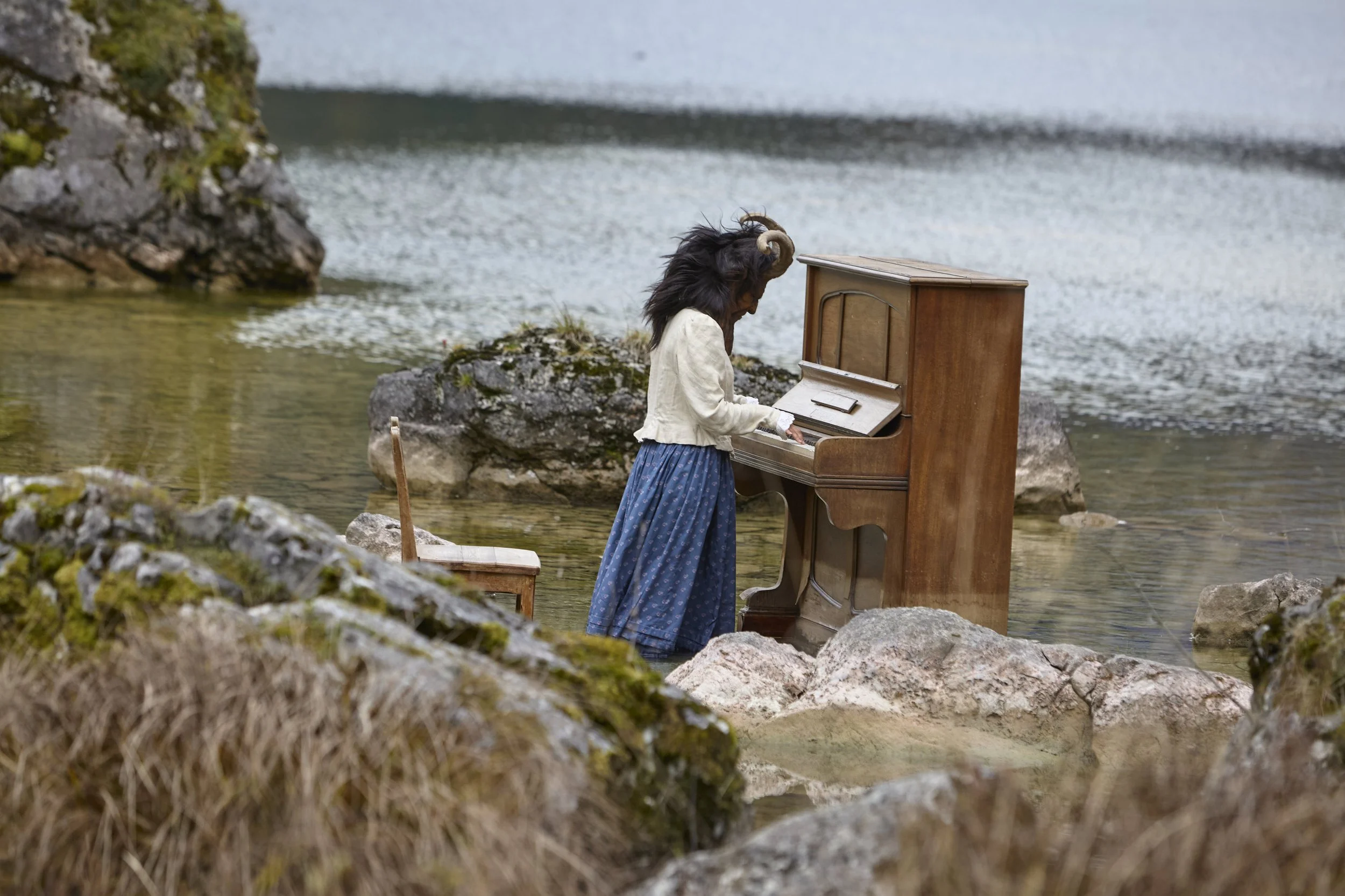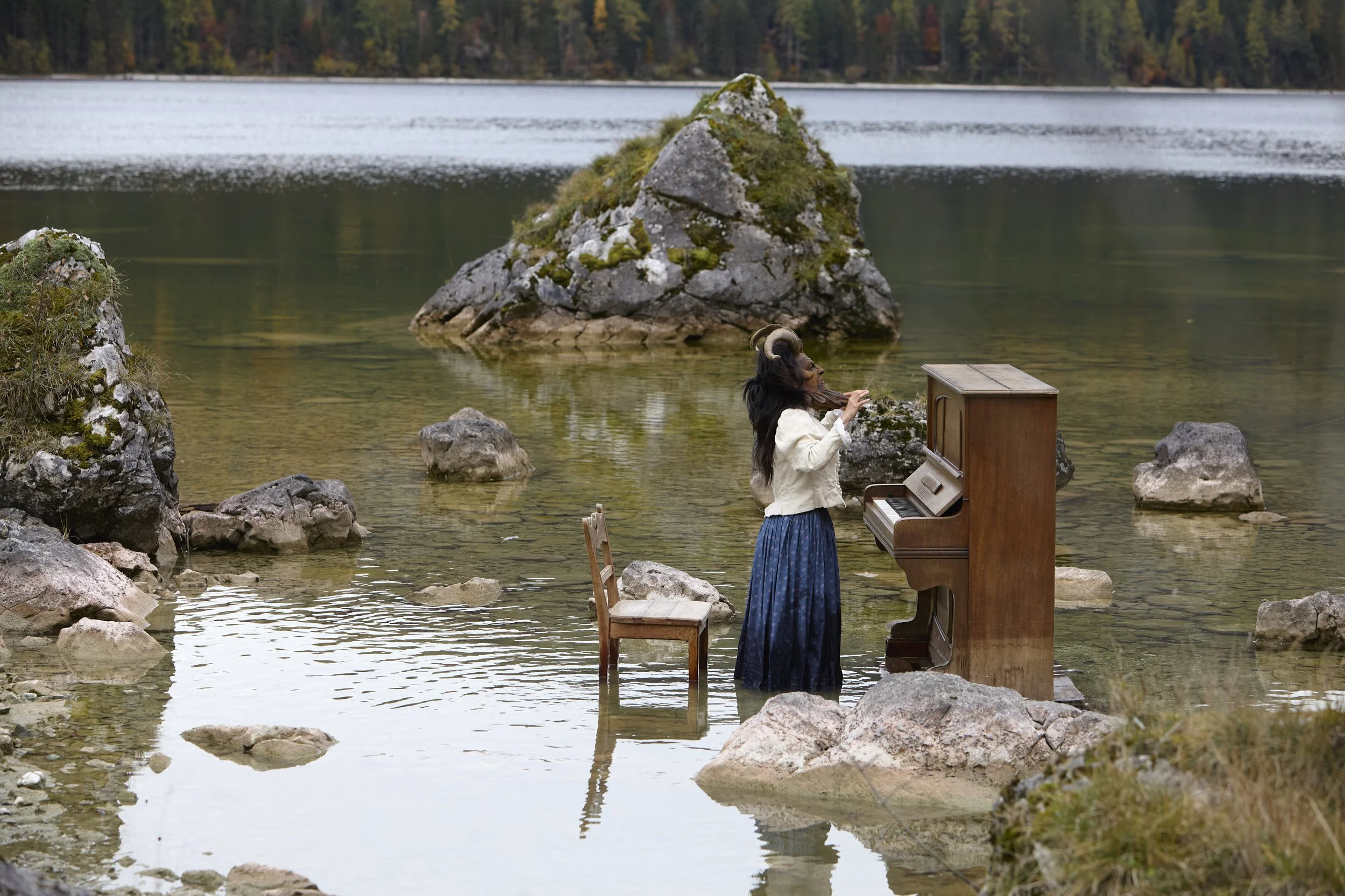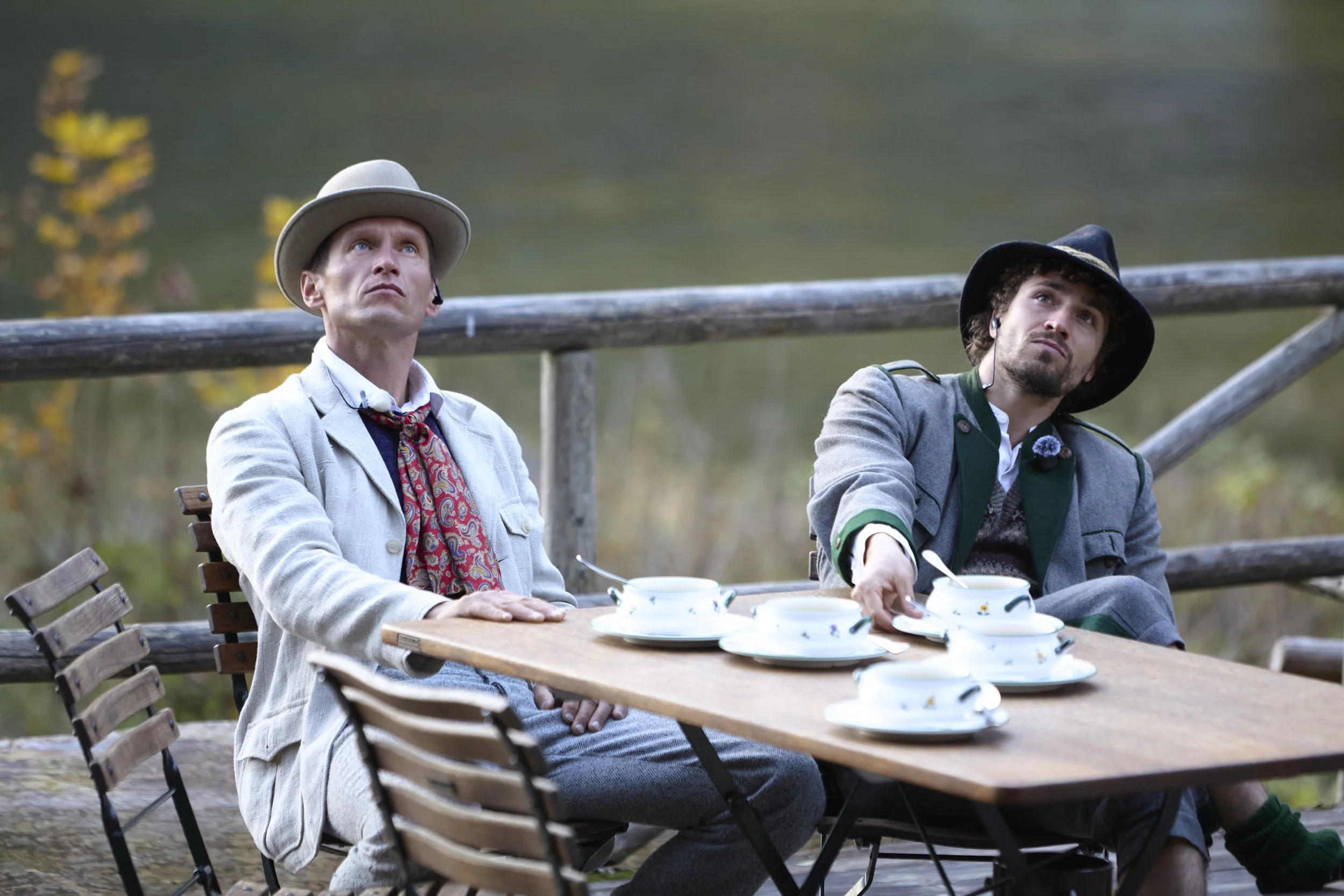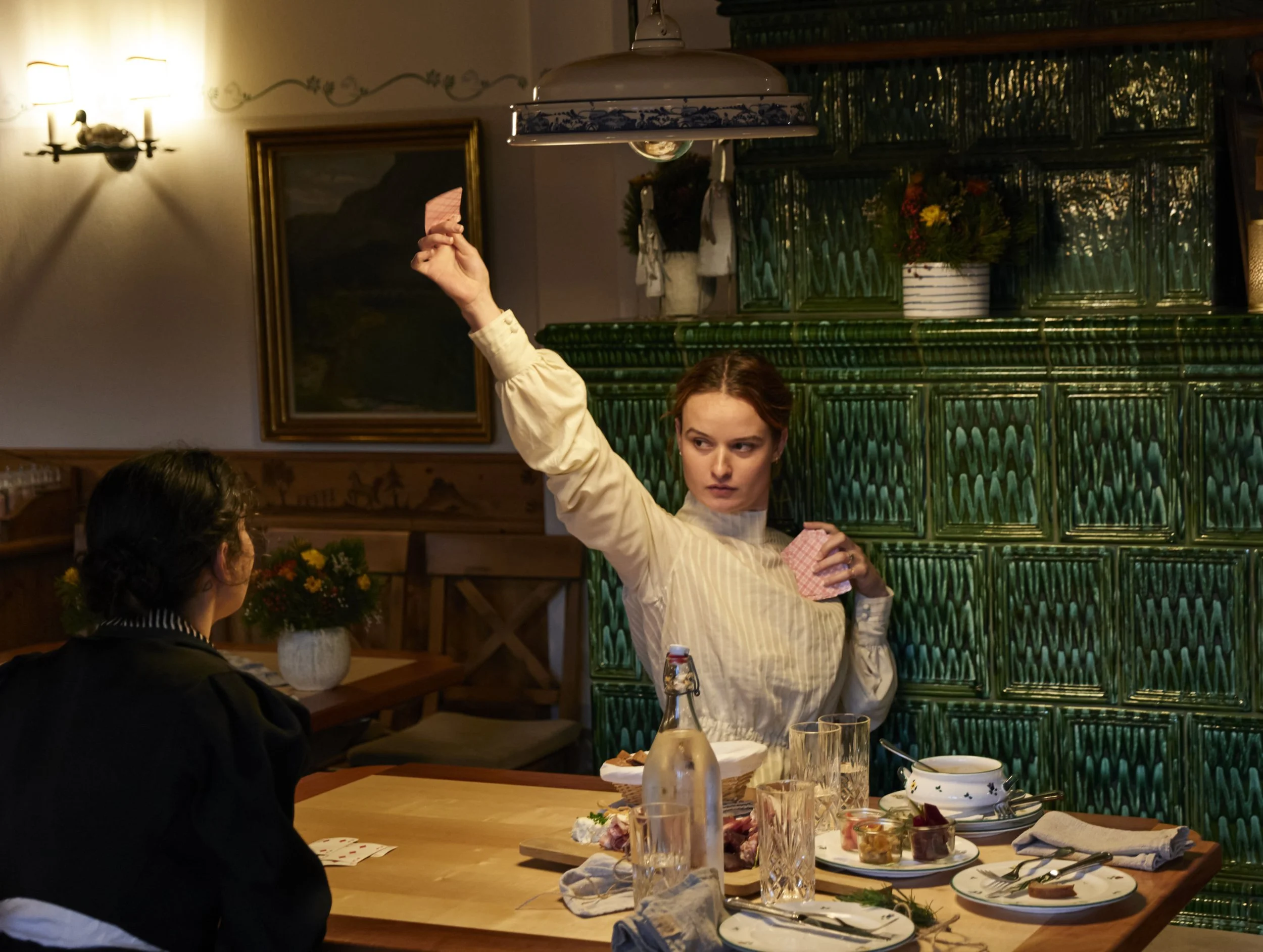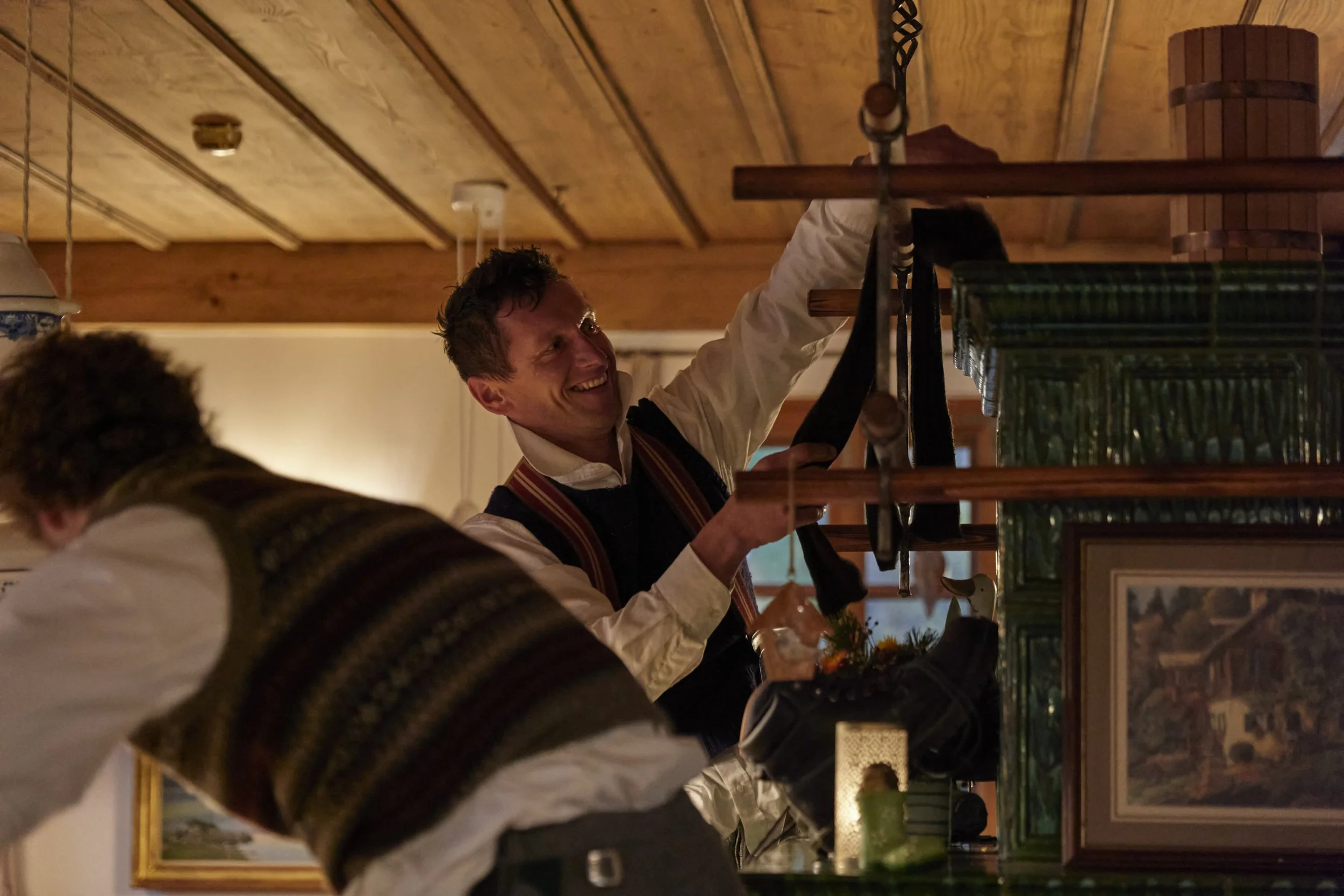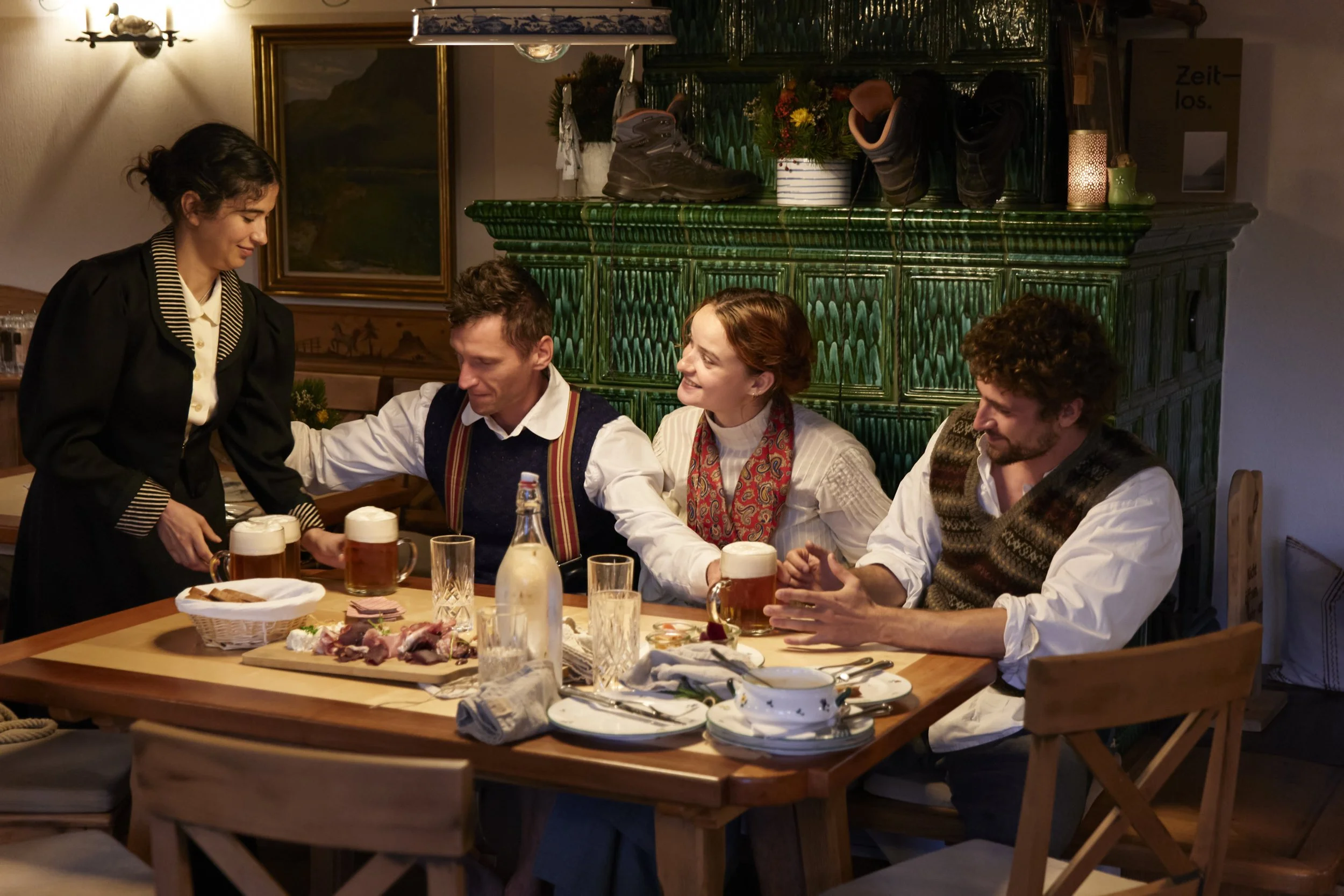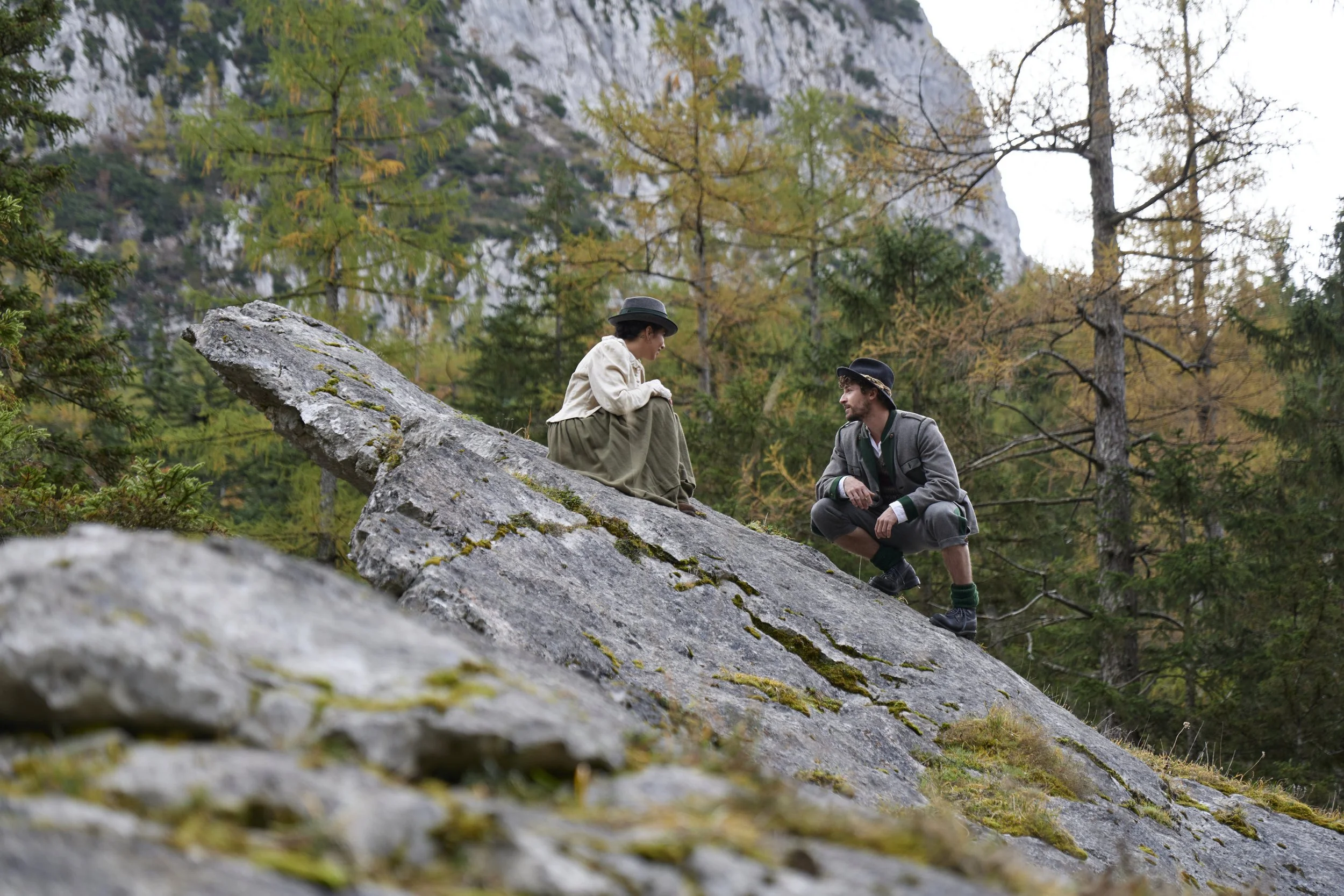
PAUL
Stücktext deutsch
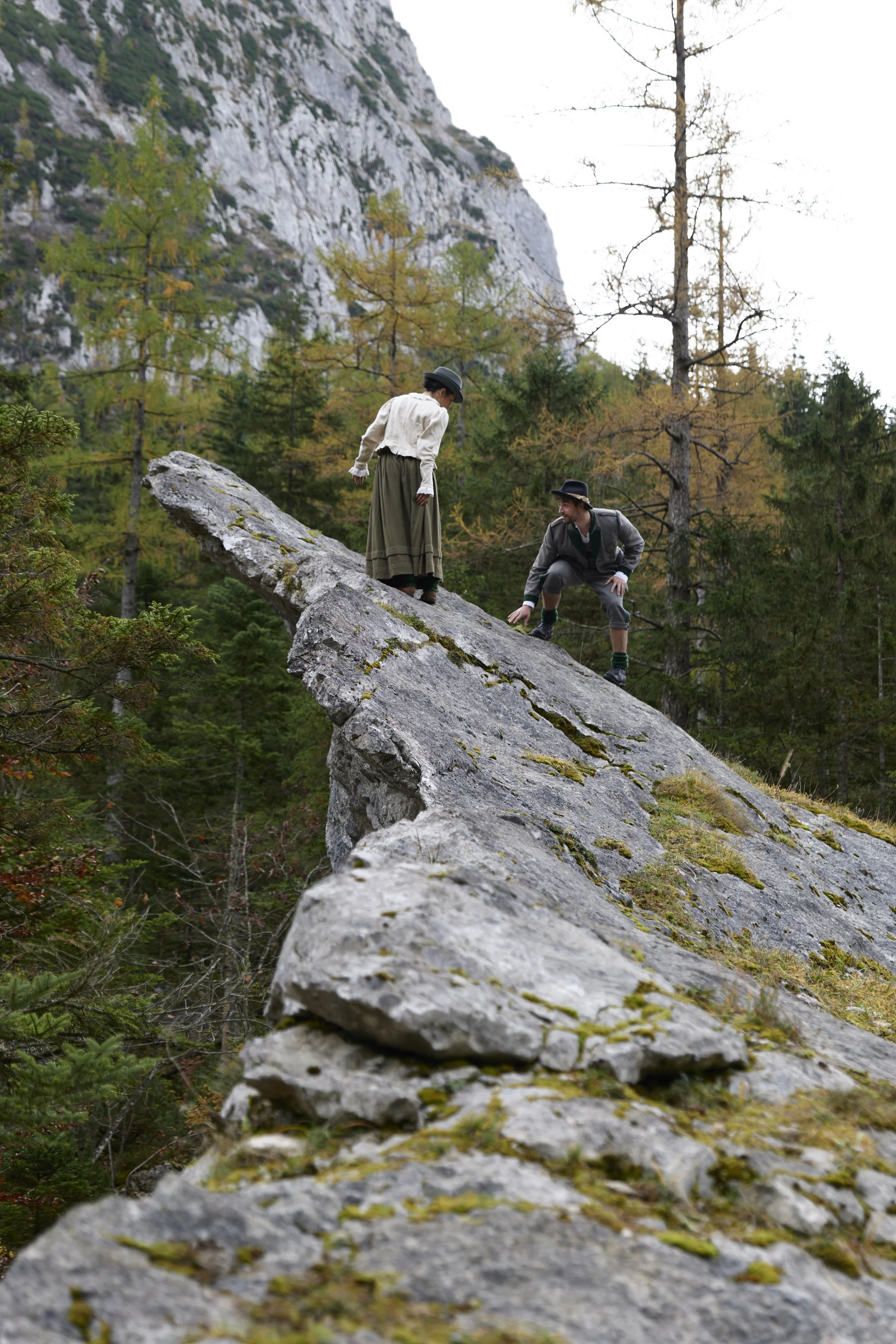
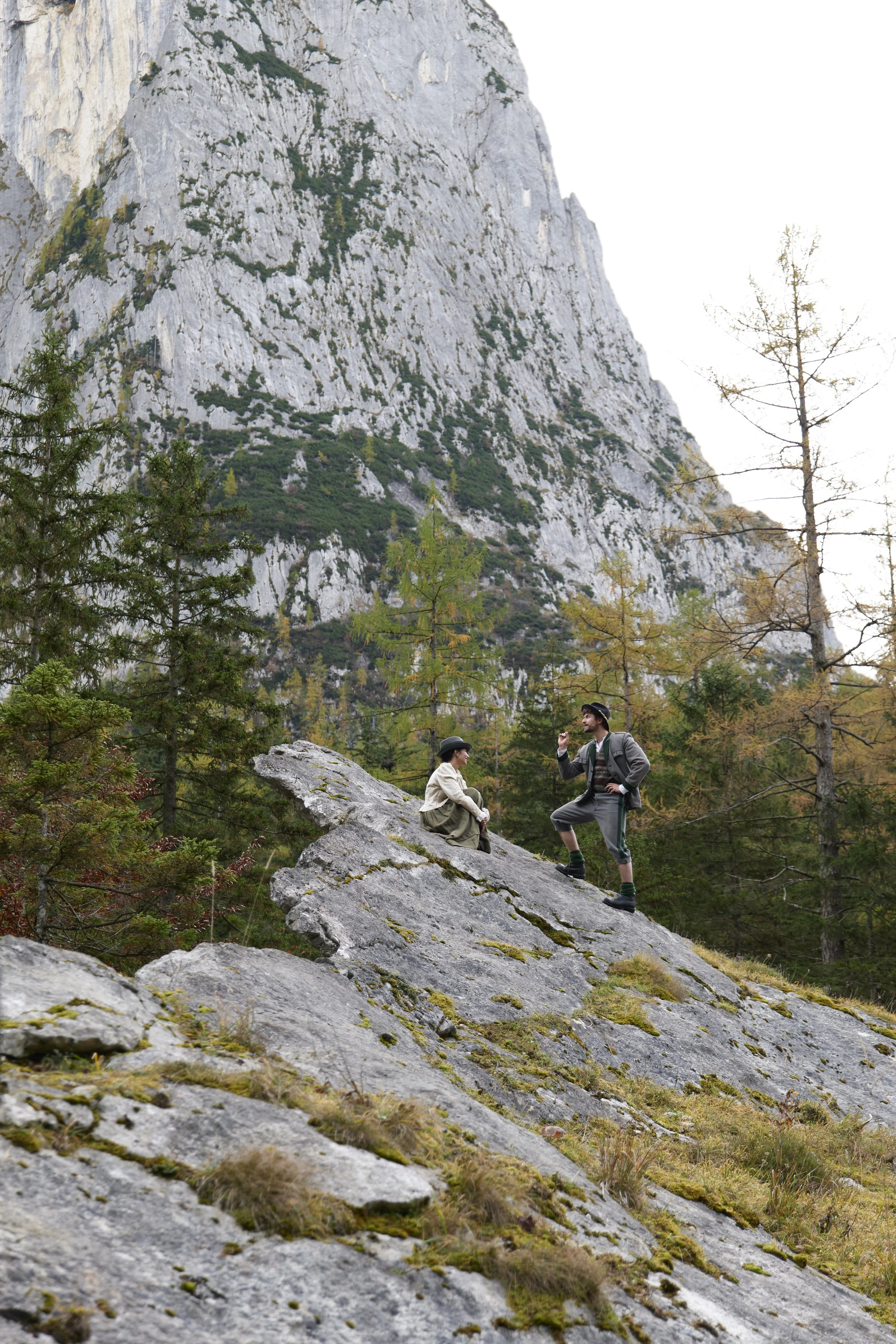
Das Stück spielt an der Seewiese Altaussee von TAUROA und am Fuß der Trisselwand. Wetter, Wand, Wald, Wiese, der See und der Weg, das Gasthaus und der Ausblick spielen im Wortsinn mit. Sie schwingen in Resonanz mit dem Publikum und den Darstellern. Sie fügen sich nicht den Zurichtungen eines traditionellen Theaterbetriebs, sie sind quasi “unverfügbar”.
Auch der 2026 revidierte deutsche Text wird hier demnächst zur Verfügung stehen.
Im englischen Text sind die Änderungen bereits berücksichtigt.
PAUL
text english
Script 2026
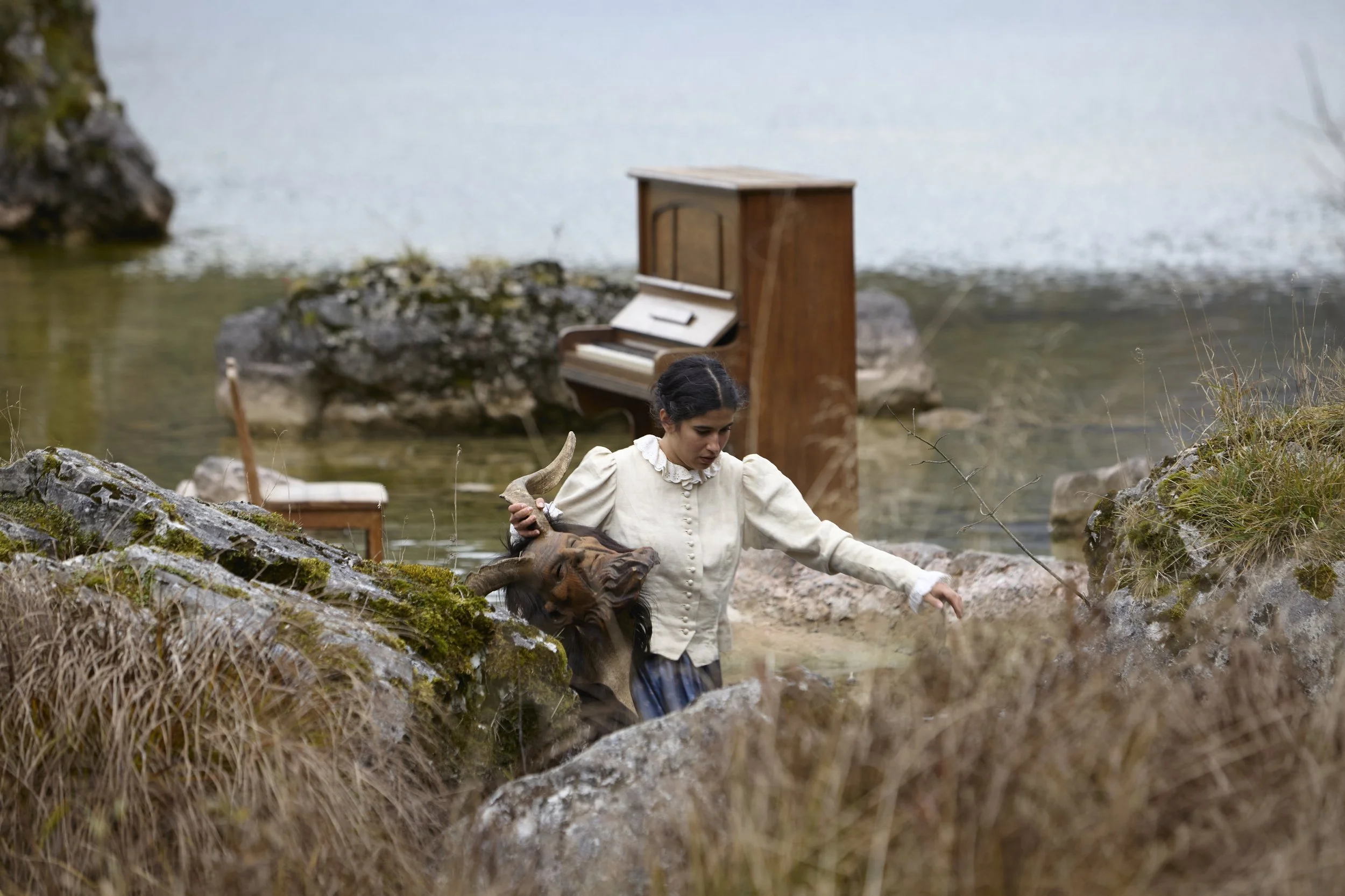
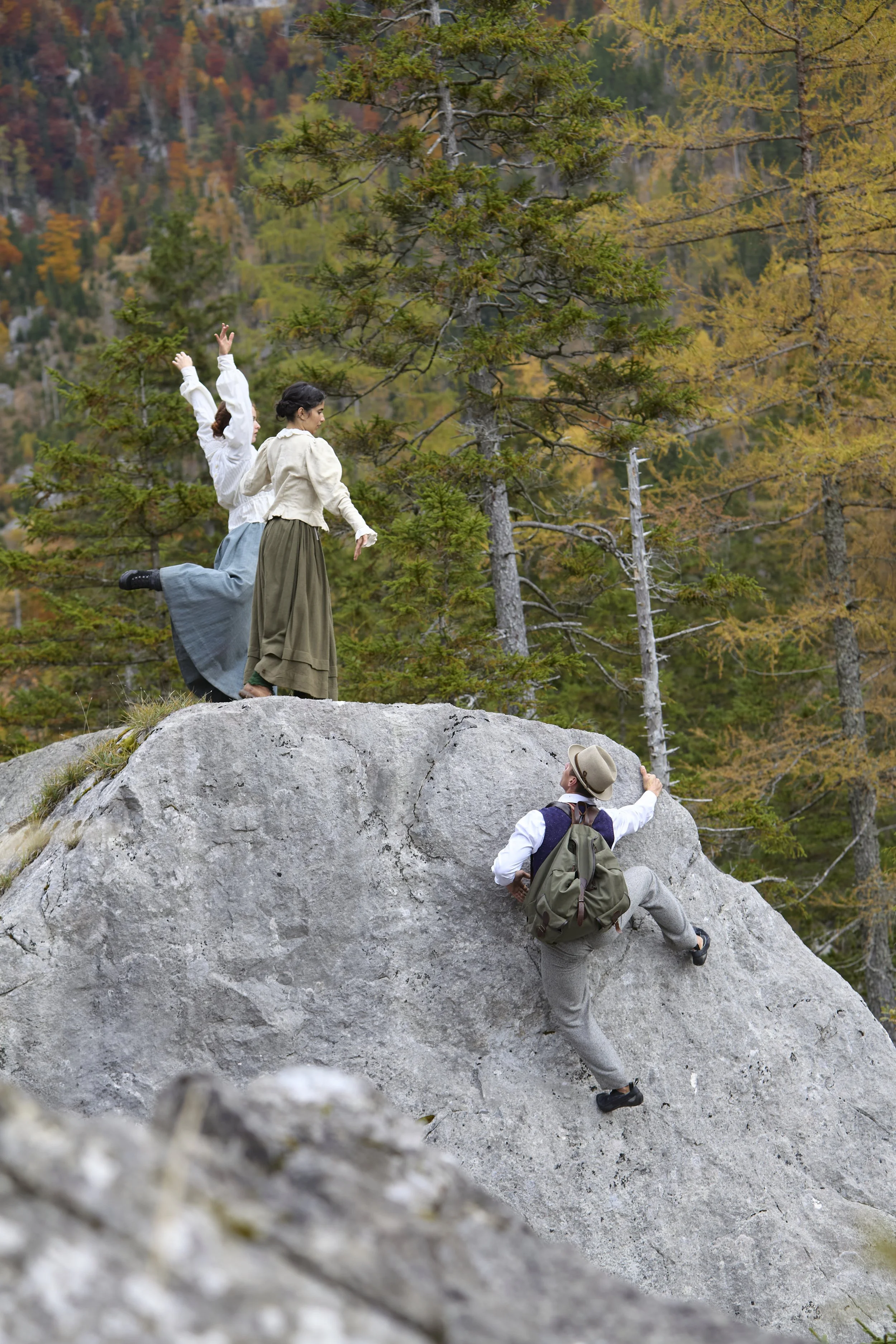
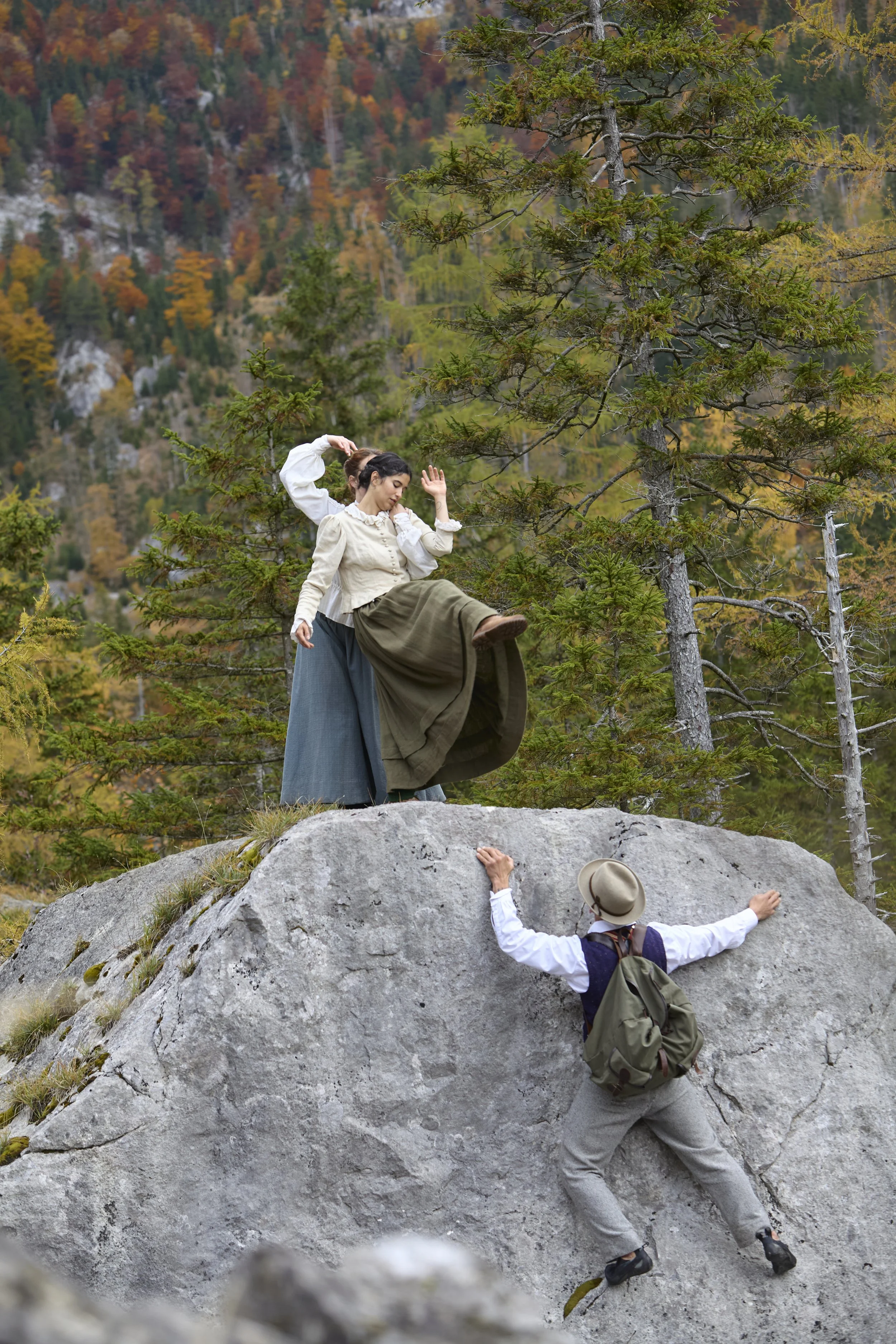
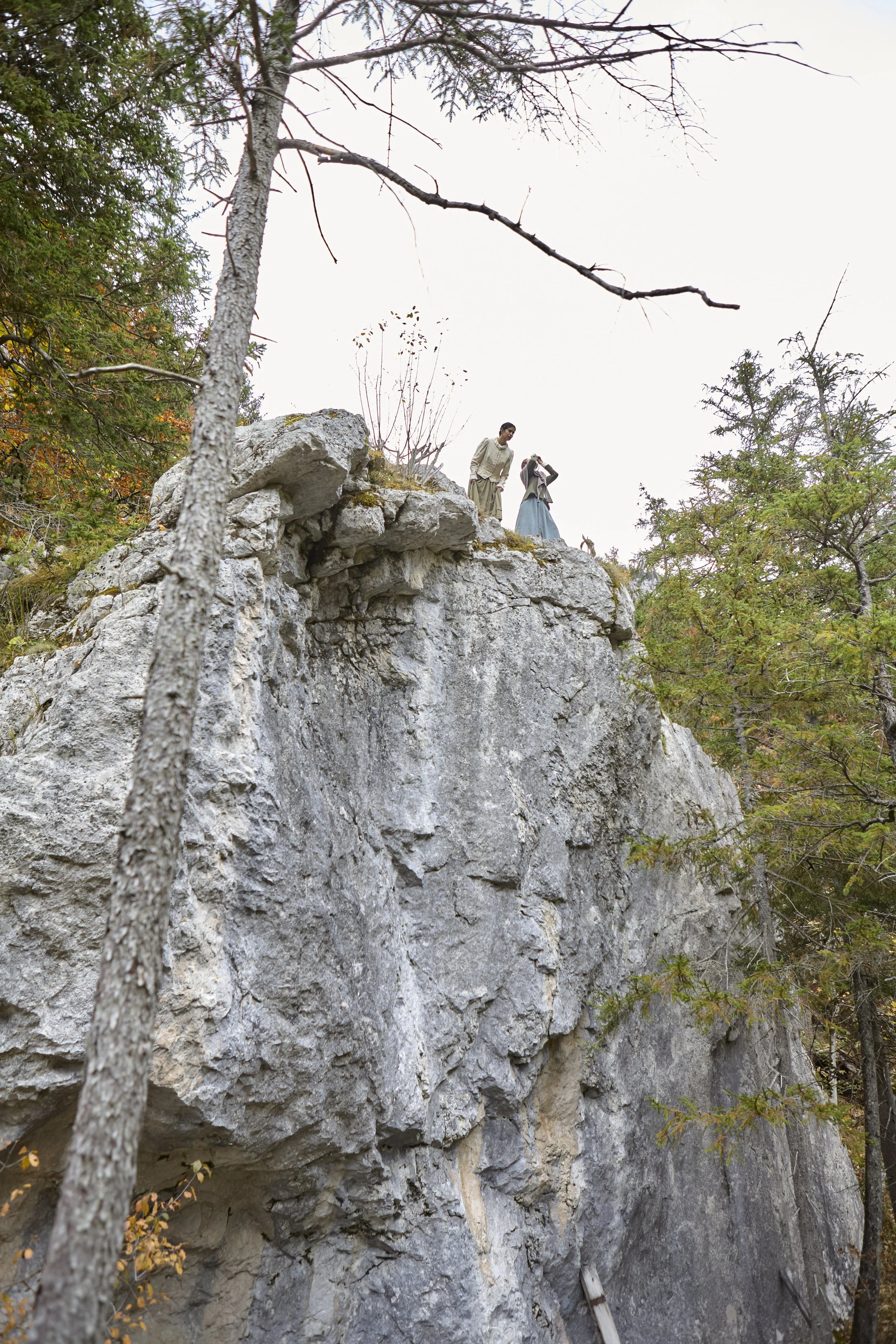
Hannah watches Paul’s friend and climbing partner Relly from an elevated rock with a bench.
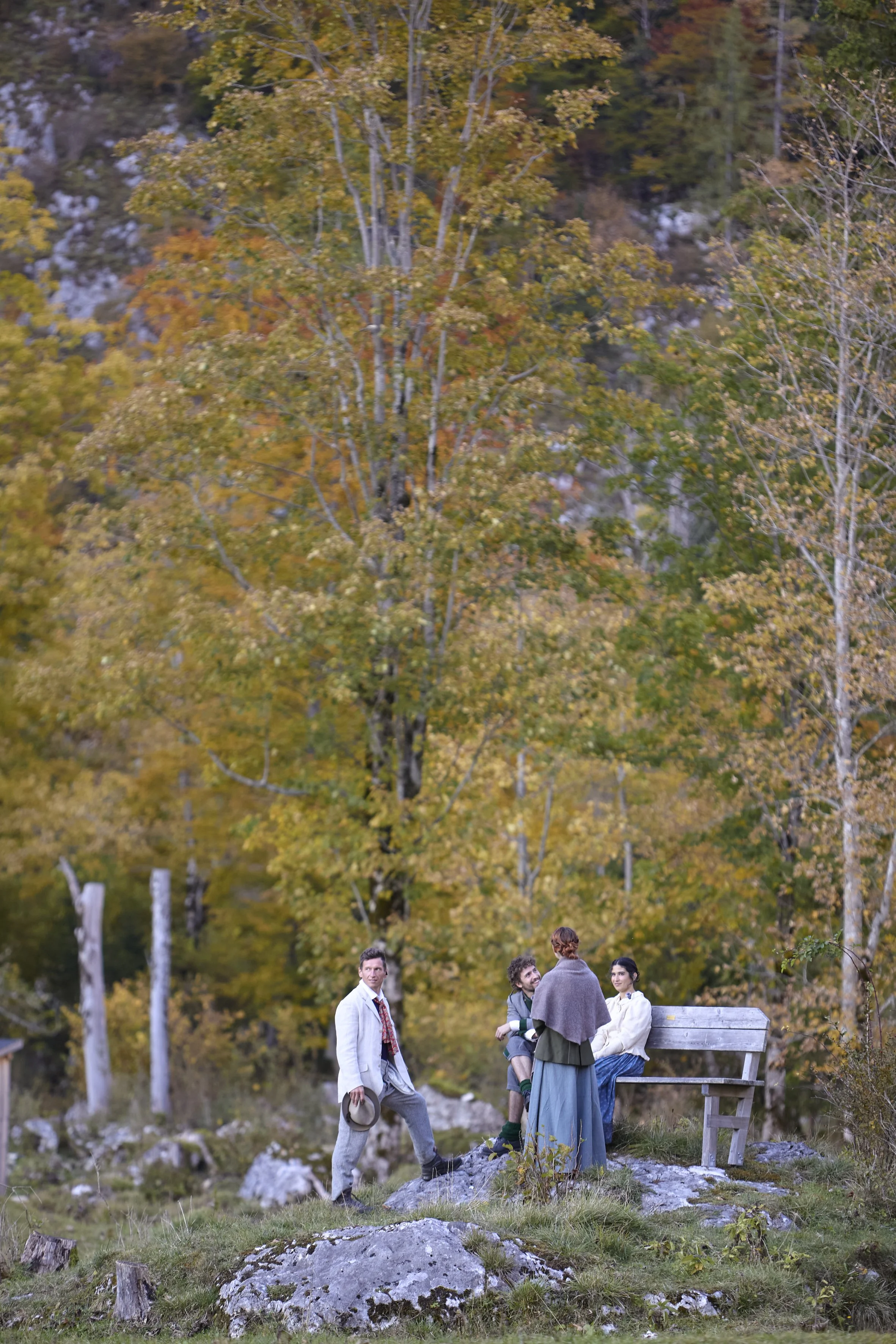
Paul and Emmy join them.
1 – BEACH
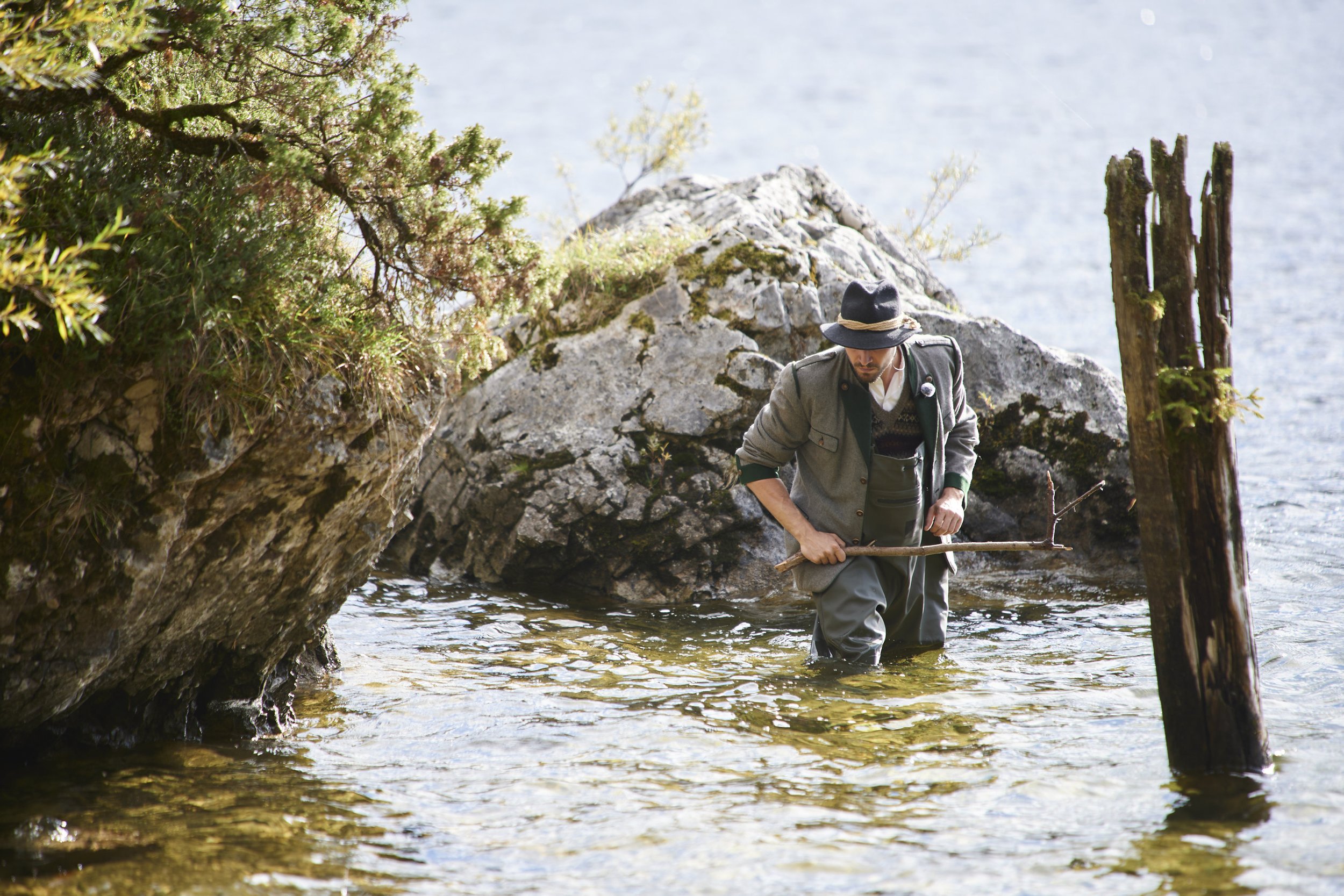
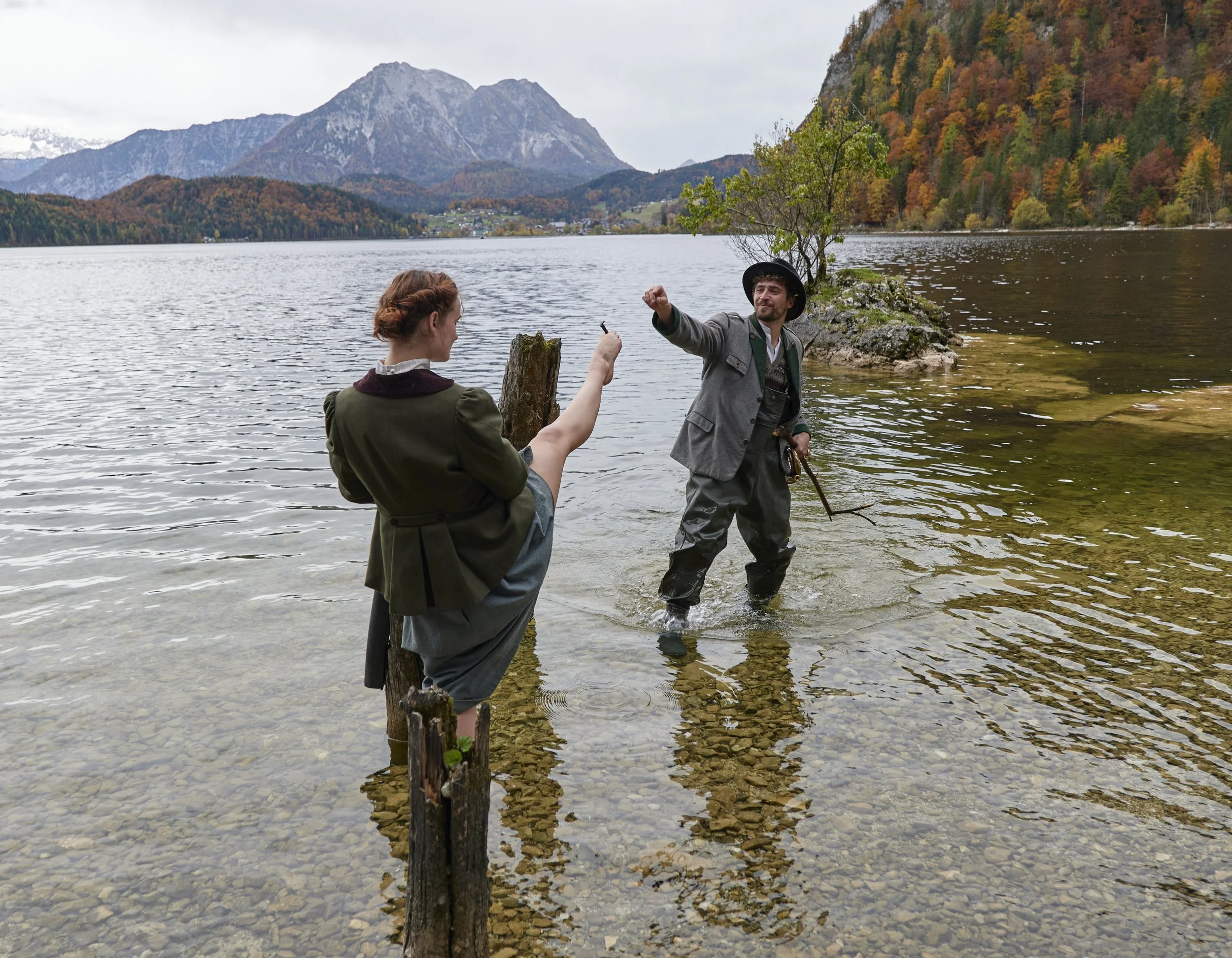
Scene: Relly is in the water, fishing for the wall hook that Paul threw into the lake at this spot a short while earlier out of frustration.
Music: Schoenberg Piano Concerto
Paul (holding the rope ready): Relly! (tries to throw the rope to Relly).
Relly (wading in the lake and searching for something on the bottom): Give it to Emmy.
Paul: But YOU’RE carrying it! (back into the forest and then to Emmy; HE absolutely refuses to carry the rope)
Narrator: Is that really not allowed? Using pitons while climbing? Must we look down on those who secure themselves with ropes? At terrifying, monstrous heights? Under perilous overhangs! Must one really climb “free”—and without aids—!?
Voice (II): We set out just as we were: in climbing shoes, wearing only a climbing jacket, without a backpack, without provisions—and without a single piton. [1]
Mina (putting things into perspective, objection): Paul wasn’t one of those summit conquerors. It was more the possibilities, the challenges—that particularly interested him.
The beauty of the bony giants, the pranks carved in stone—the comedy of the rock outcrops. Sing, oh wall, of the hook’s antics in the crevice—no, he rejected that.
Voice (slightly aggressive): Mr. Preuß, you must be a cold-hearted monster if you were ever to stand before the shattered body of your best climbing partner, who took that fatal fall right where a small artificial aid—a single wretched piton—could have saved his life and that of his loved ones[2].
Music (Schoenberg Piano Concerto No. 3) next section.
Mina: “Just come with us, Hannah! Come on!” Perhaps out of a feeling that she shouldn’t just be left behind like that, as she sat there lost at the table—while a wonderful, exciting weekend lay ahead for the others.
live, on location
Emmy: And Paul?
Relly: He’s already gone ahead. To the Steinfeld (maybe)
Hannah (to Emmy): To the Steinfeld? (Has no idea what that is)
Relly (somewhat dismissively to Hannah): No idea. He just went somewhere.
Mina: She seemed hurt from the very beginning. And the attempts to cheer Hannah up—while at the same time keeping her at a distance—this back-and-forth only made Hannah never let Relly out of her sight, clinging to him even more closely.
Narrator: Paul Preuß is twenty-five when he meets up with his friend Emmy Eisenberg — and Paul Relly, a very good friend from Munich — for a weekend in Altaussee.
To climb the Trisselwand, a mountain that has inspired great respect in Paul since he was a child, and for which he is still struggling to find his ideal route.
(Paul could appear here—turning to Emmy to hand her the rope. Glance at the wall: “I wonder if we could climb up there…” see PAUL next passage)
(All three look at the wall for a brief moment. Only Paul’s gaze lingers on the wall—the sequence depends on the staging)
Paul (voice-over): I wonder if one could get up there? “There, over there,” our thoughts whisper to us, “through that chimney and across that ledge” [...]
(Paul quietly murmurs some of his own words to himself; at any rate, it seems as if he’s speaking—though presumably no one is listening—and heads off into the forest)
Quickly, their thoughts leave all difficulties behind—it is an effortless victory they achieve.[3]
Mina: It made me nervous when—as far as the Trisselwand was concerned—he brought his friends from the big city right then of all times. That Hannah, of all people. What was he thinking! But he remained silent, staring into space. If Paul doesn’t say anything on his own, you can’t get a word out of him.
Emmy is now at the rock, trying to help Relly with the search.
Emmy: Hannah, can you see anything? (Hannah doesn’t hear right away, so she repeats it in English) Hannah! Can YOU see something?
Music (Schönberg Piano Concerto No. 3) next section.
Narrator: October 1911. Paul Preuß, who lives in Munich, plans to visit “Altaussee”—the summer resort of his childhood—with his friends. Until he was ten years old, he had traveled to Altaussee for vacation with his sister Mina and his parents.
Mina: Some people knew and recognized Paul, but not everyone greeted him. Even among those who dared to say “Grüß Gott,” some hesitated.
Narrator: At the western pillar of the Trisselwand—a bold rock formation whose base lies on the shore of Lake Altaussee—Paul has devised a route that he intends to be the first to climb, a route that no one else knows yet.
Voice: Like ruins, the rocks rise from the earth like a skeleton, sparsely covered by the vegetation. [4]
Narrator: As a child, he looked across: the veins and bumps etched his father’s face, lofty, unapproachable. Yet at the same time: friendly. [5]
Paul (Speaker): For years, I’d been drawn to climb directly up the immense pillar that drops vertically from the summit—and thus to dare the perfectly straight ascent.
Voice: Nature’s drive for form[6], you deeply hidden stranger to science, I’m coming after you[7]!)
Music (Schönberg Piano Concerto No. 3) next section.
Narrator: He goes on many of his climbing trips, his adventures on the mountain, with Emmy, a childhood friend.
Voice: Or with Relly, his friend from Munich. Or alone.
Relly (to himself, raising his head): Or alone.
Voice: Like on the Mandlkogel ridge.
Hanna: Pardon? (didn’t catch it)
Relly: Oh, nothing.
(A short pause here, so this dialogue can play out)
Paul (Narrator): Now that I’d finally found the start, I still didn’t know whether a section of rock as smooth as a wall—visible in the upper part of the pillar— would repel all attempts.
(Around here, PAUL might have reached the rock on the right. Interaction with Emmy: passing the rope, then pulling it back …)
Voice: Paul and Emmy—who’ve gotten along since childhood.
Mina: At times, I wasn’t sure if Emmy wasn’t the better, the “real” sister for him. The one Paul wished for. And I was offended. A couple in love—I could have put up with that… but these two, Paul and Emmy, with their cloying “one heart and one soul”; whenever the mood struck them, they’d put on a show of togetherness that really got on your nerves. Where everyone feels left out!
(Paul walks off into the forest)
Narrator: Emmy Eisenberg, barely younger than Paul Preuß, a close friend of Paul’s, fearless. She is considered persistent, ambitious, and the best climber of her time. She doesn’t complain. Neither about the difficulty of a route nor when there are inconveniences.
(turns her attention to finding the piton and Relly; Paul is now gone)
Voice (slightly dismayed): She climbed alone with men—even though it seemed morally reprehensible! And could ruin a woman’s reputation[8].
Narrator: Emmy is “modern,” a woman who doesn’t adhere to conventions.
Hannah (as the hem of Emmy’s skirt gets wet): Emmy, your skirt!
Emmy: It doesn’t matter. (perhaps also in French) “Je dois changer de toute façon.” I have to get changed anyway.
Music (Schoenberg Piano Concerto No. 3) next section.
Narrator: Emmy Eisenberg, who supports Paul not only in his immediate goals. Emmy arrives by train from Vienna and meets up here with Paul and Relly.
Voice: (and by the way) Relly. Dr. Relly. A close friend and fellow student of Paul’s. In the “climbing piton debate,” the “‘Is it permissible to use aids?’ debate,” he doesn’t really stand behind Paul. (OK)
Narrator: For Paul, there is no doubt that—if at all—climbing pitons should only be used in an emergency—or not at all.
Paul (Speaker): “To put it briefly: I consider belaying with hammered-in wall hooks—and in many cases, belaying itself—as well as rappelling and all other rope maneuvers that so often make mountain climbing possible or are at least
used in the process, to be artificial aids and therefore, from the standpoint of both the mountaineer and the sport climber, not flawless and not justified. "[9]
Music (Schönberg Piano Concerto No. 3) – next section.
2. PATH
Voice: “I simply cannot understand how anyone can be so cruel as to want to impose restrictions on rock climbing; after all, people go to the mountains to break free from restrictions!” [10]
Paul (Narrator): “Has my interlocutor[11] (for) completely forgotten these climbers whom one can observe every Sunday on outings, who tackle the most difficult routes with blind trust in wall hooks and rappelling slings, without being in the least bit up to the task?”[12]
Voice: “ We’d rather hang from the belay rope (perhaps with a broken leg) than have the ravens feast on our corpses in the dark abyss.”[13]
Paul (Narrator) (summarizing): “The routes you undertake, you shouldn’t just be able to handle—you should be superior to them.”[14]
Narrator: Discussion and debate about “real” climbing, admiration and adoration, rejection and hostility—all of this suits Paul just fine. For the success of the lecture evenings that Paul organizes, the more conflict there is, the better it seems to be.
Voice: And if discontent and outrage happen to be absent, then you simply toss a bouquet of flowers into the audience: Anyone who needs help while climbing should just stay home.
Narrator (Paul) (explaining): “The rock hook is a last resort—not the foundation.”11
Voice: “It is my firm conviction that wherever serious danger looms, the use of iron pitons is an absolute necessity.”
Narrator (Paul): “Anyone who needs technical aids to complete a route they wouldn’t dare attempt without them should forgo the route altogether!” [15]
Music (Schönberg Op. 25 II Gavotte)
Narrator: A surprising addition to the group coming from Munich—Hannah, an art student at a school for female painters. Hannah happened to be sitting at the table when Paul and Relly agreed on their hike …
Mina: Hannah! Come with us to Altaussee!
Narrator (defensive, friendly): With those show-offs?
Voice II: The lady is a bit reluctant, not wanting to entertain such “offensive” thoughts. But in fact—days later—she’s standing on the train platform.
Mina: If Hannah hadn’t shown up at Ostbahnhof, Paul would never have given it another thought.
Narrator: Unexpectedly, Paul and Relly bring this friend along to Altaussee—Hannah, an acquaintance of Paul’s from the student scene; Their friend Emmy is from Vienna; Paul and the others are from Munich.
Narrator (Paul): The conductor’s call roused us, as we’d been traveling for hours on hard benches toward our destination.[16]
Narrator: In Attnang-Puchheim, we transferred to the train heading toward Altaussee.
Mina: She was certainly pretty. And her clothes, her style. We couldn’t compete with that. But then again—why bother? We don’t have nearly as many funerals as they do in Munich.
Music (Schönberg Op. 25 II Gavotte)
Narrator: Mina Preuß, Paul Preuß’s sister. Accompanied by her mother, she has come from Vienna to Altaussee. Paul and Relly therefore abandon their original plan to stay at the old summer retreat.
More Schönberg.
Hannah, Paul, and Relly—along with their Viennese friend Emmy—take up quarters at an inn, which is named after the meadow on which it stands: the “Seewiese” inn.
Schönberg Gavotte
Frischmuth: The inn at the far end of the lake can only be supplied by boat. It’s open during the summer months and is a popular destination for day trips.[17]
Mina: So much money for nothing. But Paul insisted that we stay at the inn, partly for Hannah’s sake. Pointless. When we could have gotten most things for free at the summer house.
Narrator: What Mina doesn’t like: that she, of all people, is supposed to stay in the village with “Mama”—who comes up with something new every two minutes.
Mina: Last year’s firewood is all cut the wrong way. The stove is too small for it. We spend an hour sawing every day.
Mina: Relly and Emmy got along well with Hannah, and Emmy’s curiosity was stretched to the breaking point. She teased Hannah. How unfortunate it was, she said, that Munich had nothing to offer. “From a Viennese perspective.” In which she undoubtedly went too far. And Hannah finally countered her taunts with ease. Paul was glad that everyone had forgotten about him and that he didn’t have to worry about anything.
Narrator (Paul): My old friend and companion, Dr. Paul Relly, in a newly acquired gallantry toward my sister Mina (fade out) … had accepted a package of monstrous dimensions and stowed it in his unfathomably large backpack … , in a newly acquired gallantry toward my sister Wilhelmine 14
Music: Schoenberg Suite Op. 25, continued
Frischmuth: The end of the lake where the inn stands is called Seewiese. Behind it, two mountains meet; they belong to the Totes Gebirge massif—that is, between Loser and Trisselwand, the rear face of the Weiße Wand rises, against which the Seewiese tapers off in the shape of a triangle. [18]
Narrator (Paul): A cool evening breeze blew toward us, and wispy mists rose ghostlike from the silent valleys up the black cliffs[19] —up into the realm of the clouds, the expanse of the sky.
Narrator: In 1886, when Paul Preuß was born, the family had purchased a summer home in Altaussee. The city as a nightmare, the mountains as an ideal.
A life in nature, a simple life—Paul learned this in Altaussee. From his father—when they went (as they did every year) for their summer retreat. It’s important to note, however, that Paul, the hero (he’s barely six years old), has to spend weeks in a wheelchair as a boy, suffering from paralysis.
Frischmuth (child’s voice): The place where you grow up is a special place that holds a special place in your memory. And the house remains the house, and the garden remains the garden, and the imagination begins to wander.[20]
Narrator: Barbara Frischmuth. The Austrian author grew up here in the 1940s.)[21]
Frischmuth (child’s voice): The inviolability of those early years . . . a mixture of memory and what one has heard—about oneself and others.[22]
Narrator: In Barbara Frischmuth’s *Jahre* (*Years*), the author describes the moods and states of mind of her childhood in Altaussee.
Frischmuth: I think I can remember things well. And yet what I remember differs greatly from what others remember. And even those are just moments or brief stretches that remain in one’s consciousness, and in between there is nothing—or virtually nothing.18
Mina: “Look at her.”—At Hannah. I did my very best. Would she like to go fishing? Or see animals? Or visit us at home? Hannah always wanted to stay with the group, not miss a thing. And one of her foremost interests—as gradually came to light—was Relly. That probably started already on the train.
Music: Schoenberg Suite Op. 25, continued
Narrator: With her college classmate Hannah, the group—if Mina’s diary is to be believed—has “taken on a burden.” Hannah seems reserved, orderly, and empathetic, but just as openly complicated, indignant, and headstrong. Hannah—who approaches things naively, boldly, and without reservation—
Mina (slightly annoyed): And always trips over her own feet. –– In the end, it might even do her some good if she went “climbing.”
Narrator: Let the others “take care” of it; Emmy, for example, or Mina. Paul doesn’t have time.
Mina (immediately stepping in to protect Paul): He has to concentrate. The line has to take shape before he even takes a single step.
Narrator: Paul and this mountain, which he’s known since childhood—the Trisselberg.
Blissful horror. Finally—over the years—he has turned the Dead Mountains—one of the last bastions of impassability—into a place where he feels safe, at home, in a homeland that offers security.
Mina: (quoting somewhat contemptuously) “in a homeland that offers security” … That sounds to me like that Monte Verità. Where everyone finds some value in paralysis.
3. BUG - FELSNASE
(1st grade elementary school child’s voice, halting, reading for the first time)
Elementary school child’s voice:
He reads the rock HE READS THE ROCK
from a distance FROM A DISTANCE
and spells it out AND SPELLS IT OUT
later LATER
on the wall. IN THE WALL.
(same voice but now faster and more briskly)
Elementary school child’s voice: He reads the rock from a distance, and later spells it out on the wall. –– What does that mean?
Mina: It tells us what matters.
Voice: Him and his climbing partner Emmy, whom he can trust blindly.
Music (Schönberg Opus 19, No. 2, slow)
Narrator: The summer of 1911 marks a high point in Paul Preuß’s career. He accomplishes sensational climbs, especially in the Dolomites. Between June and October, he summits 93 peaks, many via first-class routes. … And then—after this “warm-up”—Preuß climbs—alone—alone and without aids—the Totenkirchl West Face in the Wilder Kaiser, which not only sends the entire climbing community into a frenzy: Paul Preuß is a front-page sensation.
Voice: And his boldest climb—he keeps the plan for it a secret—he accomplishes on the Guglia di Brenta.
(Narrator: Extreme mountaineer Reinhold Messner has remarked on several occasions that there was nothing and no one better.)
Voice (Paul):
Gone is that youthful innocence that allowed us to simply surrender to the awe of the magnificent.
The colossal no longer amazes, and the once boundless reverence for the mountains has been supplanted by the desire to conquer them!
Voice: “This masterpiece of a route—vertical rock, dramatic lines, a picture of exposure—Paul Preuß was able to climb freely, without any protection on the ascent or descent, without ever hesitating.”[23]
Voice: (picking up where her last sentence left off) What really matters: getting into the “flow” … Immortality through mortality. Toward liberation from the shackles of a doctrinal concept of culture: “What is, does not have to be—so we can change it.”
Narrator (Paul): Pointless. Meaningless. A direct ascent of all six Vajolettürme seems pointless to me if it requires an 80-meter aerial journey on a rope.
Voice II: With or without approval (Alpenpost)—most people find it hard to understand: climbing a wall without any backup and demanding that the only safety lies within oneself.
Mina: Relly 10, Emmy 8, Hannah 5. I don’t want to rate Paul: he is my brother, after all.
Music (Webern, 11 Short Pieces, No. 1)
Voice (thoughtful, conciliatory): One must admit that moderation in the use of climbing aids is desirable. But to achieve this moderation, one shouldn’t immediately resort to such radical measures. [24]
Narrator: A fatherly piece of advice that comes at just the right time for a master like Paul Preuß. Just as Relly thought he’d heard the clatter of an iron hook in Paul’s shirt pocket, he notices how Paul stands on his tiptoes and defiantly proclaims what everyone is meant to hear:
Speaker (Paul): The rope may be a helpful tool, but never the sole means to happiness that makes climbing mountains possible.10
Narrator: Relly, Paul’s friend, is quite different. He doesn’t follow Paul’s dictates by any means. Paul’s strict stances, his know-it-all attitude—even in the wall-hook dispute—often lead to distance and conflict in Paul and Relly’s friendship.
Mina: Relly is capable of empathy. Unlike Paul.
Narrator: He can find something to enjoy in everything. 1–0 for Relly. Which is also what makes him interesting to Hannah.
Mina: Relly was charming, understanding, courteous—and nowhere near as aloof. Hannah sensed that there was no equality between Paul and her.
(Relly, Hannah, lagging slightly behind, walking last)
Relly Wait! Careful! Now look at this! (to himself, but loud enough for Hannah to hear, of course) You only see one of these once in a lifetime. (as an afterthought, to Hannah) If at all! (as he kneels down and pushes tufts of grass or stones slightly aside, explaining with fascination, somewhat reverently) A click beetle! I never would have thought this beetle was here—
Hannah (also kneels down, perhaps a bit aloof): I wouldn’t even have believed it existed at all.
Relly (without taking his eyes off the beetle, only glancing up briefly now and then, whispering softly, admiringly): It’s out and about all day long, collecting water droplets. Which it stores here—in these little flaps at the back—in front of its hind legs.
(Hannah reaches out to grab something)
Relly: Don’t touch it!
(Hannah immediately pulls her hand back)
Relly (after a brief, thoughtful, and admiring look, enthusiastically, lost in thought): In the evening, it sits there comfortably. And sips from its little pool. Which he’s prepared for himself in his walnut shell.
Hannah (somewhat incredulous): Prepared? In a walnut shell?
Relly (explains, seriously): Little by little, he spits the shell full, right after he gets home.
Hannah realizes that Relly is teasing her, stands up
Relly: But seriously. (also stands up) The fact that this beetle is here in this area is more than unusual. I ask for your discretion. (explains, gestures) The entire wall, maybe even the whole mountain range. They’d be closed off immediately so as not to disturb the beetle. They’d shut it down. (after a pause, already walking away) If this gets out, climbing is over. Here… and throughout the whole area.
(Hannah and Relly are about to leave, but Hannah stops once more and looks toward the beetle. Is this nonsense, or could it be true?)
Hannah (following after him): And the name? “Knatterkäfer”?
Relly (matter-of-factly): The sound it makes when it spits its water supply into the bowl in the evening. Something like this (concentrates, imitates the Knatterkäfer, illustrating the sound by clicking his tongue three times each) tz tz tz ... tz tz tz . No, wait, like this (exactly like that): tz tz tz ... tz tz tz
Narrator: Grinning, Hannah joins the others. A man who makes her laugh—she hasn’t experienced that in a long time.
4 – STEINFELD
Mina: I remember—we were still little—when Paul got fixated on the idea of whether our parents could buy the stone field. To this day, I have no idea who even owns it. The emperor? I asked Paul, “Does it matter if it belongs to us?” “You’re still asking that?!” And that he’d come early in the morning and wouldn’t leave until late in the evening. “And someone would bring us food—and then he looked at me. And pointed his finger—‘You.’” –– “If you really care so much about those stones,” the neighbor said, “then you should buy them.” And then, furrowing her brow: “Who would we have to ask?”
Paul hoped for days, but nothing happened.
We didn’t tell our parents. Instead, we figured out just how amazed our parents would be if we could tell them that there was no going back to Vienna because the stone field was now ours.
Mina: Paul had a hiding spot in the stone field where he kept some of his belongings. I don’t know exactly where it was or what was there. But every year,
when we came back in the summer, he’d go check to see if everything was still there. I’m not even entirely sure whether he didn’t—upon arriving today, when he was at Steinfeld before the others—well, whether he didn’t check to see if the ancient treasure was still there.[25]
Narrator: Mina remained on edge. Hannah could be dangerous to her. Hannah knew how to come out ahead even with her shortcomings.
Voice II: Hannah is the kind of woman who doesn’t care about conventional standards of value; who is interested in men and knows how to ingratiate herself with them—without being subservient or submissive.
Narrator: It’s unclear whether she’s that sensitive, or whether it’s just instinct or a calculated move (to appeal to men’s protective instincts).
Voice (II): Hannah is calculating. And she couldn’t care less if anyone else notices. She knows how to play the game. Without ever managing to make a real friend, men fall for her one after another. And there’s nothing she can’t use to make herself seem interesting. Hannah’s sketchbook, in which she draws… or jots down “important” things, her elegant clothes, and Hannah’s weaknesses of all kinds, with which she—naturally “against her will”—stands out.
Narrator: Which is why it’s not entirely clear whether Mina wasn’t trying to make Hannah look bad. At least in front of Relly. And at least in her diary. From Mina’s entries, one can easily sense hurt feelings, jealousy, and spite (toward Hannah). Even regarding the ghost story, it’s impossible to tell what really happened and what was made up. Mina writes that she heard Hannah say more than once that things were looking grim… and that Hannah wouldn’t take another step if people didn’t trust her.
Mina: The way she threw herself at Relly!
Voice II: And no one who could bring themselves to explain to Hannah that Mina Preuß and “Doctor” Relly—Paul’s friend—had been together for a long time: a couple, engaged for months!
Mina: No one wanted to tell her. Everyone beat around the bush.
Voice: Fearing any exchange of blows, a period of waiting and watching sets in. This, of course, isn’t a lie, because no one says anything; but it also can’t be resolved, because the crucial point isn’t spoken.
Mina (pleads for consideration): Hannah already seemed very depressed and shaken at that point anyway.
Voice: Mina doesn’t put everything down on paper, but later expresses the suspicion that Hannah was toying with the idea of deter Paul and Relly from climbing altogether. Perhaps as a show of power: that, because of her—Hannah’s—influence, there would be no climbing at all!
Mina (annoyed): One moment she wants everyone to wait until she says so, the next she insists it must be this path and not that one—because otherwise something terrible will happen. And having just set the tone, everyone else now has to wait, because Hannah can’t bring herself to take the next step. Does she have a fear of heights, when there’s no cliff in sight? And even though you can see Paul and Relly getting almost angry, they put up with Hannah’s stubbornness for the sake of the mood, for the sake of peace.
Narrator (Paul): The lack of a sense of direction among most women is astonishing, and with a suggestive power, they even transfer this lack to all their companions. [26]
Emmy is at a really easy climbing section, but she acts as if she has to explain to Hannah how to tackle it. Emmy climbs, then encourages Hannah to follow her. Hannah works up the courage. Paul and Relly chat. Hannah manages the section too, though with some difficulty. Emmy praises her, saying she got off to a great start and that she’s talented.
live, on location
Emmy: As I always say: Goals you can reach quickly! (Also meaning: Let me show you …) Look at that, dear Hannah! A little practice and you’ll be right there!
Relly and Paul in the lead, Emmy and Hannah together.
Mina: Hannah smiled. She clapped her hands, like someone who’d shown the others how it was done. And she didn’t ask what Paul and Relly thought. Later, though, she noticed how the two of them would sometimes clap their hands, even at the silliest things. And she felt that she was just the city mouse, and Paul and Relly were wild animals. That hurt and weighed on her.
live, on location
Emmy: They do that to everyone. I don’t even hear it anymore.
Emmy: I think your sister, Wilhelmine—that she, just like you, is still suffering from the fact that you’re not locals, not “real” Altaussee people.
Paul: I’m not so sure about that. One more day with Mom in this backwater, and Mina’s off to the train station.
Emmy: I’ve heard it described differently too (swoons) “If only we could live here.” ” Mathilde, my friend, used to say that over and over, too.
Relly (corrects): Mathilde.
Emmy: What?
Relly: You said “Wilhelmine.”
Emmy: I definitely didn’t say that, did I?
Relly and Paul: Yes, you did.
Paul: You meant “Mathilde,” but you said “Wilhelmine.”
Emmy: That’s nonsense! Why on earth would I say “Wilhelmine”?
Relly: Because you’d already said it before.
Hannah: You said “Mathilde.”
Emmy: So you were right after all. I’ll show you, Relly! … Thanks, Hannah.
Paul: And this friend of yours knew Altaussee?
Emmy (exuberantly, as Mathilde would have said it): “If only one could live there—I’d move there forever.” (somewhat more matter-of-factly): No. It was somewhere in Bavaria.
Paul (after a pause that’s a bit too long): Where exactly?
Emmy: Near that town—with the royal spa house.
Hannah (realizing): At Lake Thum!
Emmy (surprised that Hannah got it right): Hannah!
Hannah (triumphantly): I’ve been there!
Emmy (pointing at Hannah): Hannah really surprises me!
Hannah: And there, at that Thumsee, there’s—funny that I hadn’t even thought of it until now—a similarly beautiful inn—on a similarly beautiful lake. Almost exactly the same. Just like here.
Emmy: (Did you go on vacation?) Did you go on vacation?
Hannah: Excellent service. Unfortunately, I’d already eaten somewhere else—but now guess what the inn is called.
Emmy (after a short pause; the men don’t want to guess): “Thumsee”?
Hannah: “Seewiese.” It’s called… (Hannah pauses, repeats thoughtfully): “Seewiese.” How strange.
Emmy: Wilhelmine, anyway—(actually slips up now, speaking louder to cover up the “Wilhelmine”) ahhh, Mathilde! (pauses, shakes her head, can’t believe what she just said) Mathilde was there with her parents. Right here at Thumsee. But that was ten years ago now. And they stayed at that inn. It’s supposed to have been so beautiful.
Hannah: I can believe that.
Emmy: Maybe also because she fell in love. With the son of the innkeeper. Who was probably nice. And whom she couldn’t get out of her head.
Paul: And where she waited far too long to see if that door would open the other way, too.
Emmy (as if to say Paul shouldn’t downplay it): Oh, Paul! (continues her story) Despite a friendship that lasted for years, despite many letters and assurances, it didn’t work out. Although I believe she’s still pining for that innkeeper’s son—who’s since become a doctor.
Despite a friendship that lasted for years, despite many letters and assurances, it didn’t work out. Although I think she’s still pining for that innkeeper’s son—who’s since become a doctor.
Paul and Relly among themselves
Relly (to Paul): The climb isn’t easy, and the way down is often even worse!
Paul (to Relly, precocious, half-shoe tourist): Often, the only thing that makes it worth it is the beautiful view.
Emmy: She tried for years, writing to him constantly.
Relly: Y-e-a-r-s???
Emmy: I think she’s still writing to him today.
Paul: In the end, it can’t all have been for nothing.
Emmy: Over the years, Mathilde has talked less and less about her longings and her goals, and more and more about her vacations—at that lake. About hiking, about boating. How wonderful it was back then.
Over the years, Mathilde has talked less and less about her longings and her goals, and more and more about her vacations—at that lake. About hiking, about boating. How wonderful it was back then.
(after a pause)
Relly: And the future? What will happen to Mathilde?
Emmy: She got married. But now she’s sick again.
Mina: Hannah wanted to matter. Her contribution to the community was to be loved. But when she realized what Emmy, Paul, and Relly really wanted—that terrifying wall—and how immense this undertaking was—and how unimportant Hannah was, she lost her way. These were feelings anyone could see. But here, too, no one in the group asked what was really troubling her so much—and I certainly didn’t.
Narrator: Paul Preuß is tireless; he climbs the Loser, the Sturzhahn, and the Ödsteinkante. He is often all alone, taking on the first ascent of the Traweng North Face, here in the Totes Gebirge.
5 – STUMMERNALM
Narrator: Did Mr. Preuß actually finish his studies? Yes! Dr. Preuß. That’s what it says on the posters. Lecture by Dr. Paul Preuß. About his magnificent, sometimes hair-raising exploits.
Voice: The result: an endless stream of relentless controversies. A back-and-forth has escalated, centered on the zeal to assert one’s subjective viewpoint as social consensus. A desire to be proven right that masquerades as public concern, supposedly responsible behavior, and feeds on insidious taunts.
Voice II: The higher the mountain of cheap ideals, the easier it is to push the opponent aside.
Narrator: They hadn’t seen each other for weeks. But when Emmy finally meets Paul in Altaussee, she thinks he’s changed—restless, unsettled. Is she mistaken? Or was something wrong with him! Didn’t he seem—despite all his cheerfulness and popularity— “just as everyone knew him”—a bit more uninhibited, more erratic than usual?
Mina: Who, as Emmy, would even have wanted or been allowed to notice such a thing—which, of course, she would never have voiced to any third party.
Narrator: Emmy resolved to put off the subject, partly because she—absorbed by Hannah’s eccentricities—was focusing more on Hannah at that moment.
Mina: Emmy could sleep, relax, just disappear into thin air. Not so with Paul. Wherever Paul was, it was bright. And he wanted—or needed—to make sure it stayed that way. That people would always keep seeing him. Driven by the need to be the center of attention, he put himself in situations he sometimes could no longer manage.
Narrator: He financed his life with his lectures on alpine topics and the high fees he charged.[27]
Emmy (with Hannah, commenting as she plucks or tears off the remaining scraps of paper from the poster stand)
Every time
Everything torn down.
Mostly opponents (tears)
Admirers (tears)
Rarely (tears)
Mostly opponents (rips)
Every time I come here
(rummages in her bag, pulls out a new “Avalanche Torren” poster and puts it up, e.g., with thumbtacks)
it’s almost exclusively city folks
(to Hannah) hold it here—here (Hannah holds the top left corner, Emmy pins a thumbtack on the right)
where Paul has a name (pins a thumbtack on the left)
the Isar Valley Association (pins a thumbtack)
the Alpine Plant Conservation Association (pins a thumbtack)
the Association for the Protection of the Forest Scrape (pins a thumbtack)
against Paul
most of them
the German branch of the Alpine Club
is up in arms
the Austrian branch of the Alpine Club
rages
the German and Austrian Alpine Clubs
rages
(slightly in the style of Hauptmann)
the consistent implementation ... of ideal principles
must sooner or later ... lead to disaster[28]
Narrator: This is how director and writer Luis Trenker would later put it.
Voice (quoting Trenker): “I claimed that the consistent implementation of these ideal principles must sooner or later lead to disaster.”
Mina: Paul, who stood up for his cause, his beliefs. That didn’t sit well with many people. It frightened many.
Narrator (Paul): There are so many things I could take personally if I wanted to! But I don’t want to, because the cause matters more to me than the person, and because I want to see such childish resistance eliminated from the development of the sport.[29]
Voice: Paul, who measures himself solely by success, stands atop the loftiest peaks like a messiah for whom victory on the rock face makes more sense than life itself.
6 – GATE
Emmy, Relly, and Hannah, in a loose group, are watching; Paul is on the rope, rappelling down (perhaps even in the Dülfer position), speaking loudly and commenting as if he were addressing a group
Narrator (Paul) (in a peculiar position on the rope, mocking his opponents, calling out to his friends from a low height): Please don’t get the wrong idea. Because if there are no surrounding mountains to block the wind, the rope can become a lifesaver. Otherwise, you can—otherwise, you’ll—waits for a response
Emmy: Blown away!
Narrator (Paul) Blown away, exactly. The best example… is Mount Etna in Sicily. The winds there blow from eight—eight different directions. The shimmer of the heat, the hissing of the volcano, ash in your eyes, and all around you, the many winds. They come at you unchecked. You have to say: Safety first. But aside from Mount Etna—in the Alps, people have been getting up to far too much nonsense with ropes lately.
Narrator: He was showing off and parodying his opponents. He didn’t care that there was no audience (except for Emmy, Relly, and Hannah, who were already familiar with such performances). Although Emmy wasn’t entirely sure whether subtle undertones hadn’t crept in, similar to those he sometimes used with admirers: condescending.
Narrator (Paul): In any case, when climbing—getting help from above with the rope—is generally frowned upon. But what’s good enough for the climb, (acts, does something) must be good enough for the descent! (reaches the ground)
Emmy (calls out to Paul, but is actually translating for Hannah, whom she thinks is behind her):
That you can also make the descent—without help!
So, simply put, that you (turns around) weren’t really at the top until you’re back down again.
(realizes Hannah isn’t there anymore, calls out, just a little hesitantly)
Emmy: “Hannah?”
7 – GAISKNECHTSTEIN
Mina: I was already on my way home when I saw Hannah. I immediately stepped aside and hid behind a tree. There I waited and imagined how many people might have hidden if they’d unexpectedly seen me—for example, when I was walking to the cemetery.
Frischmuth: At the spot on the lakeshore directly across from our house, you look up at scree slopes, above which lies the Trisselberger Loch. Children are told that devils live there, feeding on rusty shoe nails and shards of glass. [30]
Mina: Emmy wasn’t sure whether she wanted to climb the Trisselwand with Paul and Relly. She kept it to herself for a long time, hesitated, went over everything in her mind several times, but on the evening before the climb, she confided in me. Emmy’s assessment—that Paul was struggling to figure out exactly how to tackle the climb—had gained the upper hand. And neither Paul nor Relly had wanted to hear anything about the route she herself would have preferred—even farther away, starting from the Gamsplatz.
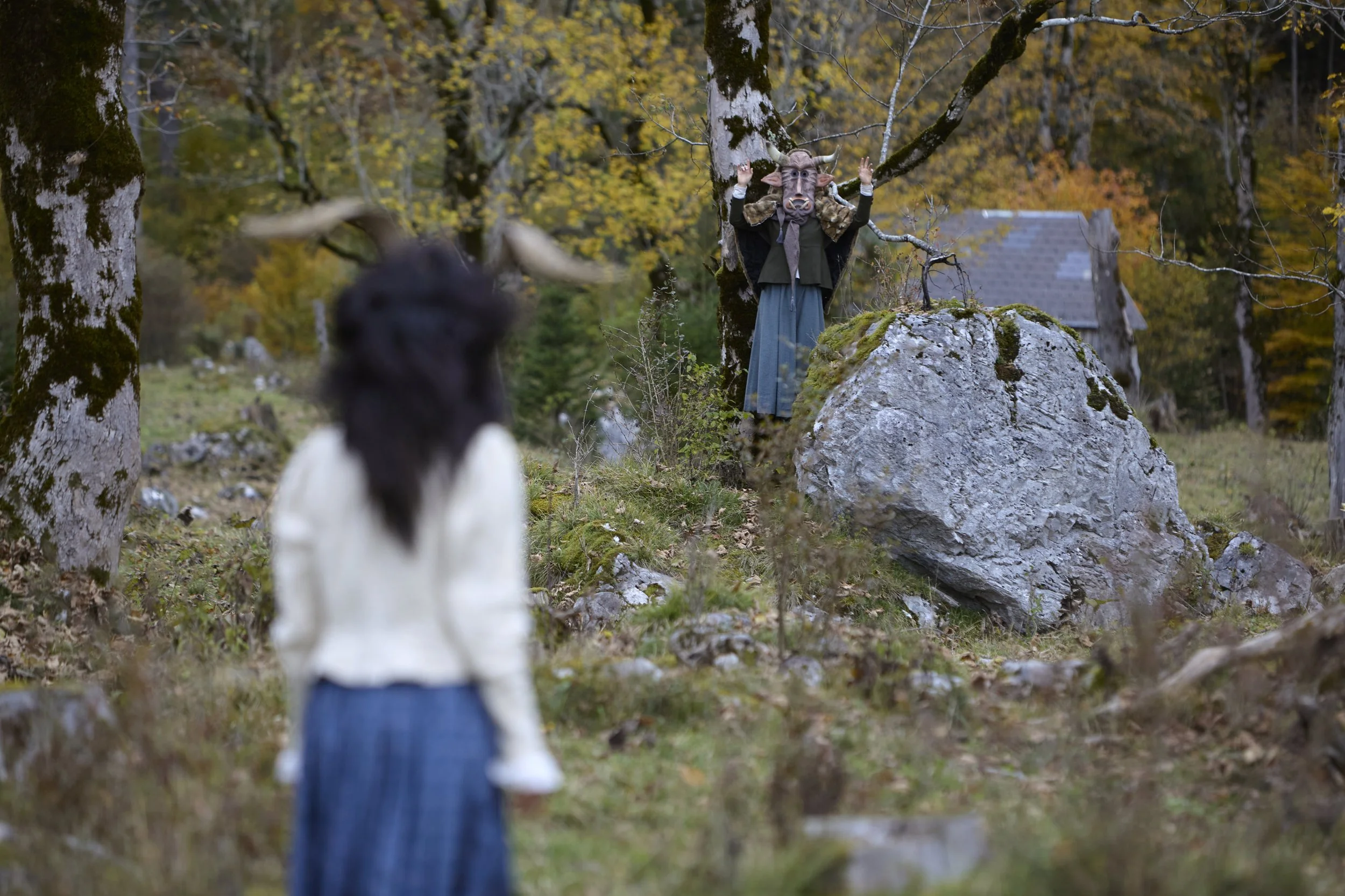
Narrator: The terror came and went so unexpectedly that they soon agreed that Hannah had simply made up these ghosts to make herself seem interesting. No one wanted to even remotely consider the question of whether she was actually capable of perceiving things that were hidden from others.
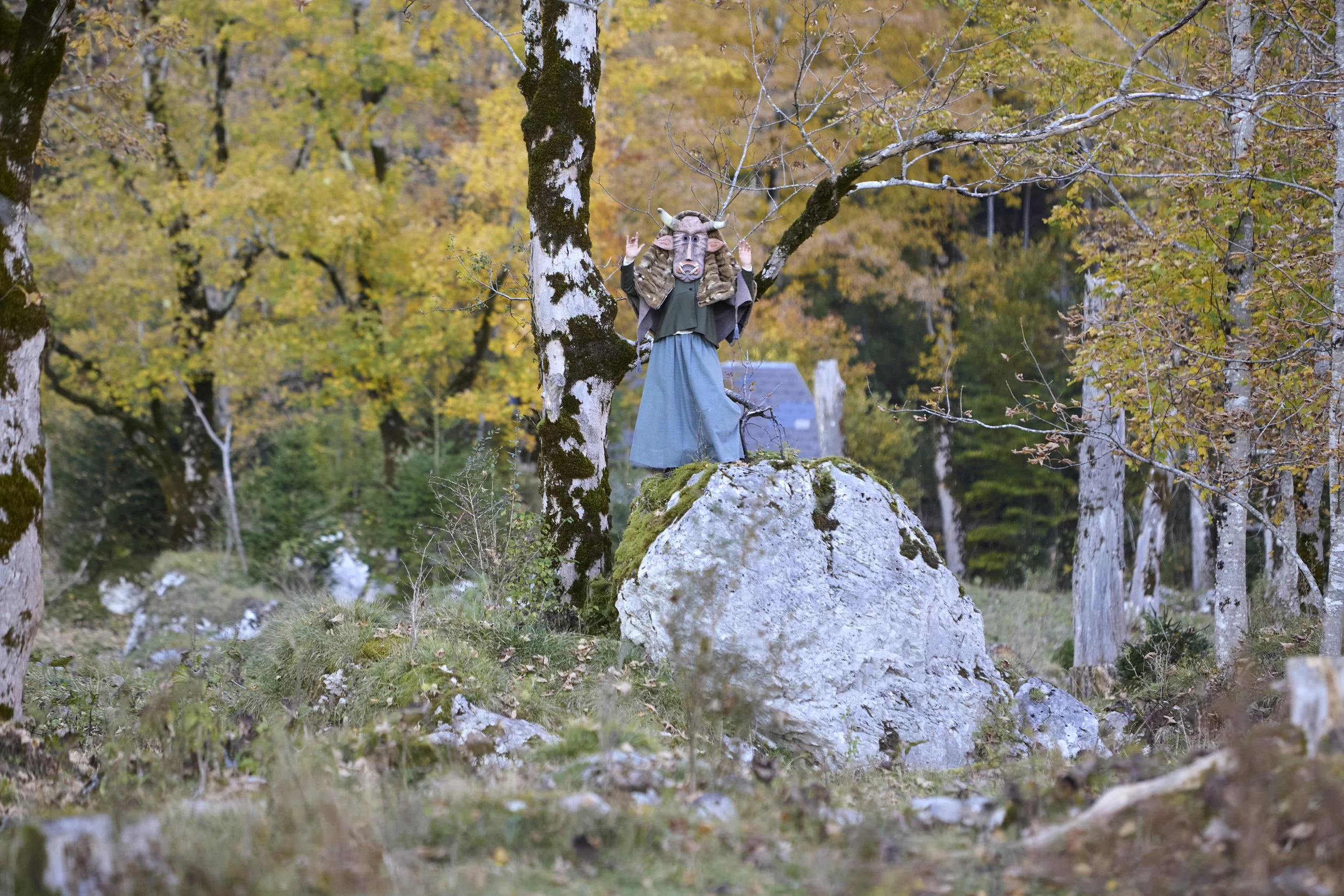
(Relly wearing the cow mask on the rock with the hunting blind. )
8 – SEEWIESE
Mina: For the first time—and in a way everyone could sense—Hannah was struggling. She couldn’t go on. Down on the ground, she behaved that way for no apparent reason—just as others sometimes do—on steep terrain. Where it was crucial to be sure-footed and determined, because it dropped 100 meters straight down. Hannah could go neither forward nor back. As if paralyzed, because there was an abyss—inside her—and she sank to her knees. And couldn’t take another step.
Emmy (somewhat reproachfully): Hannah! What’s wrong?
Hannah (looks around fearfully, peers into the distance, pulls Emmy down toward her, speaks in a whisper as if she mustn’t be heard, points): “There!”
Emmy: “Yes? –– Hannah – ”
Hannah: “There”
Emmy: “Yes?”
Hannah: “The rock.”
Emmy: “Yes? Hannah?”
Music: Alban Berg, Op. 6, No. 1, Prelude, beginning
Voice: Something must be added to the unfamiliar to make it uncanny.[31]
Narrator (Paul, ignorant): The lady only needs to walk five minutes ahead, and already the path to the cabin is lost.[32]
Emmy: “It’s okay, give us a moment. – We’ll be right there.”
Mina: Although we knew this had long since ceased to be fun, we were annoyed. And we dismissed Hannah’s posturing as mere feminine sensibility.
Narrator (Paul): “The woman seeks new values in the mountains. Values that can evoke heightened sensations. Impressive, new, overwhelming experiences. She wants to be overcome by the unfamiliar and to experience the strongest sensations. She knows no fear, but she wants to learn what it means to feel a chill.”[33]
Voice: And “unheimlich to the highest degree”—as Sigmund Freud puts it, “to many people, what is connected with death, with corpses, and with the return of the dead, with spirits and ghosts, appears unheimlich to the highest degree.”[34]
Emmy (almost interrupting the “Voice”): “Go now, please!”
Hannah (looks around): Why are we here again?
Emmy: We’re still here. How are you feeling? Better?
Relly (impatiently): What’s going on?
Hannah (sits up, strong impulse) I can’t do it. Emmy! You can’t do that.
Mina: Not even in Altaussee, when she’d seen the Trisselwand for the first time, did it seem to really dawn on Hannah what Paul and his friends were planning: that Paul and his friends’ intention to have a good time and to climb that steep cliff—that these two things were connected. Having set her sights on a few nice days of hiking and spending a little time in the mountains, everything instantly seemed to turn upside down for Hannah. And with every step toward the inn, it got even worse, without Hannah having the faintest idea where it was coming from.
Music: Alban Berg, Op. 6. I Prelude, Continuation, and End
Breathe, Holly Herndon
Mina: And she described what she thought she heard and saw—grotesque faces and menacing figures that filled her with fear. But she told it the way a dream transforms such descriptions. And Hannah right in the middle of it, trapped.
Mina: The way Hannah behaved—that certainly wasn’t just an act. I didn’t want to admit it. Not even later. After all, I was against Hannah. – Something must have been going on. Even if no one but Hannah saw the ghosts.
Voice: This uncanniness is really nothing new or foreign, but rather something […] familiar that has merely been alienated from him through the process of repression. [35]
Cage: And The Earth Shall Bear Again (with lyrics overlapping at appropriate points)
9 – INN
In this mood, you arrive at the inn. Weather permitting, the scene takes place on the dance floor in front of the inn. The audience tables are on the terrace under large umbrellas. There’s some warming soup.
Emmy: Or maybe something to eat?
Hannah: I’m fine.
Emmy (stirring Hannah’s teacup, modestly, to Hannah): And you saw something?
Hannah: I don’t know. ––– Now, here (unsure whether she’s mistaken about the whole thing). (I don’t know. ––– Now, here)
Emmy: Paul didn’t see it.
(meaning: You’re still free to decide; it’s not set in stone yet; it’s not yet part of the group’s “reality.”)
Relly (assuring himself, to Hannah): But you don’t mean to say that—because. (getting into the details, becoming as familiar as a sports commentator) If you approach it that way—if you don’t believe you can take the next step—then you have little chance of actually taking it.
Emmy signals to Relly to calm down
Hannah (composing herself): But that you have to listen to yourself—
Emmy (agreeing, tersely): Sure. Maybe. — (somewhat helplessly) But a ghost. (to Hannah, friendly) Your ghost.
Hannah (insists, corrects): Gh–osts.
Emmy: I mean—even if they’re there? ... just suppose: in the end, you never know what ghosts want—what they say!
Relly: That reminds me of Paul. (Paul takes notice, feels addressed, Relly explains) And his lectures. (to Hannah) An example. (as matter-of-factly as he can) You’re climbing—and somewhere in the rock, right in the middle of the wall—you get a scare. A small, black crawling creature you wouldn’t expect to find there.
Paul: That’s almost impossible.
Relly: The glacier flea of North Tyrol (alternatively: The glacier flea of Edelgries).
Paul: The glacier flea from North Tyrol? (incredulously) At this altitude?
Relly: The one that, after a long journey, found a place of power to restore the peace of mind it had lost. What do you say to that!
Paul: That it underestimated the effort involved?
Relly: Yes, but beyond that. As an example. What does it “mean”?
Hannah: That the glacier flea—as small and inconspicuous as it may be—has the same right to this very specific rock. The rock that—of all people—Paul wants to use for climbing.
Relly (drawing a conclusion, interpreting, clarifying the oracle’s advice): That you can’t go any further.
Paul (incredulous): What? The glacier flea was sitting right on my hand!
Relly: Nonsense. You have that on every climb: a visual anchor that snaps, an overhang… a corncrake on its honeymoon[36]. Those aren’t signs.
Hannah (to Relly): Because nothing’s ever happened to you. (Hannah tries hard not to lose her composure again)
Emmy: (But Hannah, you were barely six years old.)
But Hannah, you were barely six years old.
Relly: What could possibly be so terrible!
Emmy: Anyway—I'm not going with you tomorrow.
Paul: Whaaaat??
Emmy: “It just isn’t going to happen,” so to speak.
Hannah (shocked): But that’s not supposed to—(she means: have anything to do with me).
Relly (to Hannah): You’ve really done it now!
Hannah: That was definitely not my intention.
Emmy: You two are leaving, and Hannah and I will have a cozy time (doesn’t sound cozy)
and Hannah and I will have a cozy time (doesn’t sound cozy).
Hannah (has gotten up in the meantime): I can’t take it anymore. See you tomorrow—
(I can’t take it anymore. See you tomorrow—)
Emmy (polite, not friendly): Good night, Hannah! (Good night, Hannah!)
Relly: Good night! (Paul makes a gesture as if to say good night, but says nothing)
(Hannah leaves the room)
Relly (somewhat confidentially, as soon as Hannah is gone): You don’t want to come along because she’s in a sensitive mood?
Emmy (speaking more to the room than to Relly): Something’s been bothering her ever since she first saw the wall—or rather—ever since she first became aware of—(she means: what we were planning)
Relly: That it won’t work out for her?
From this point on, this dialogue takes place “in silence,” meaning the characters speak about this subject in their own language, but without sound. Or they speak in hushed tones, so that neither Hannah, who is leaving, nor the audience can clearly understand what is being said.
Schönberg, Op. 16 No. 2 “Vergangenes” (excerpt or beginning) Versions I and III
or “Verklärte Nacht,” 0:00 to 1:00 (1:50) for Version IV
or “Alpensinfonie,” beginning to approx. 1:30 for Version II
Emmy: That’s not it. It’s the fear—that a single moment can decide—between life and death.
Paul: But that’s not how it is.
Emmy: No, that’s not how it is. But for Hannah, that’s how it is. She believes that with every step we take, we’re risking everything.
At the end of the Alpine Symphony, “loud” again here.
Relly: And her life depends on it.
Emmy: Hannah’s life, every life—I don’t know. – (standing up to lighten the mood, friendly) – Your life (some form of physical contact with Relly) certainly isn’t. Good night. (she leaves the room)
10 – SUPPER
Change of day—change of scene. Here we move from the outdoor dining area into the parlor.
Voice (sarcastically, maliciously): Just imagine how delighted the Grim Reaper will be when he sees the followers of the Preuß school setting out to rush into the mountains “unprepared”!2
Narrator (Paul): I don’t want to speak out in defense of the love of danger, which—among us modern mountaineers—is absolutely present to a certain degree. But it does seem to me that the thought: “if you fall, you’ll be hanging three meters from the rope” has less ethical value than the feeling: “one fall, and you’re dead!”
Sprecher (Paul): Not the desperate attempt to correct one’s own insecurity through artificial aids, but rather that fundamental sense of security which, for every climber, should be rooted in a correct assessment of one’s abilities in relation to one’s will.10
Mina: But it can happen that you die. In principle, it’s always possible that you’ll fall.
Schönberg, Op. 16 No. 2 “Past Events” (0:43 to 1:30)
Narrator: It snowed that night. A little early in the year, but not unusual for October. Hannah attributed this to the “signs.” Paul, on the other hand, perceived it differently—he discovered something—a narrow, snow-covered ledge in the rock.
Mina: Fresh snow covered the wall. And all the ledges became visible from the valley.
Schönberg, Op. 16 No. 2 “Past” (1:30 to 1:46)
Voice II (Announcement; Warning on bergsteigen.com): The rock is solid and clean… even if it doesn’t always seem that way. Climb only in dry conditions![37]
Narrator (Paul): what I had seen when it was covered in snow: a steep, grass-strewn ledge that ran up through the vertical wall to a protruding ledge—
Mina: —up which it was possible to climb.
Narrator: Paul and Relly didn’t set out until noon, so that the autumn sun could melt the snow a little more.
Narrator (Paul): With the Kodak loaded, we climbed across a small snowfield to a chimney on the west face, and the gymnastics began! That is to say—can you even call it climbing? All that jostling and shoving between wet and mossy walls, that conglomeration of absurd arm and leg contortions, that getting caught with our bulging backpacks and slipping with our wet soles?[38]
Schönberg, Op. 16 No. 2: The Past
Narrator (Paul): The terrain gradually forced us further to the right toward the eastern edge of the pillar, and there—where we hadn’t actually expected any more difficulties—it became clear just how wrong human calculations can be. […]
Narrator (Paul): The wall wouldn’t yield; I climbed a few meters, then I could barely make out the next holds with my eyes, let alone reach or use them. […]
Voice: “Drive in a piton.”
Narrator (Paul): Eight and a half hours have passed since we started climbing—grueling hours of work. And yet, even at the summit, we can’t even settle down for a longer rest. We have only one hour of daylight left to reach the saddle, and not even a lantern with us, since we’d left our backpacks below.
In our tattered climbing shoes, we hurry across the plateau, which is covered in places with half a meter of snow.
Voice: Two pitons now protrude like dog-ears from the petrified archive of the world’s creation.[39] The sky: empty. All that remains is the descent.
Narrator (Paul): Here, where the sun shines only in slanting rays, it no longer has the power to melt away the vast amounts of snow, and the damp seeps into us everywhere; but what does it matter? Success has proven us right in attempting the wall, and whether we return home with wet or dry feet makes no difference to us ... [40]
A jubilant mood fills the room—perhaps a sound-image disconnect, as in a film: while we hear Mina’s reflections and the narrator’s text, we see the friends in a frenzy of joy over having survived the adventure unscathed.
Music: Punzenjodler
Narrator: Emmy Eisenberg, Paul’s childhood friend. Paul Preuß is said to have once remarked that she was as light as a feather, and the best of all female climbers. The fact that she is scarcely mentioned in the decades that follow is not only because she is a “woman,” but also—and this plays a part—because of her Jewish heritage. The life story of Emmy Hartwich-Brioschi—as she will one day be known—bears witness to a lively, elegant life. A life dedicated to championing women’s causes. Emmy lives to be over ninety years old.[41]
Tavener, The Lamb
Narrator: Mina Preuß, Paul Preuß’s sister—and “Doctor” Paul Relly, Paul Preuß’s friend: Mina and Relly have been engaged for months at the time of “Altaussee”; they are going to get married.
Narrator: If Hannah even went to college at all. After the weekend in Altaussee, she is considered “untraceable.” Years later, she is seen working as a waitress in a beer cellar in Augsburg. She makes a good impression. She seems to be comfortable there.
Narrator: Paul Preuss dies young. Two years after the Altaussee adventure on the Trisselwand, in October 1913, he falls to his death on the Mandlkogel in the Gosaukamm, alone.
Tavener, “The Lamb,” 2nd verse
Mina: Early Monday morning, everyone left. Relly got off the train in Ischl, supposedly because he wanted to visit a friend. But in reality, he was heading back to me.
END
[1] Paul Relly quote, Messner’s book, p. 273
[2] Messner (Nieberl), p. 68
[3] Paul Preuß quote, Messner book, p. 142
[4] Leonardo, according to Böhme, p. 28
[5] Hartmut Böhme, *Berg*, p. 60
[6] Schiller, according to Böhme, p. 24
[7] Kant, according to Böhme, p. 24, footnote 10, *KdU* B 320
[8] according to Georg Spitaler, Andrea Sturm: Sports in Austria 1918–1938 [https://de.wikipedia.org/wiki/Emmy_Eisenberg]
[9] Messner: p. 51 ff
[10] Messner, (Piaz) p. 61
[11] = refers to Piaz
[12] Messner, p. 65
[13] Wikipedia, based on Uli Auffermann: *Decision on the Wall – Milestones of Alpinism*. 1st ed. Schall Verlag, Alland 2010
[14] Messner, p. 72, “Basic Principles”[15] Messner, p. 28[16] Messner, p. 175[17] Frischmuth, Barbara: “Tage und Jahre,” Donauland/Residenz 1971, p. 59[18] Frischmuth, Barbara: “Days and Years,” Donauland/Residenz 1971, p. 60[19] Quote from Paul Preuß, Messner’s book, p. 140 ff., see also p. 32[20] Frischmuth, Barbara: “Days and Years,” Donauland/Residenz 1971, p. 106[21] This paragraph could also remain as a footnote.[22] Frischmuth, Barbara: “Tage und Jahre,” Donauland/Residenz 1971, p. 107[23] Messner, p. 32 ff[24] Messner, p. 59 f (Piaz)[25] In case anyone from the production team wants to know: I believe at least one mouse skeleton, as well as the small box with the old coins he had set aside to buy the Steinfeld. He showed me the coins—which were already rusty—once. And shortly thereafter, the little box, which actually belonged to me, disappeared. M*[26] Paul Preuß quote, Messner book, p. 89[27] Höfler, Horst: *Longing for the Mountains: Great Alpinists from the Beginnings to the Present*. BLV, Munich/Vienna/Zurich 1989, ISBN 3-405-13573-7, p. 69. – quoted from https://de.wikipedia.org/wiki/Paul_Preu%C3%9F_(Alpinist) on June 21, 2025[28] Luis Trenker quote from the Messner-Preuß book, p. 53[29] Paul Preuß quote, Messner book, p. 51[30] Frischmuth, Barbara: “Tage und Jahre,” Donauland/Residenz 1971, p. 61[31] Sigmund Freud quotes a treatise by E. Jentsch (“On the Psychology of the Uncanny,” Psychiatr.-neurolog. Wochenschrift 1906, Nos. 22 and 23) in: *The Uncanny*, 1919[32] Messner book, p. 89[33] Messner book, p. 92[34] Sigmund Freud: *The Uncanny*, 1919[35] Sigmund Freud: The Uncanny, 1919[36] Edelweiss has been a protected species since 1886[37] Warning on bergsteigen.com (Dolomites, Preußturm, 2,700 m)[38] Messner’s book, p. 145, Crozzon di Brenta (Deutsche Alpenzeitung, 1912)[39] Böhme, Dictionary, p. 58[40] The Trisselwand—by Paul Preuß, Steirische Alpenpost, 27, No. 48, Dec. 2, 1911[41] Runggaldier Moroder, Ingrid: The Woman on the Rock: The Beginnings of Women’s Mountaineering in South Tyrol. Cited from https://bibliothek.alpenverein.de/webOPAC/04_FAQ_oft_gestellte_Fragen/Frauen_Alpinismus/Runggaldier,IngridDieFrauimFels_AV_Jahrbuch_130.2006S. 260.pdf on June 22, 2025

Lawine Torrèn im Steinfeld am Fuß der Trisselwand © Magdalena Lepka
cronology
© Magdalena Lepka, Ernst Lorenzi
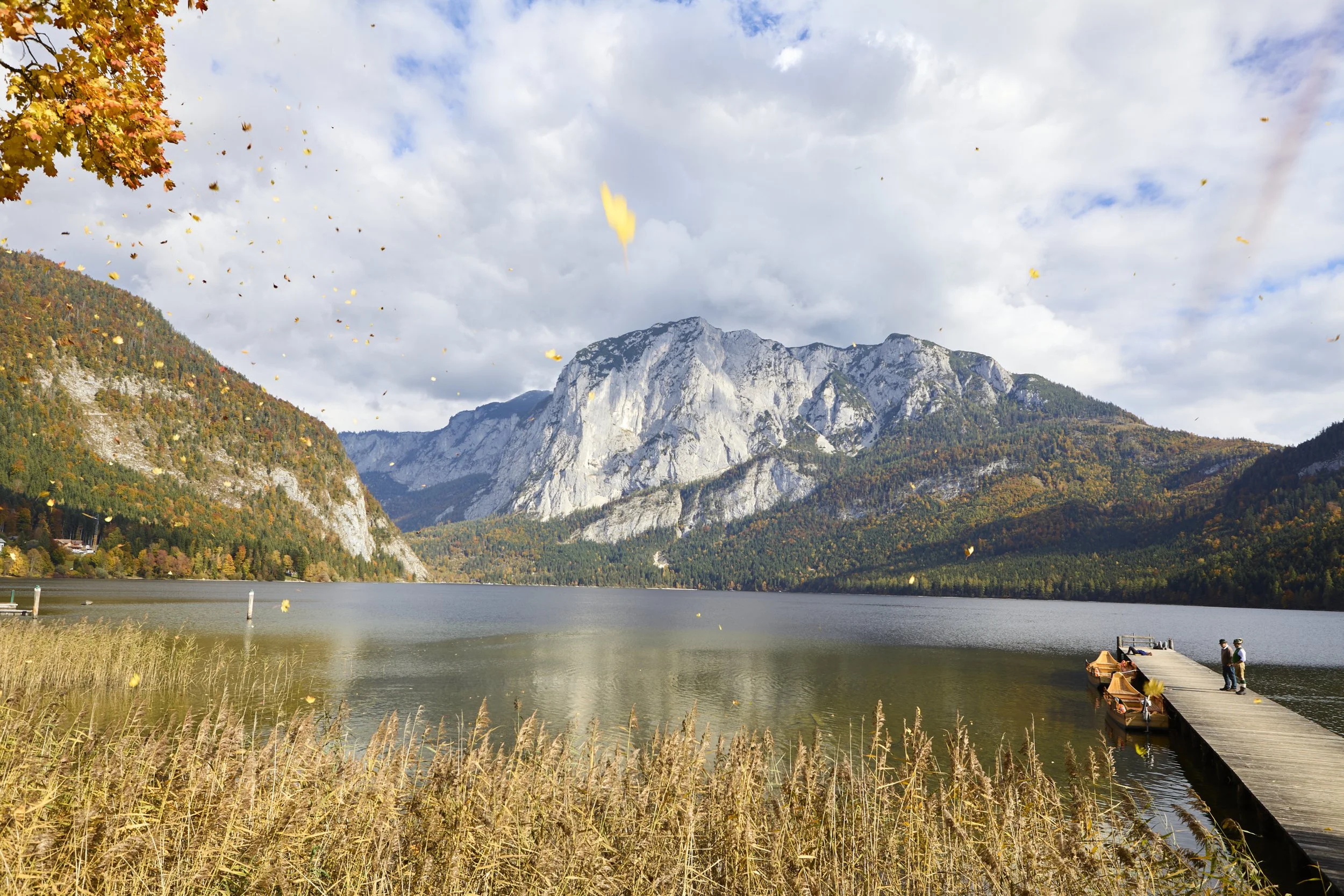
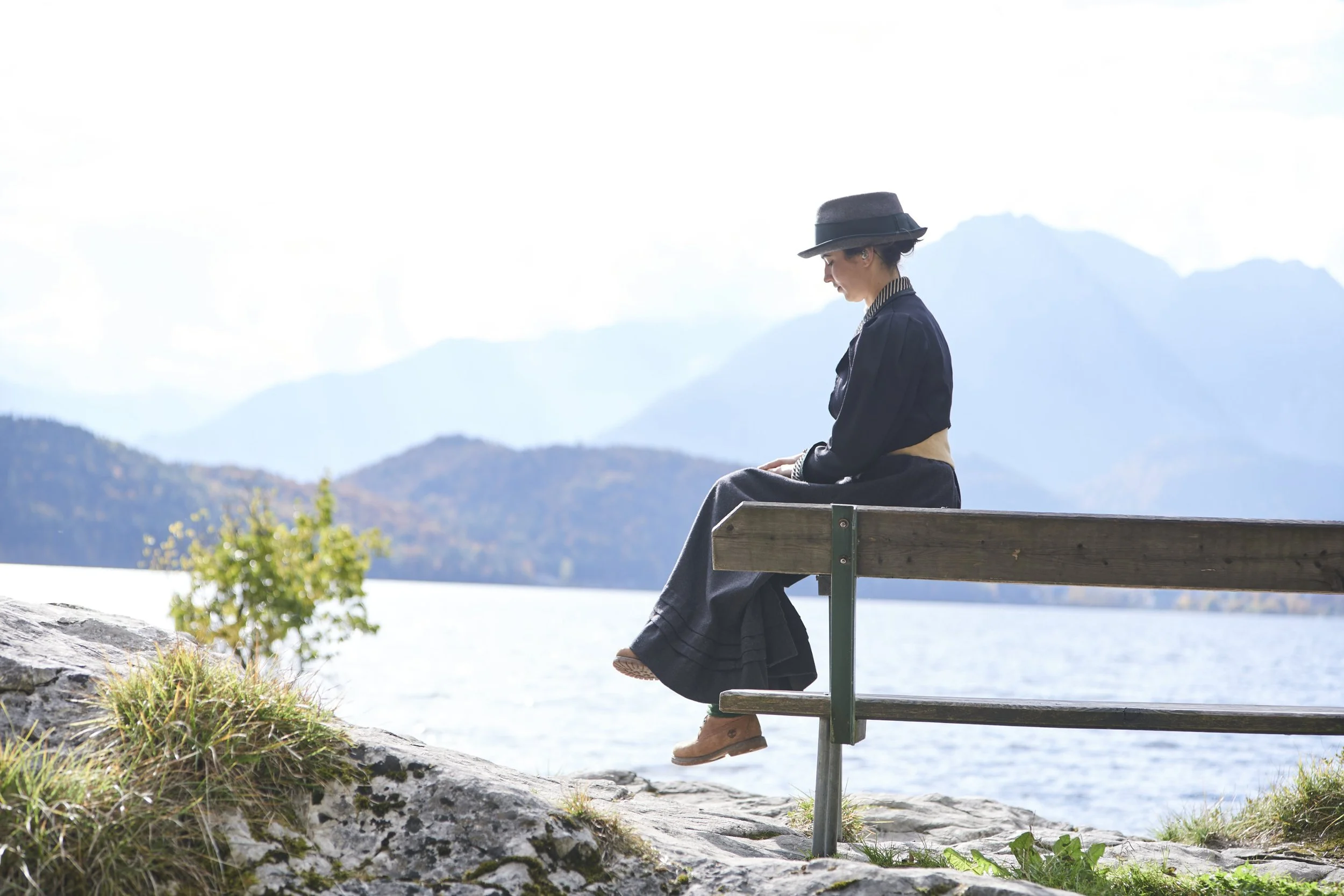
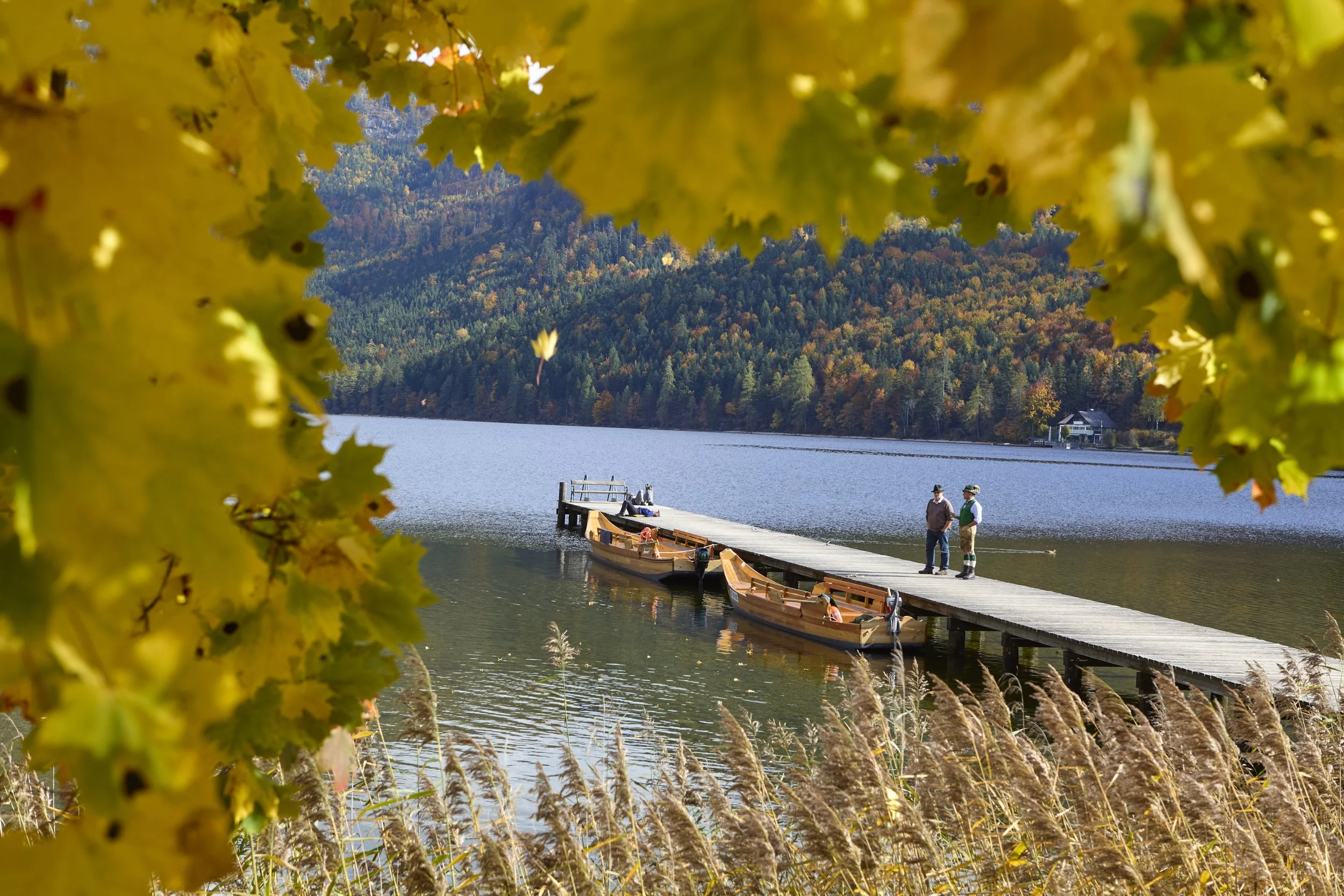
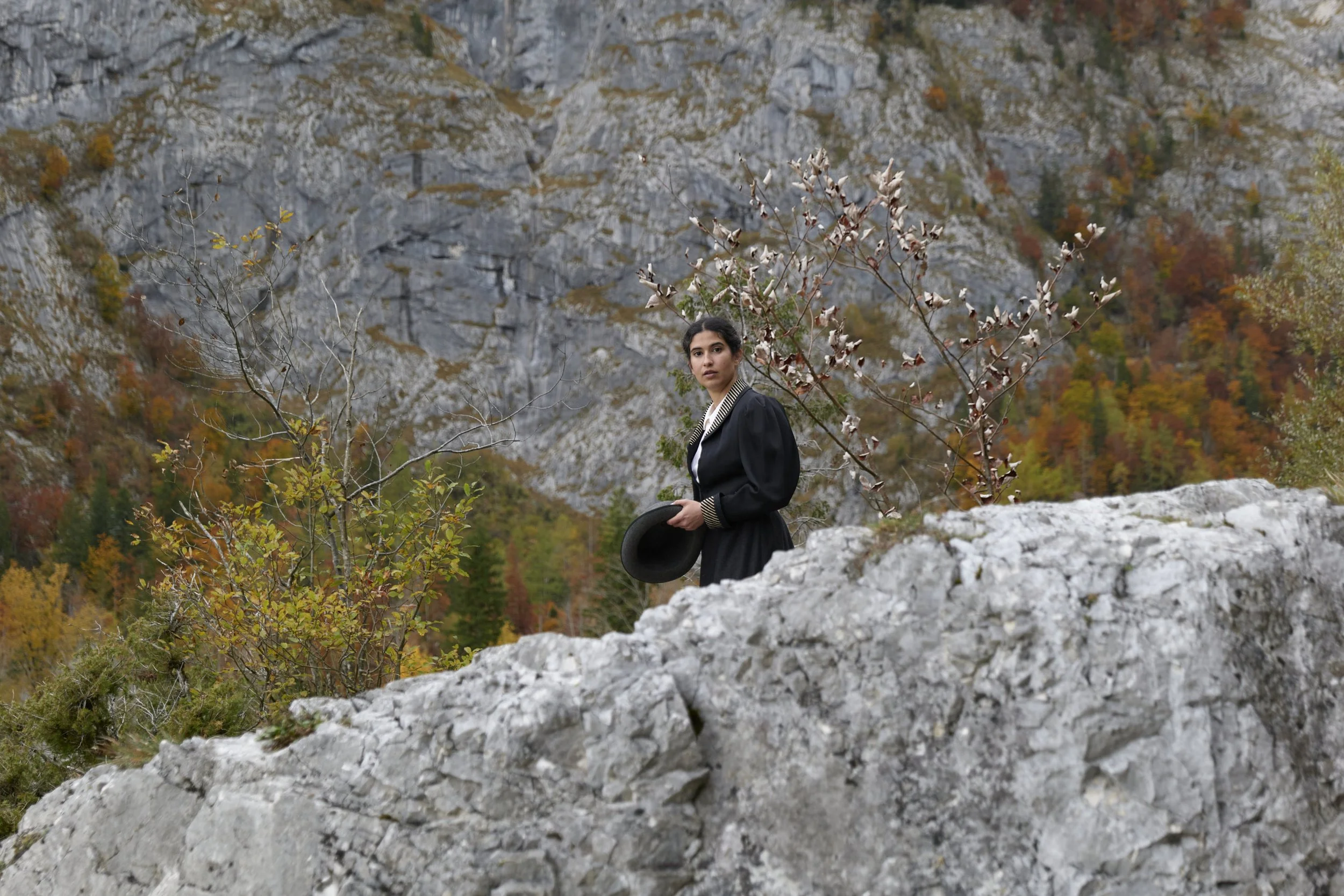
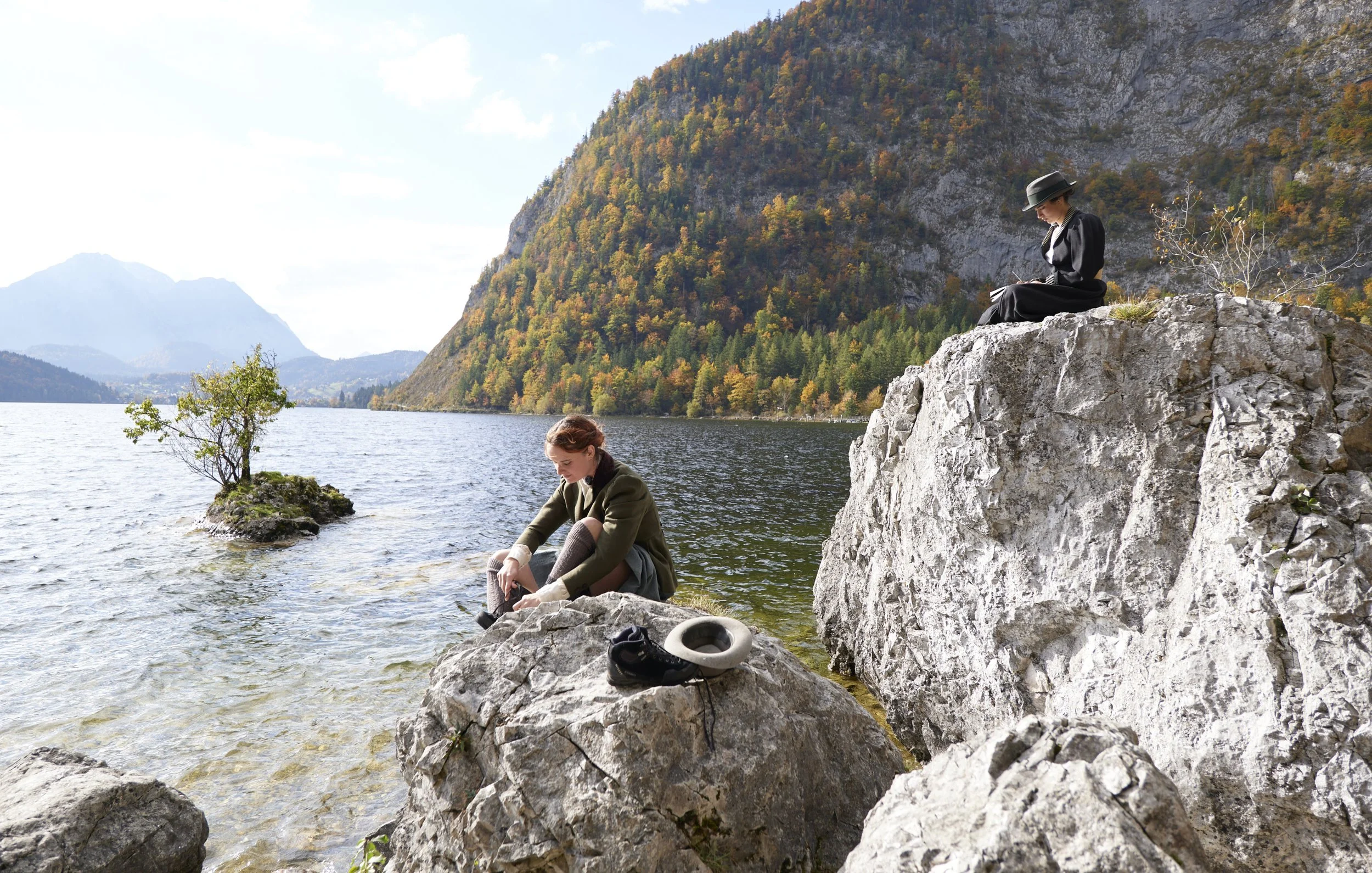
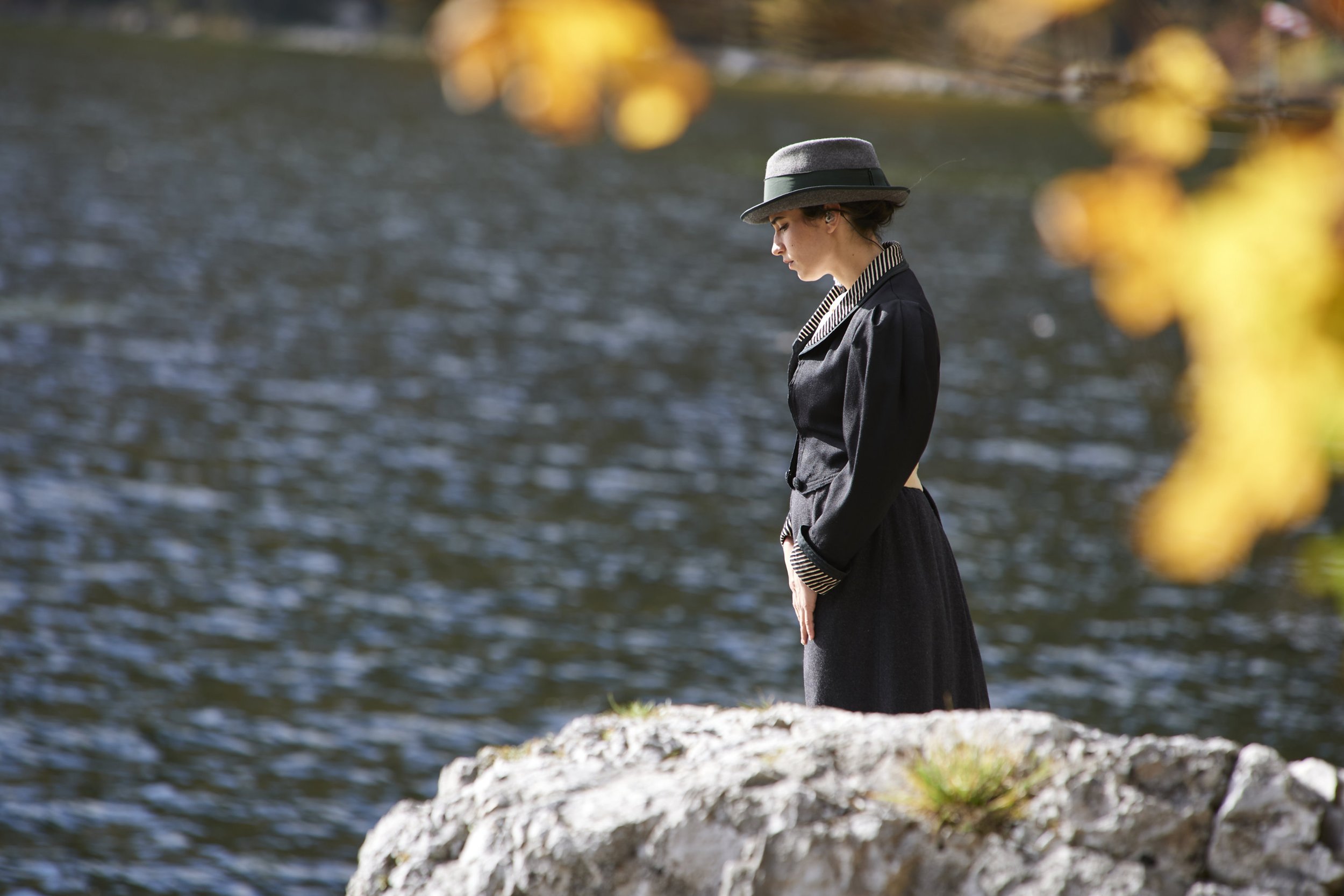
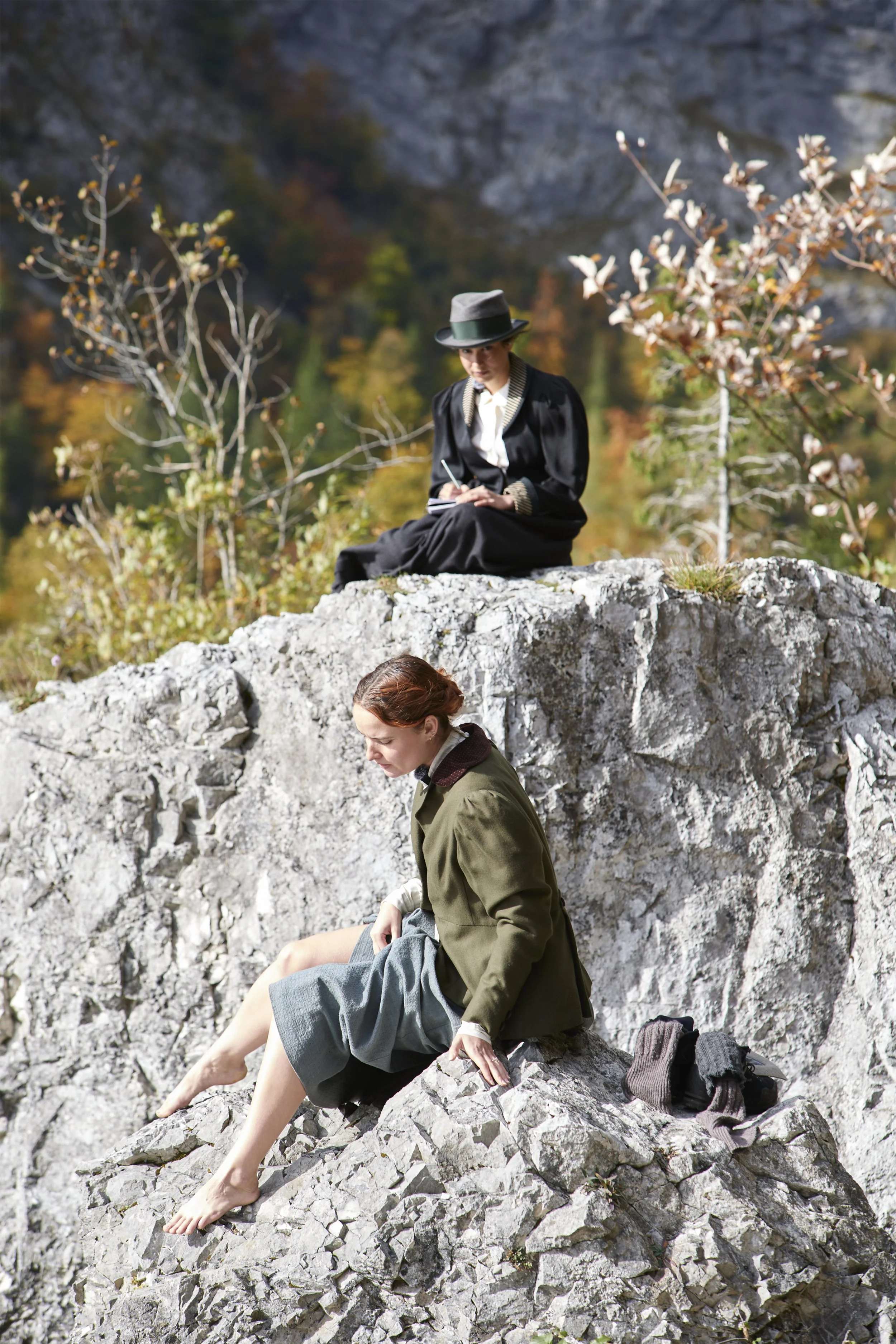
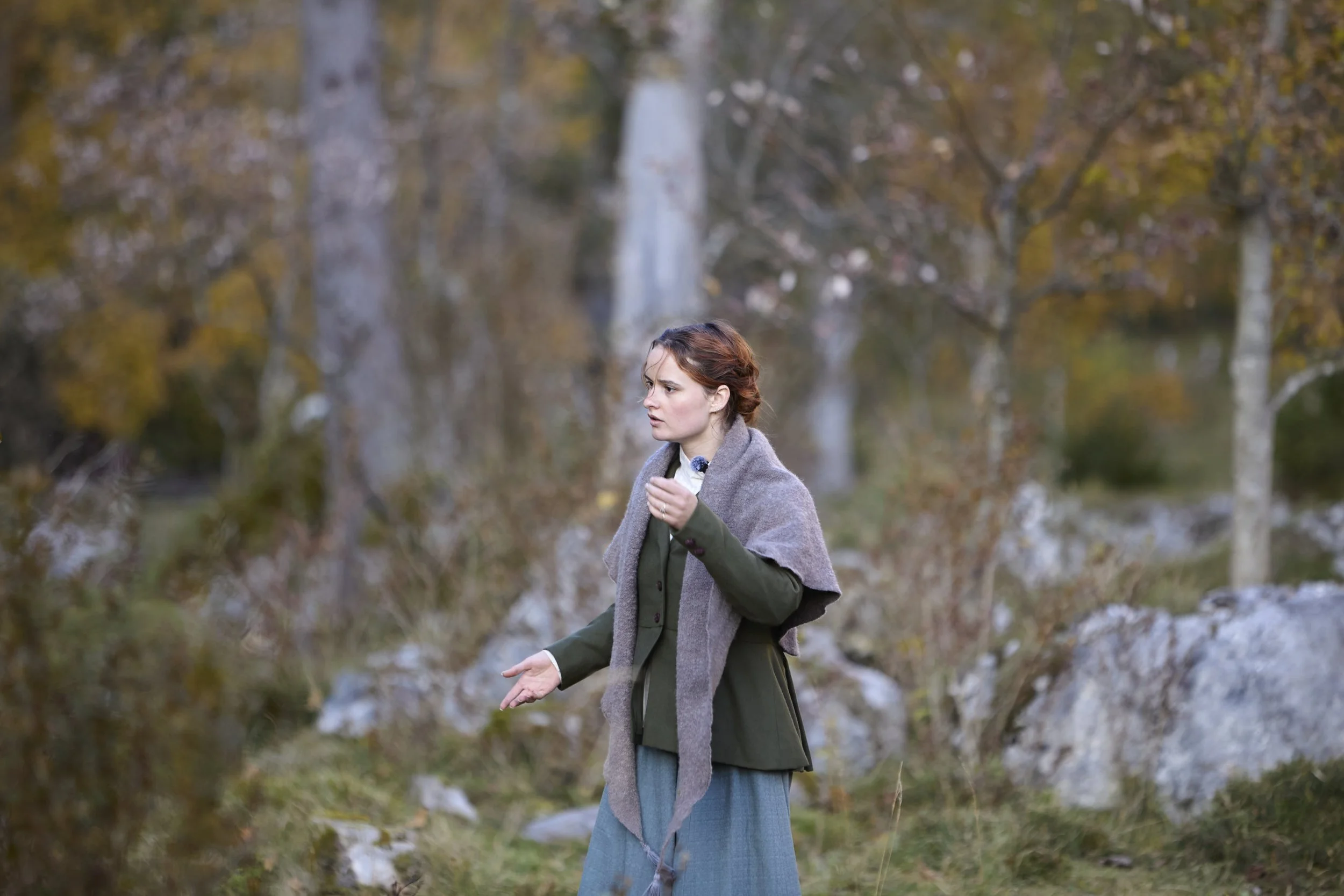
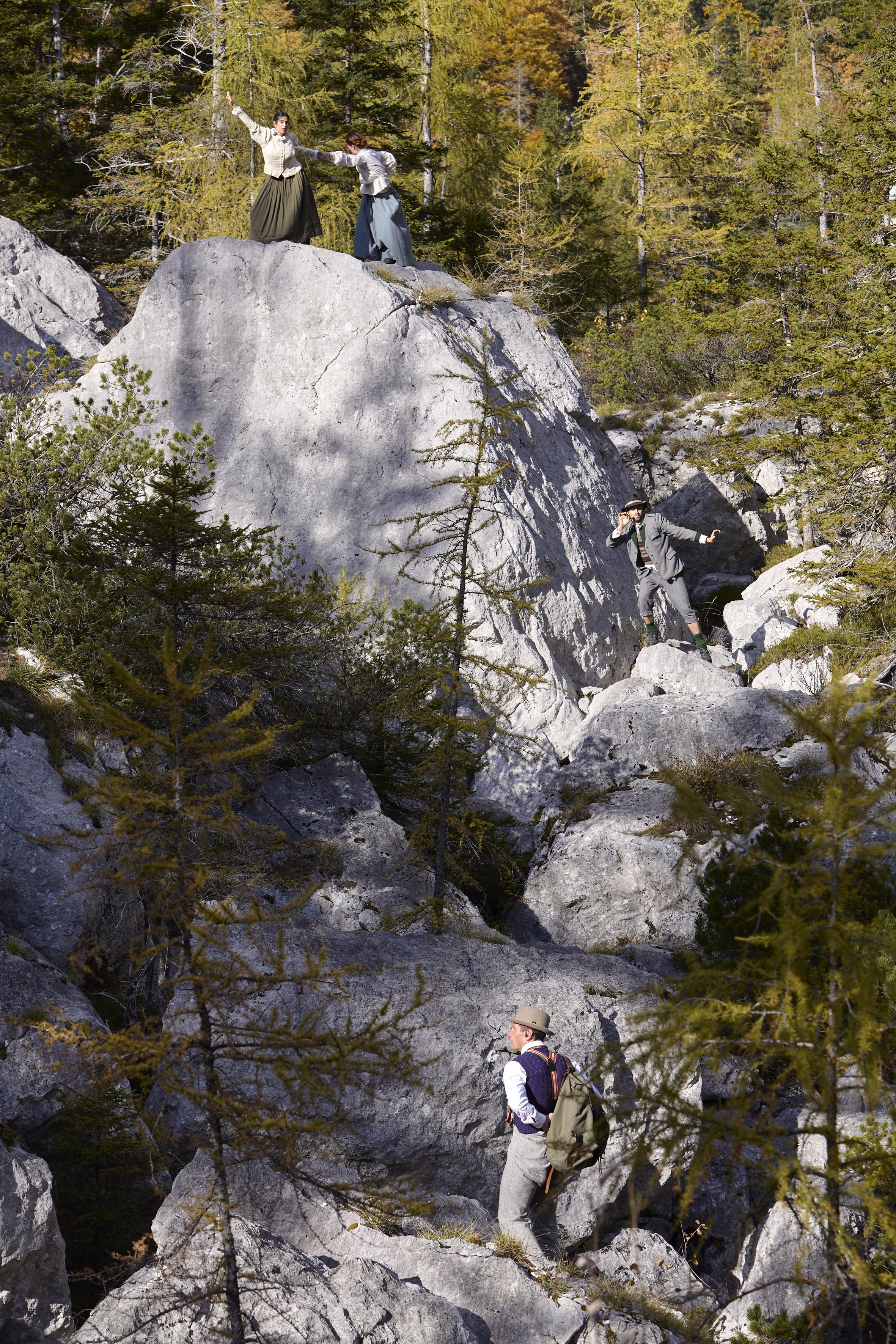
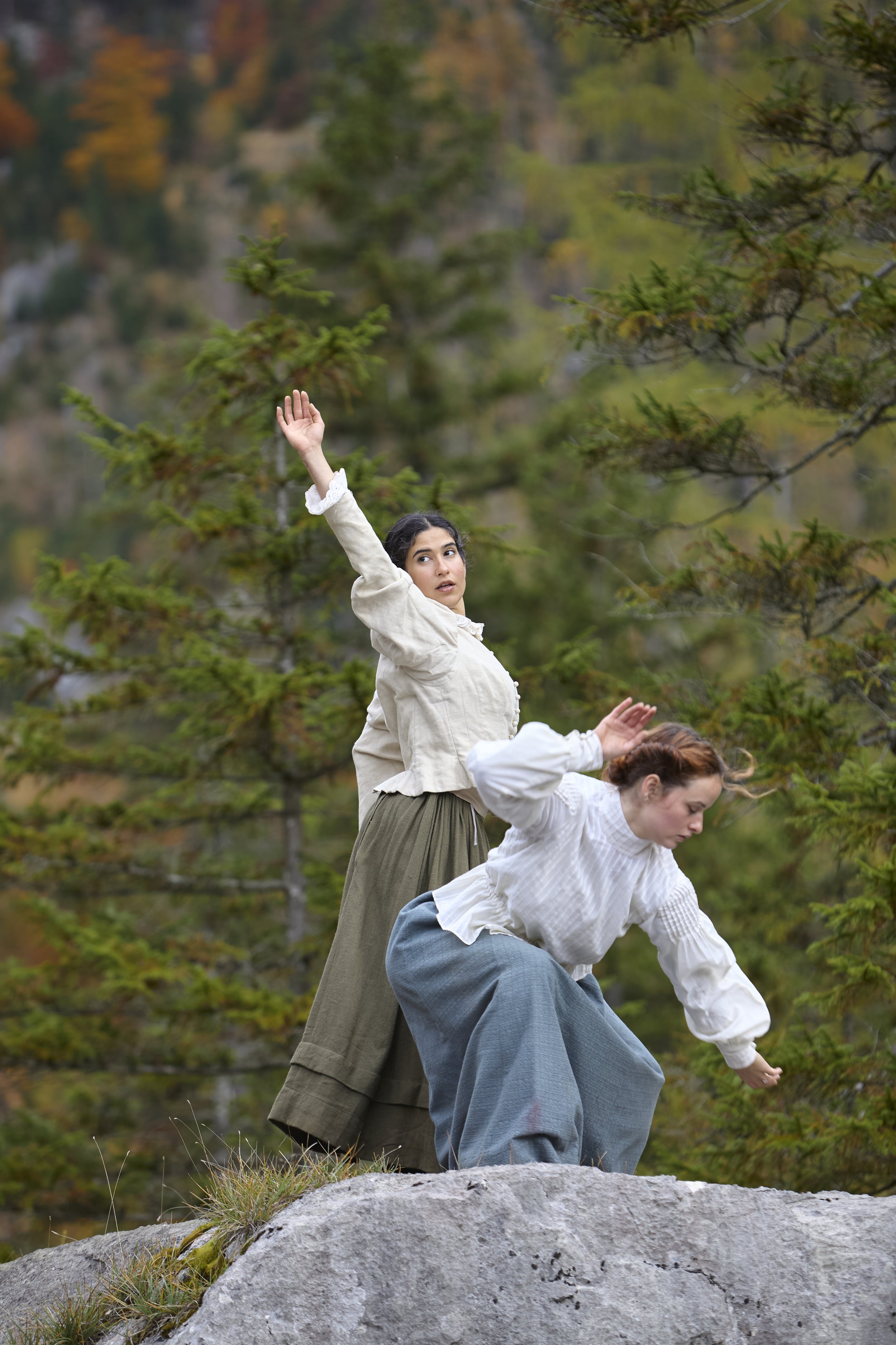
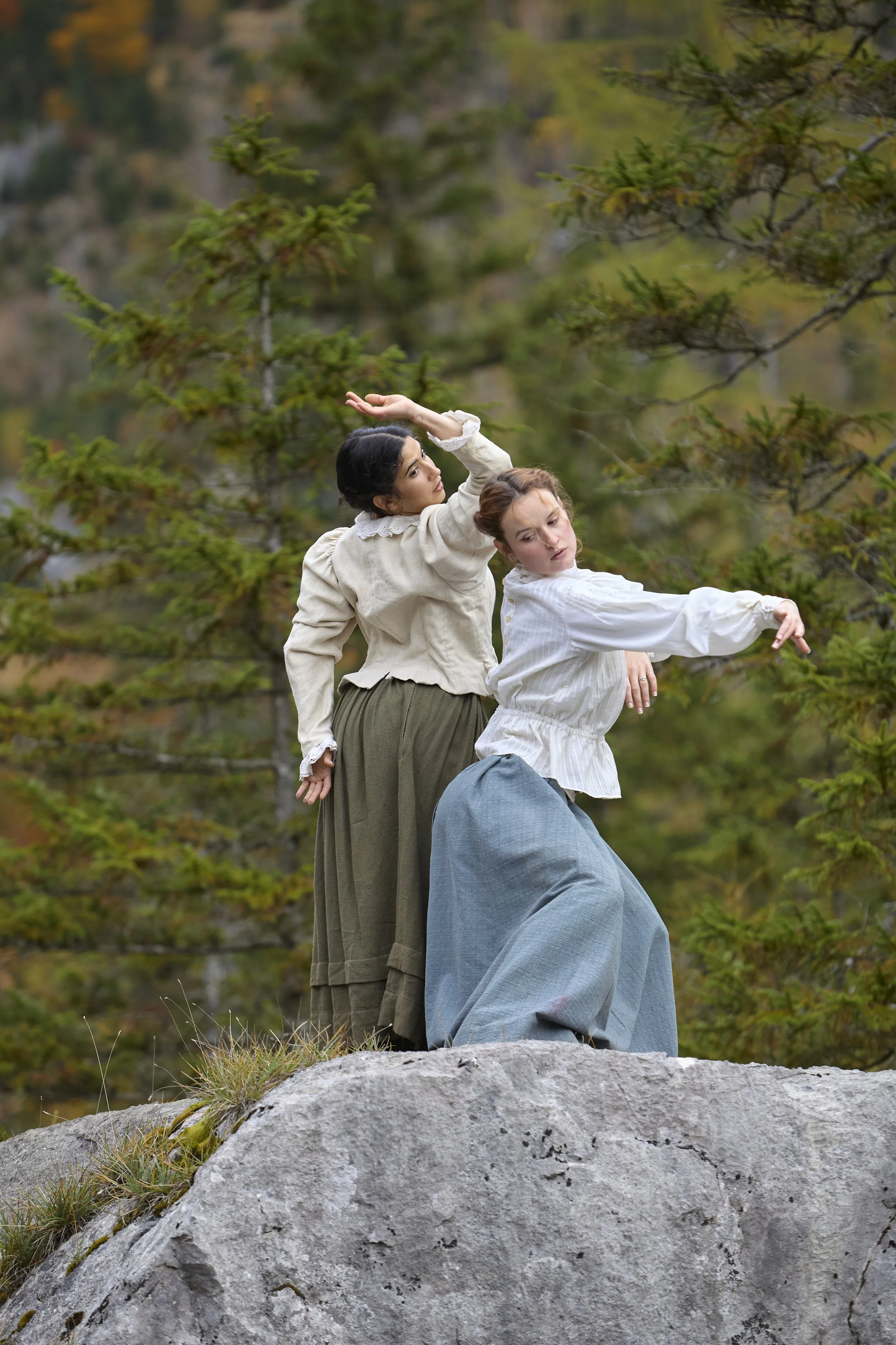
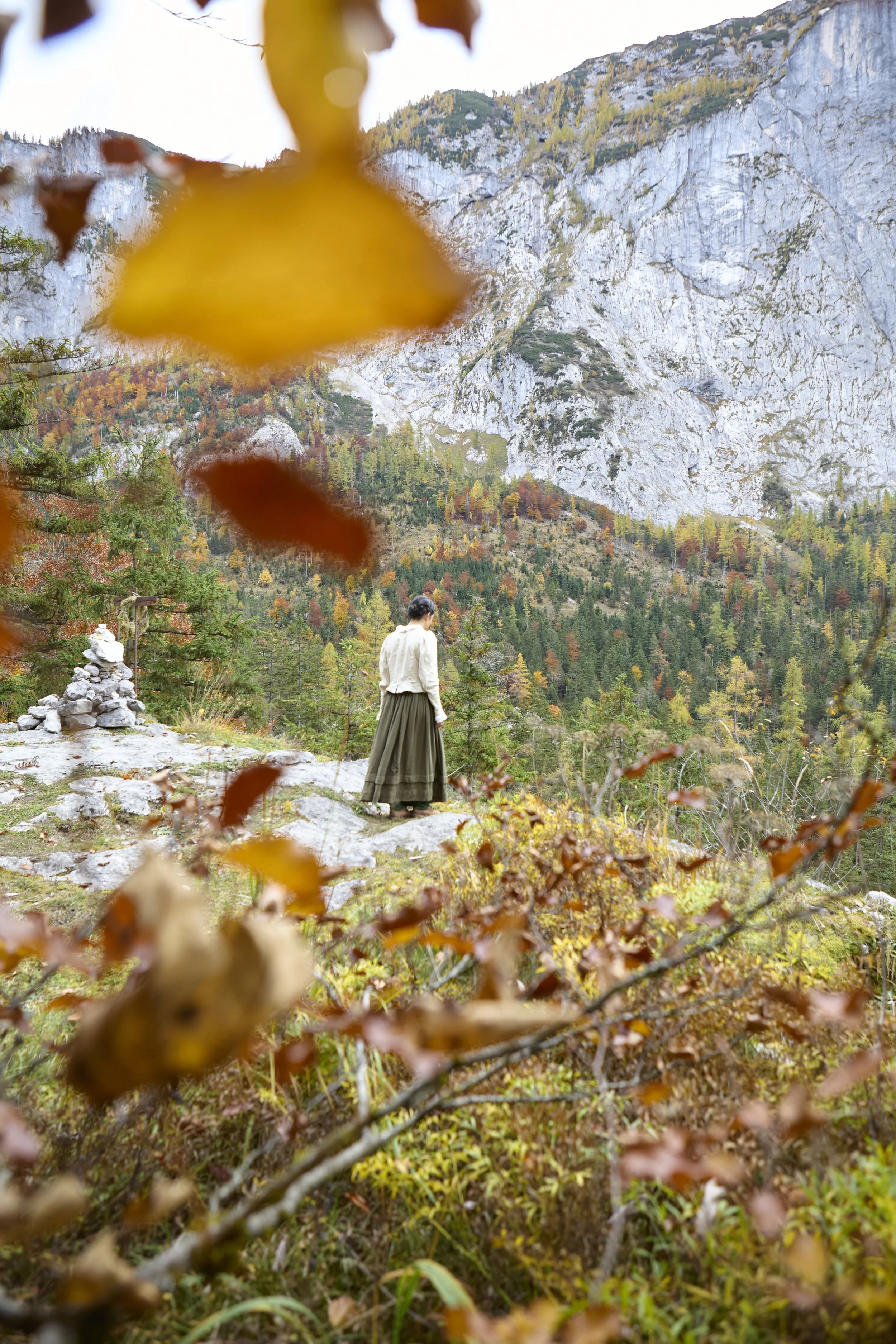
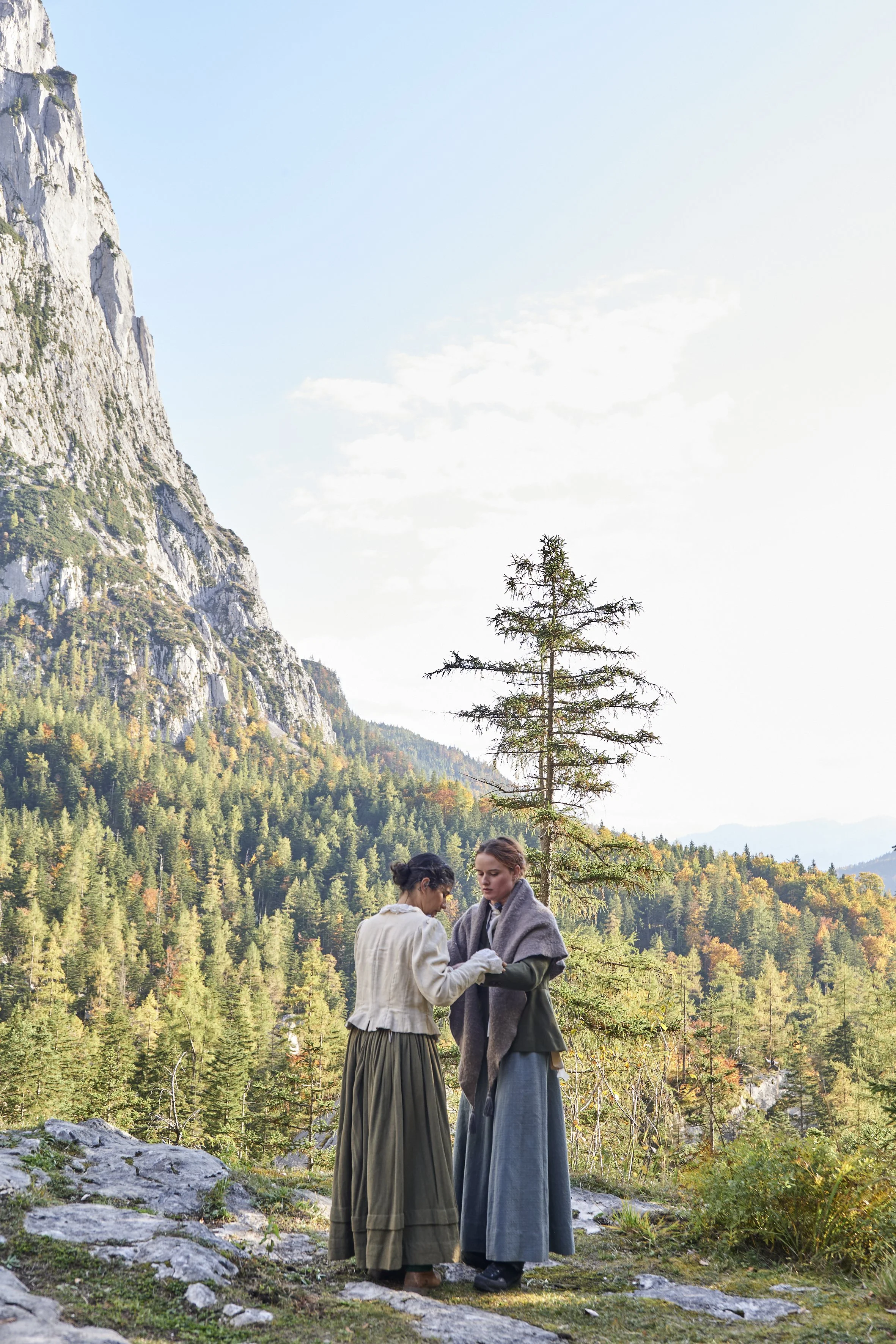
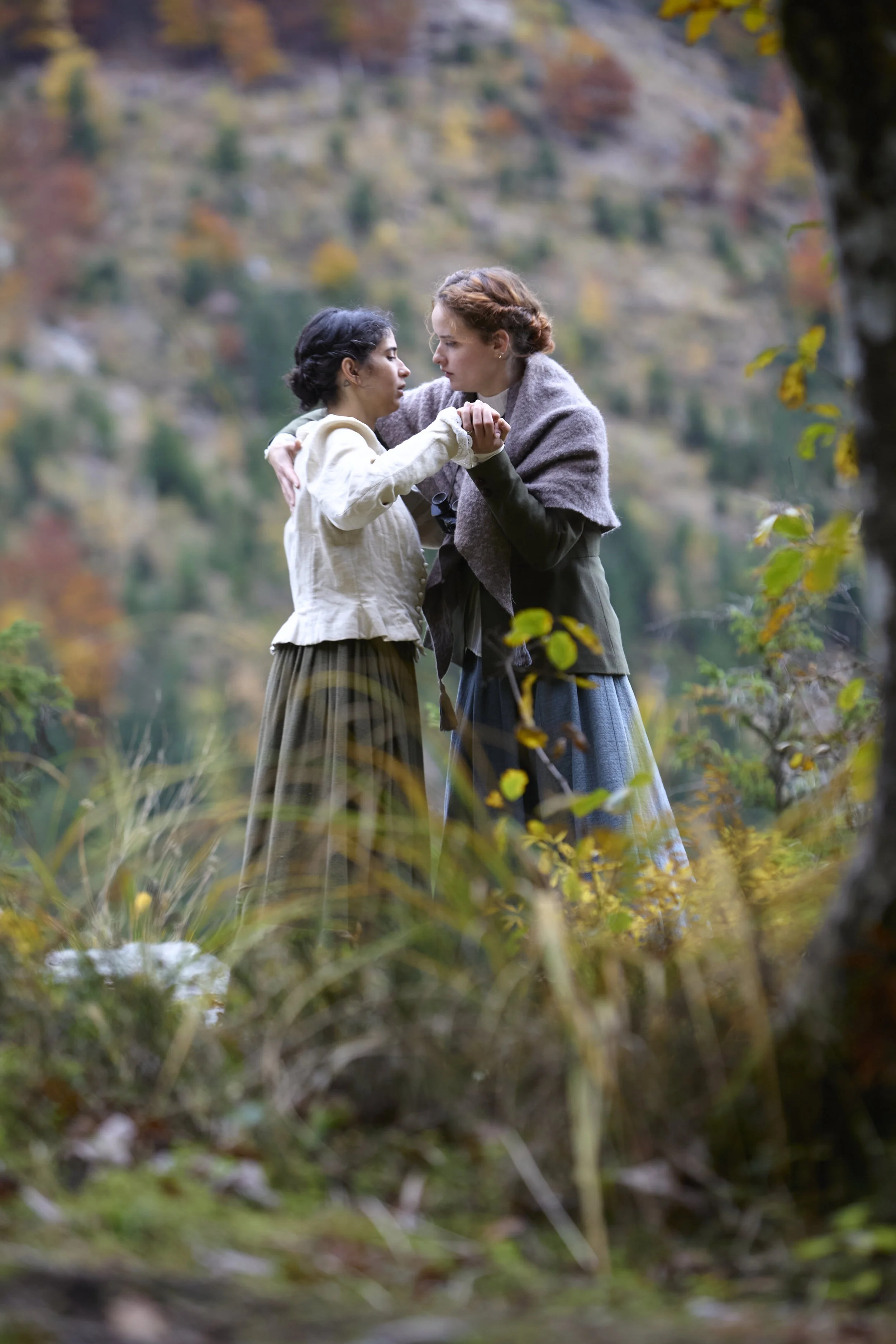
Hannah and Emmy
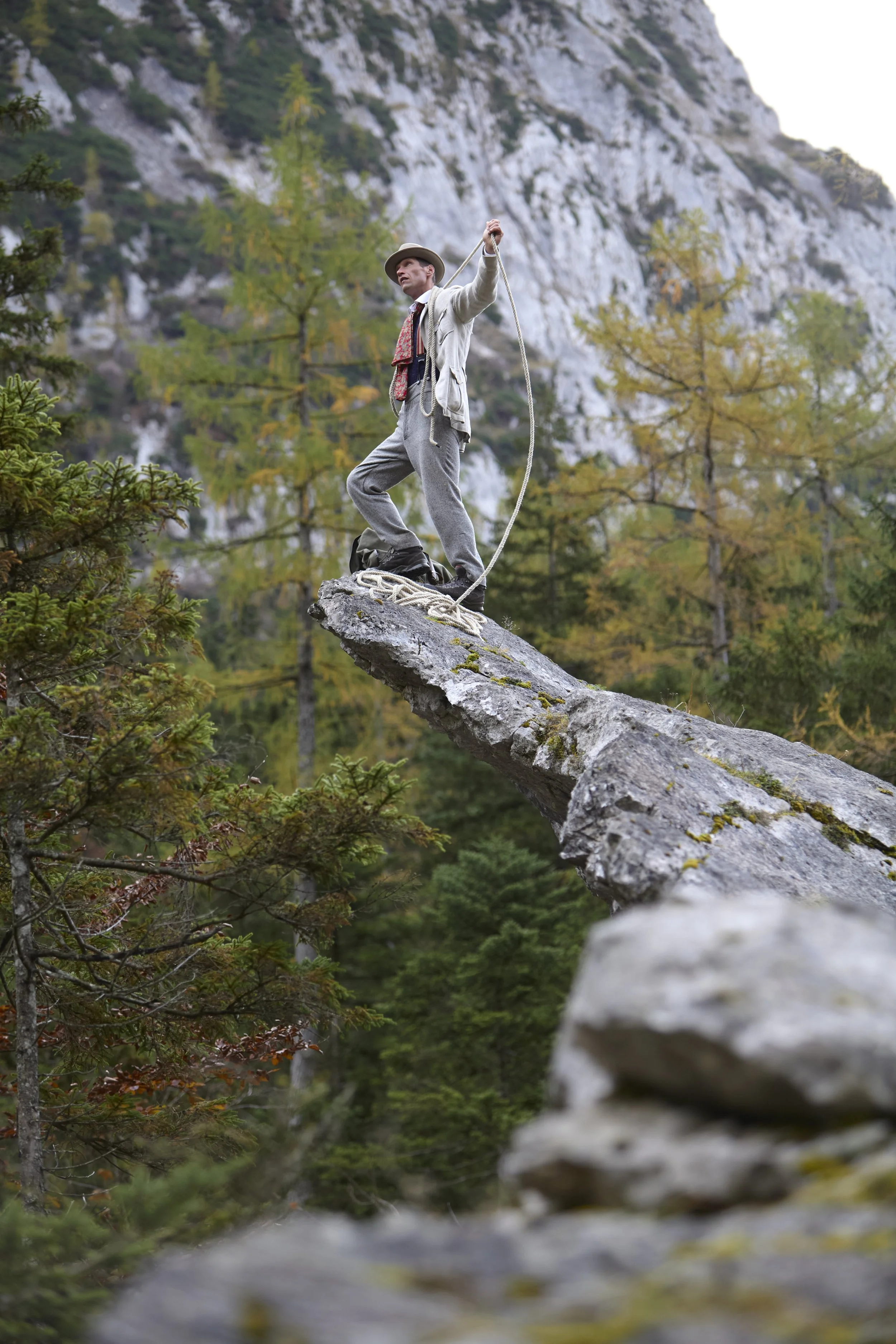
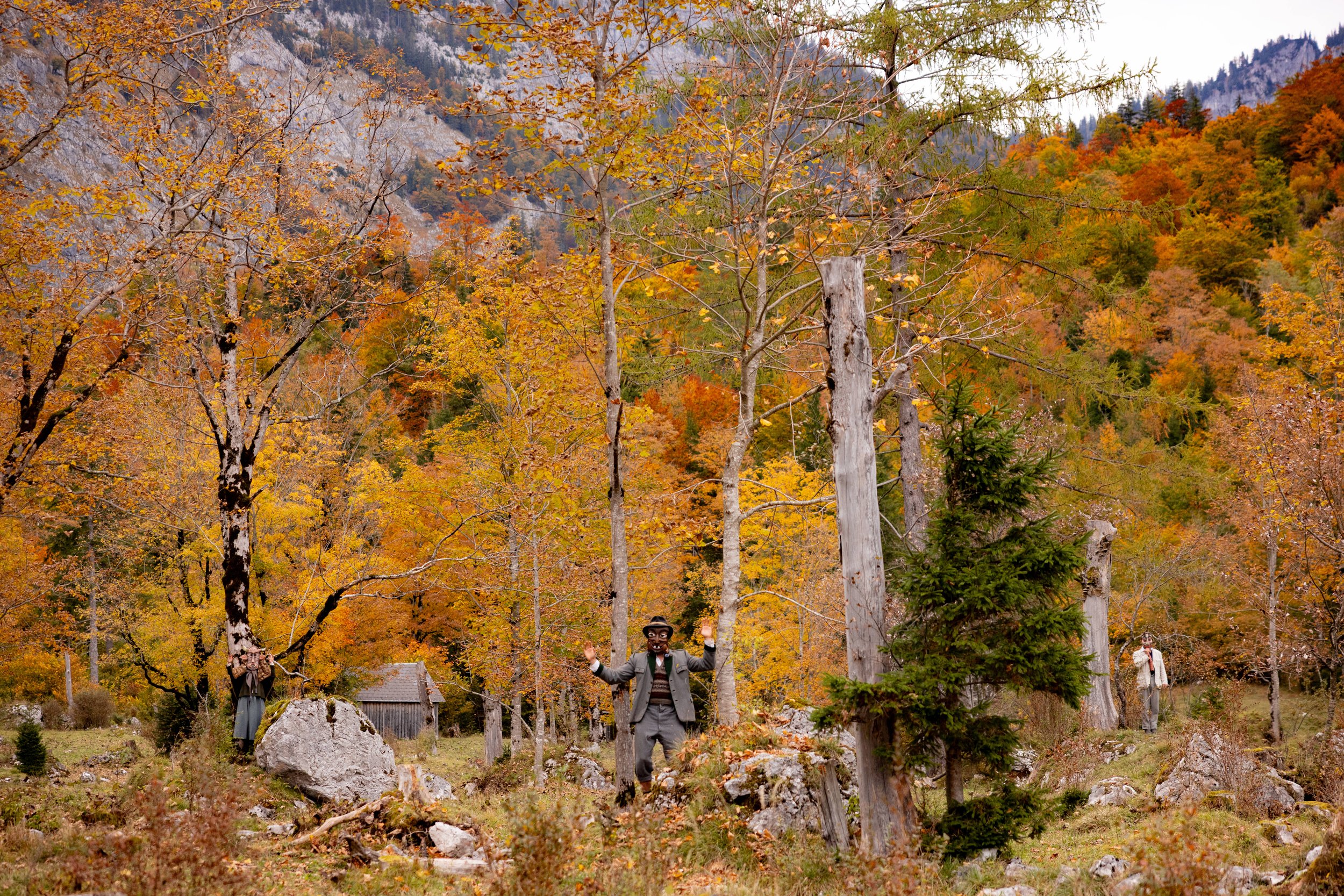
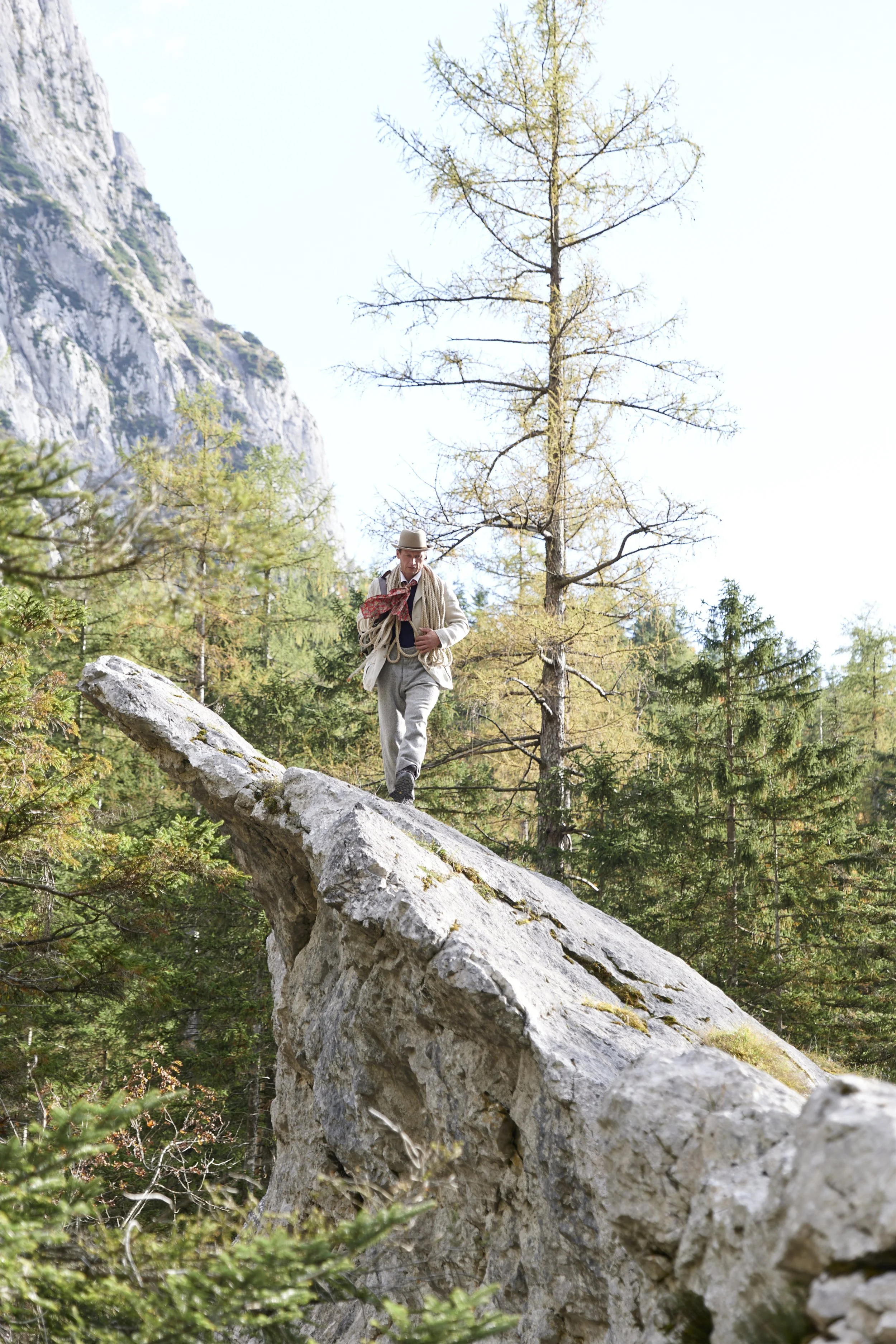
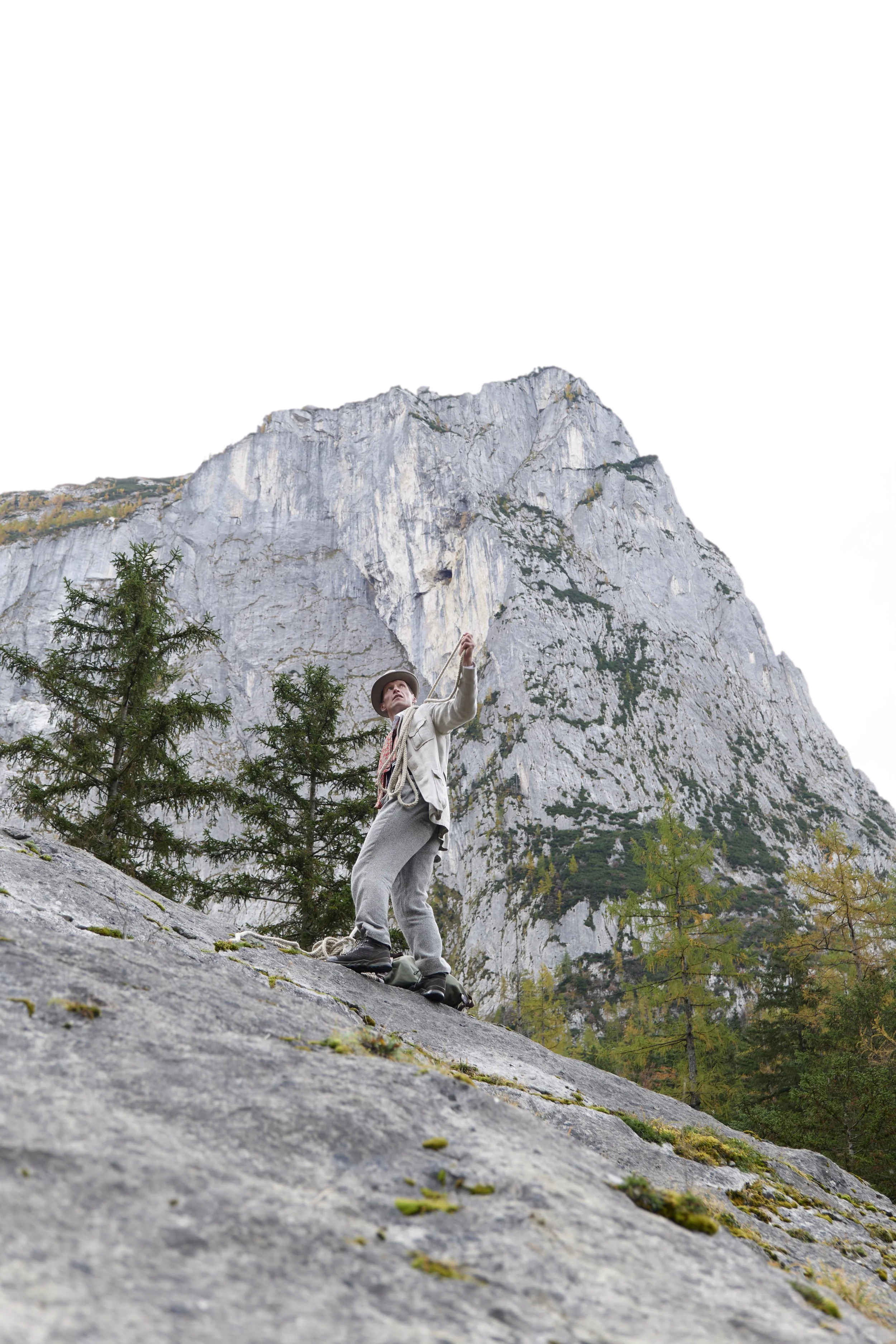
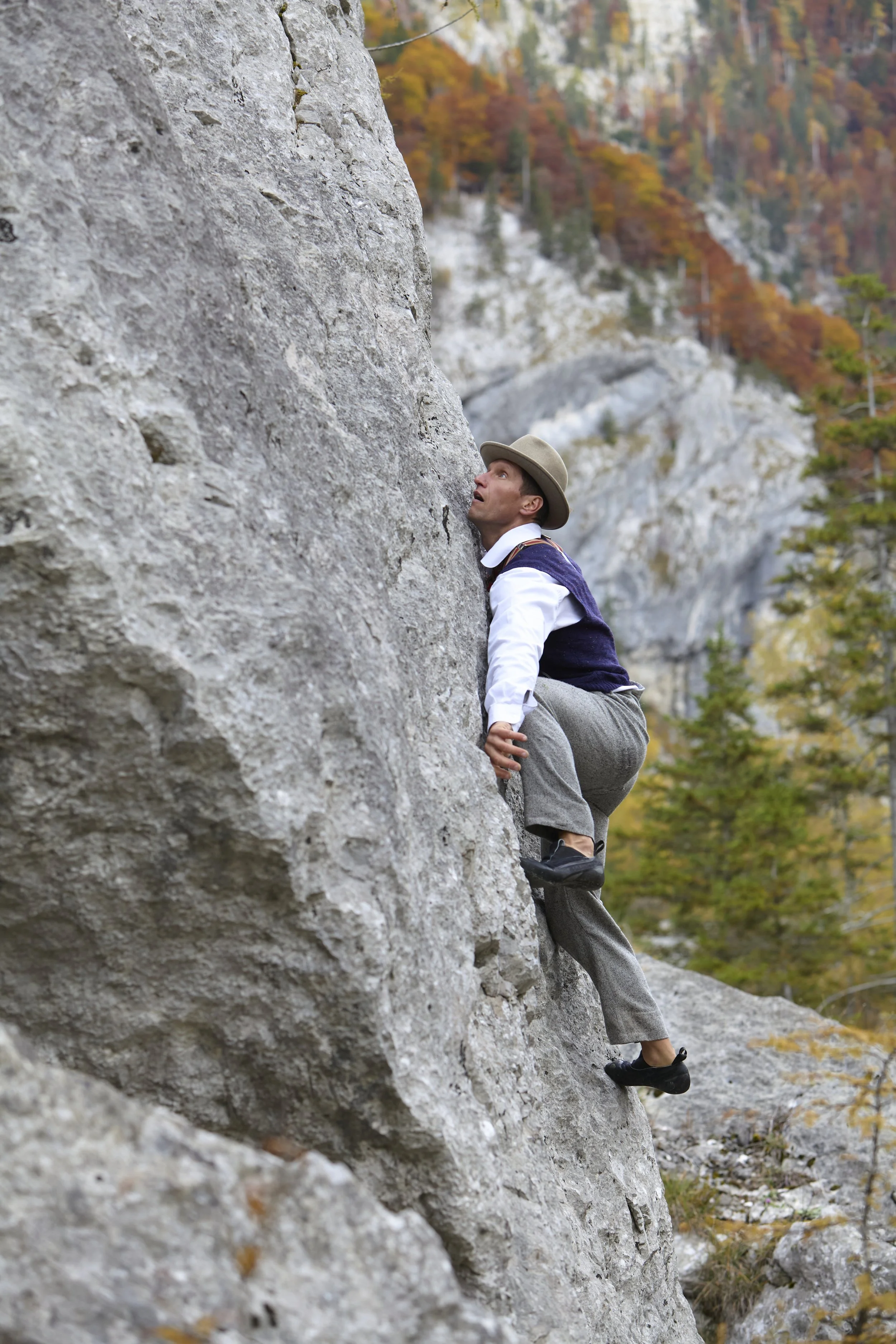
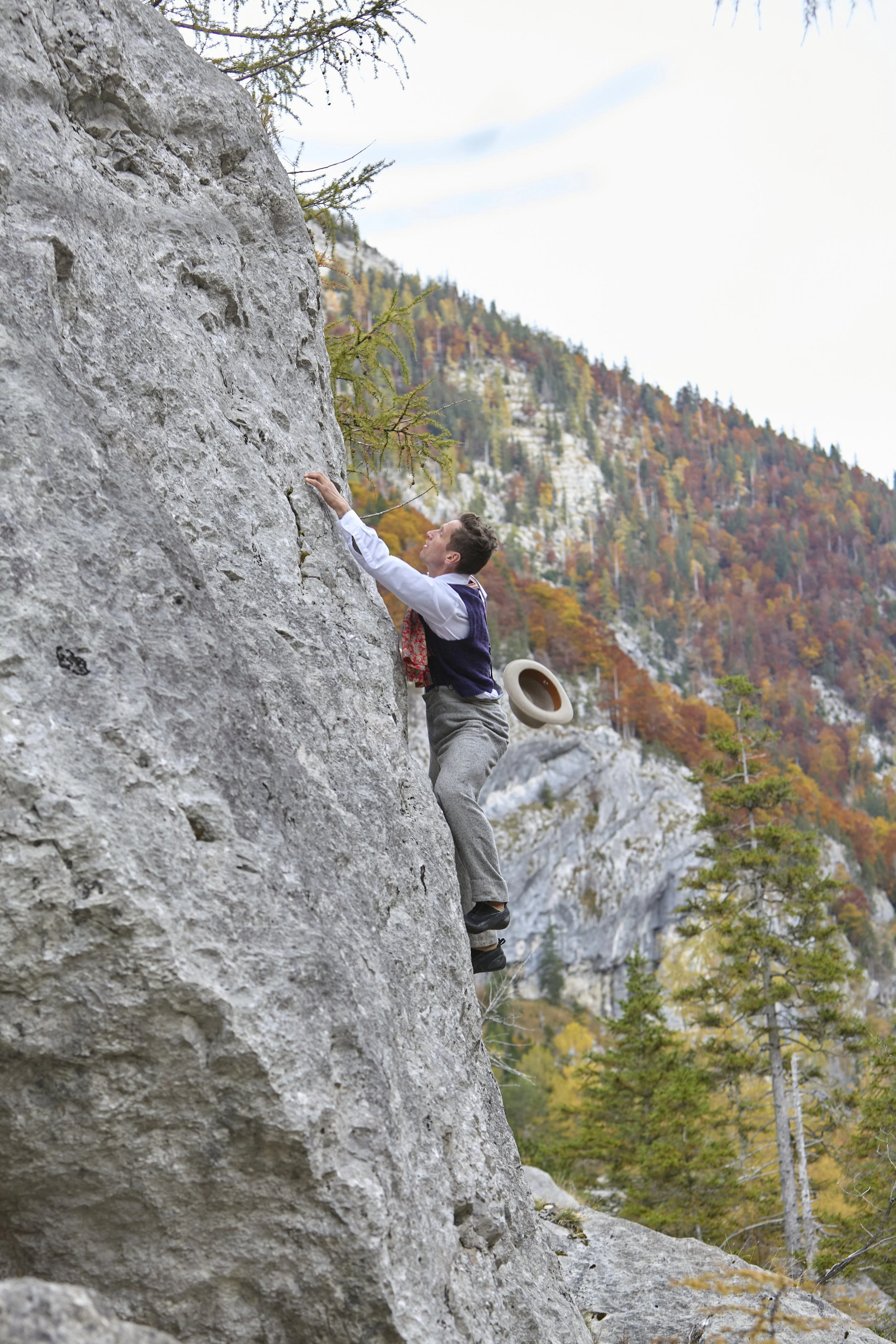
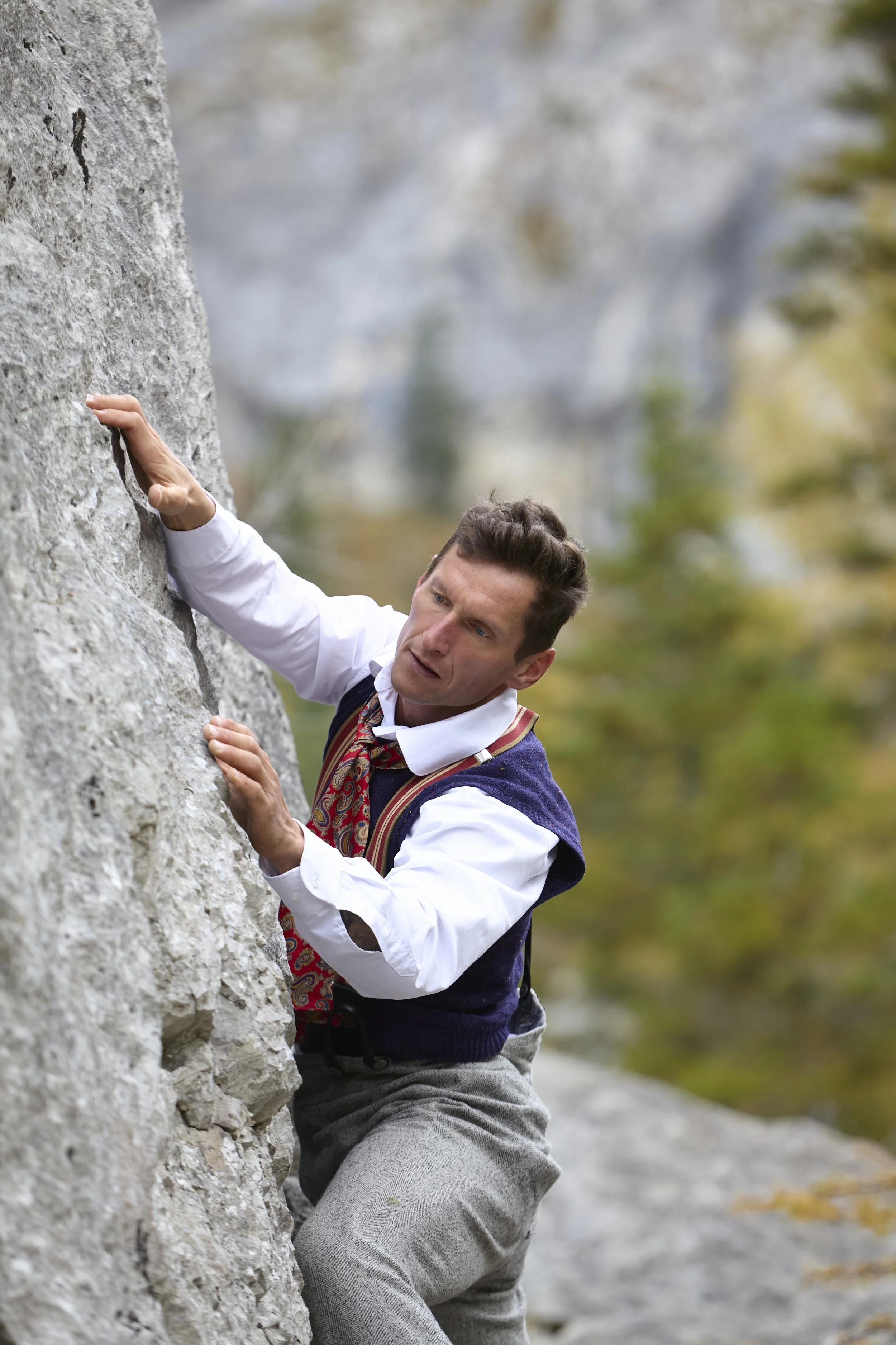
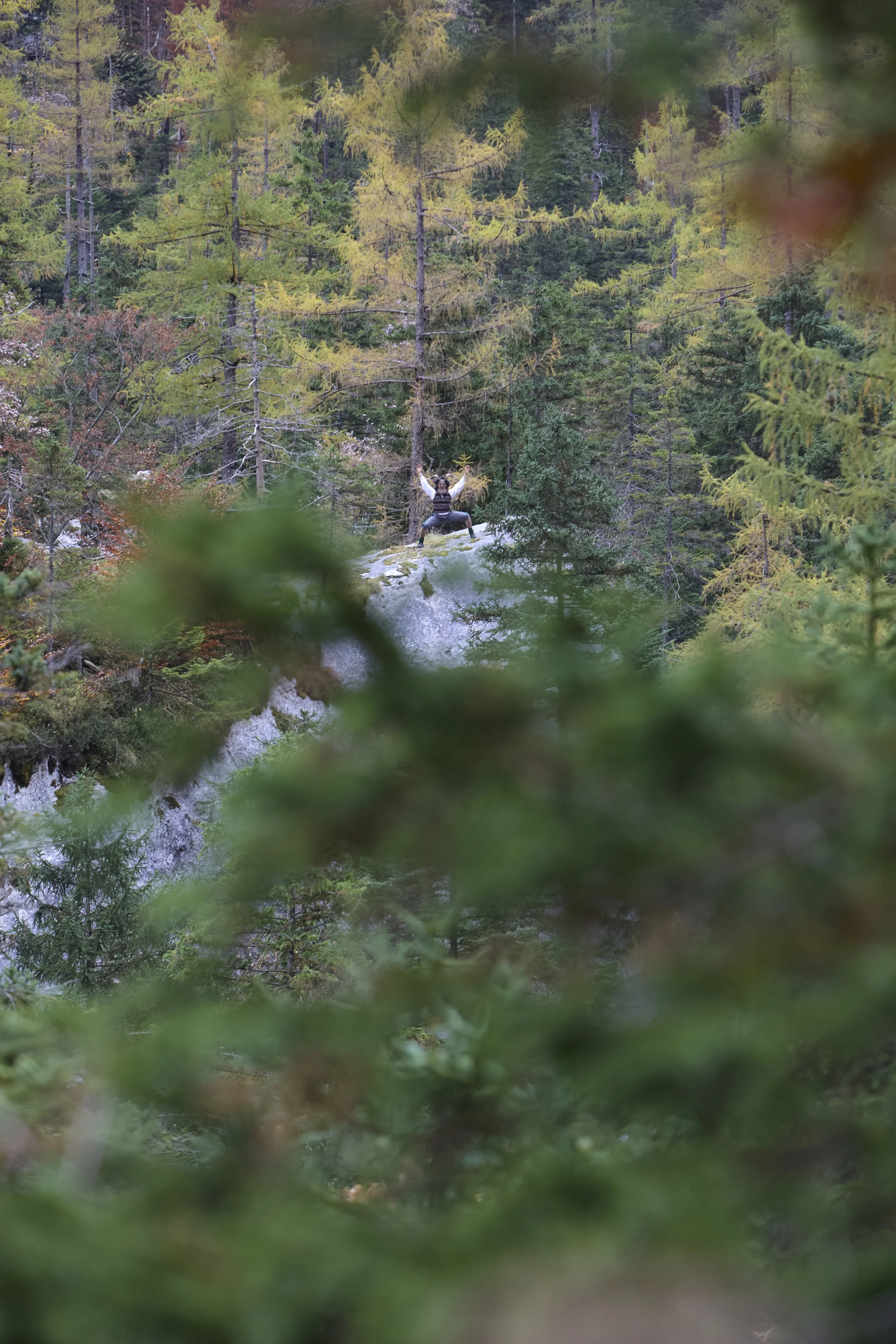
Paul
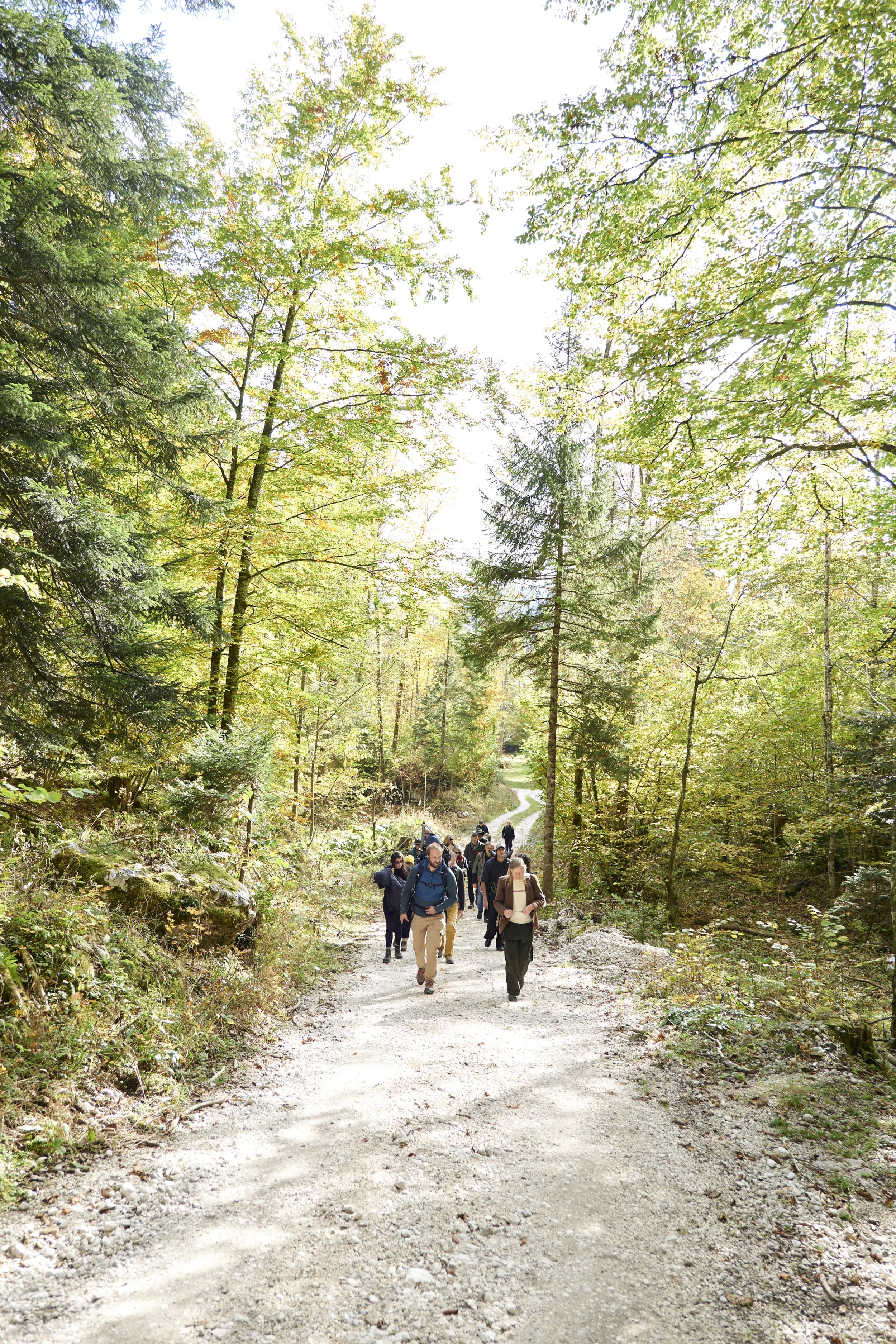
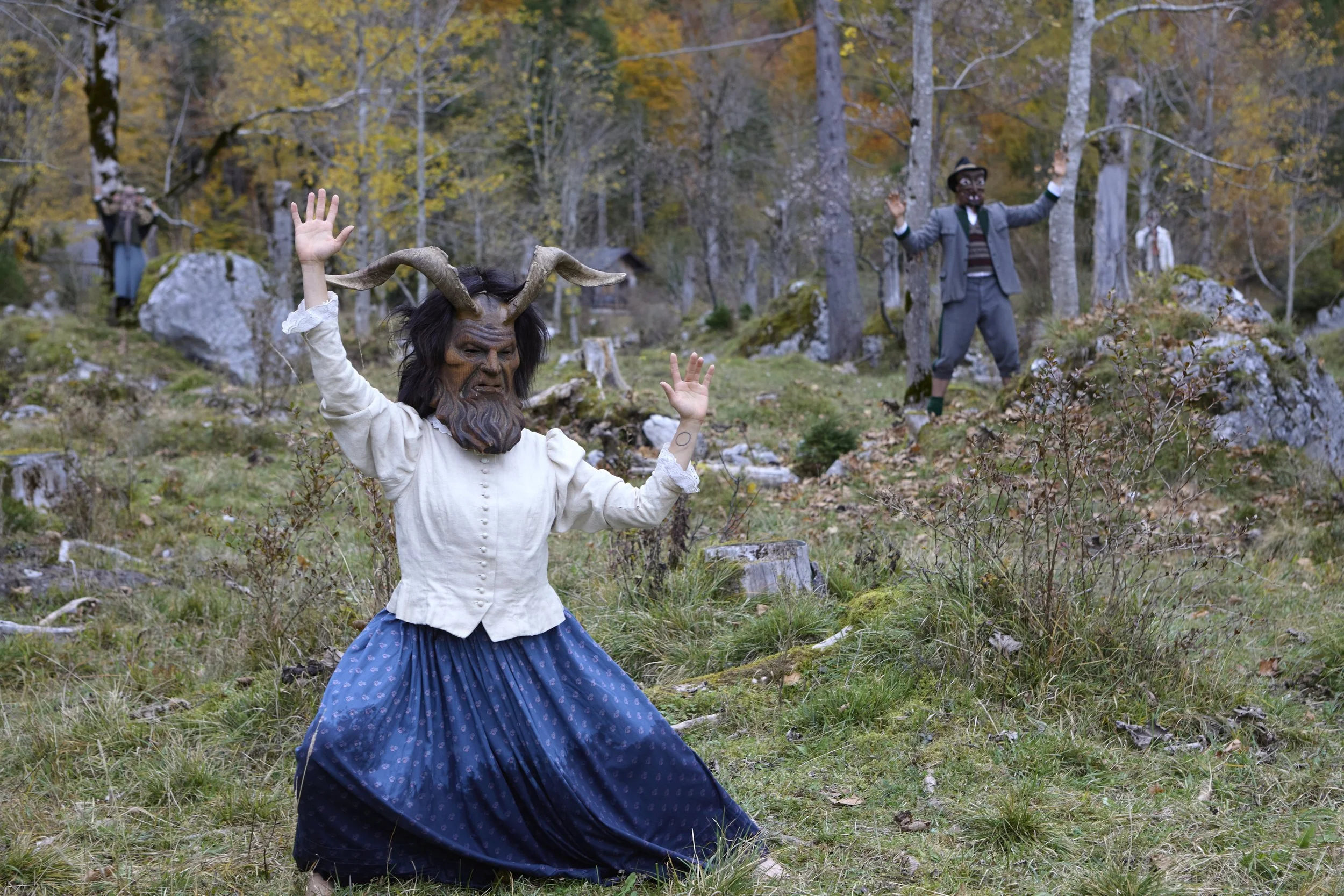
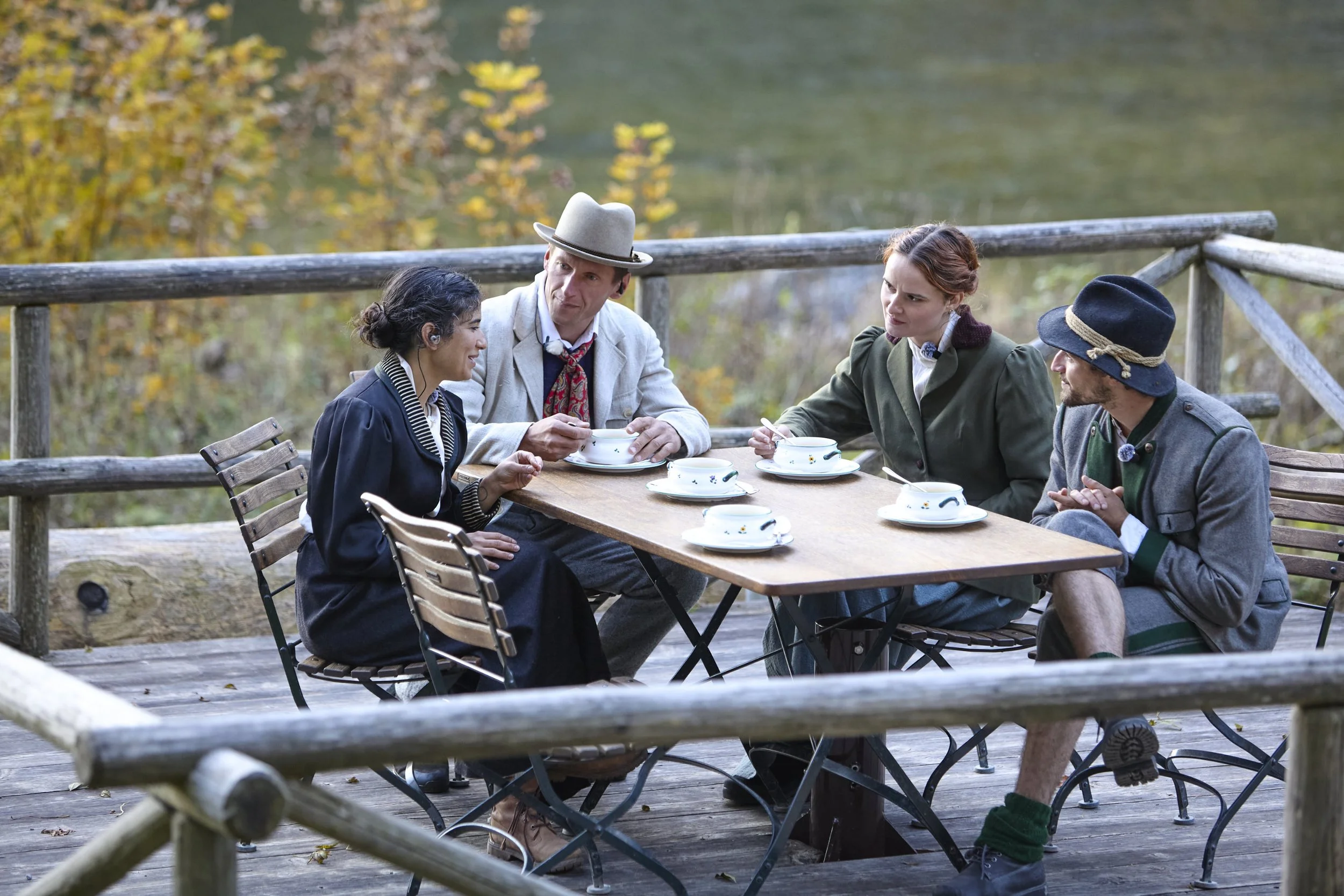
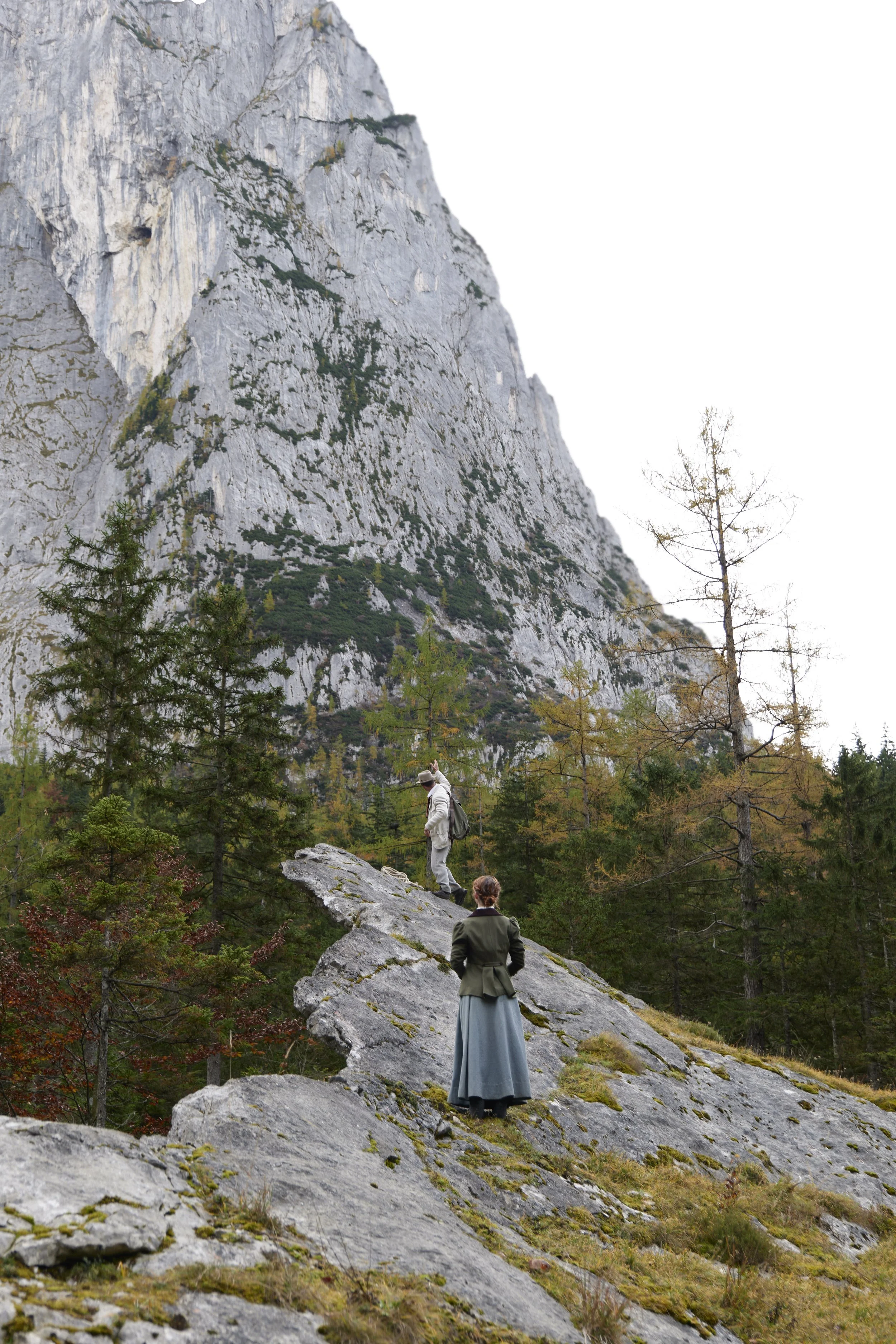
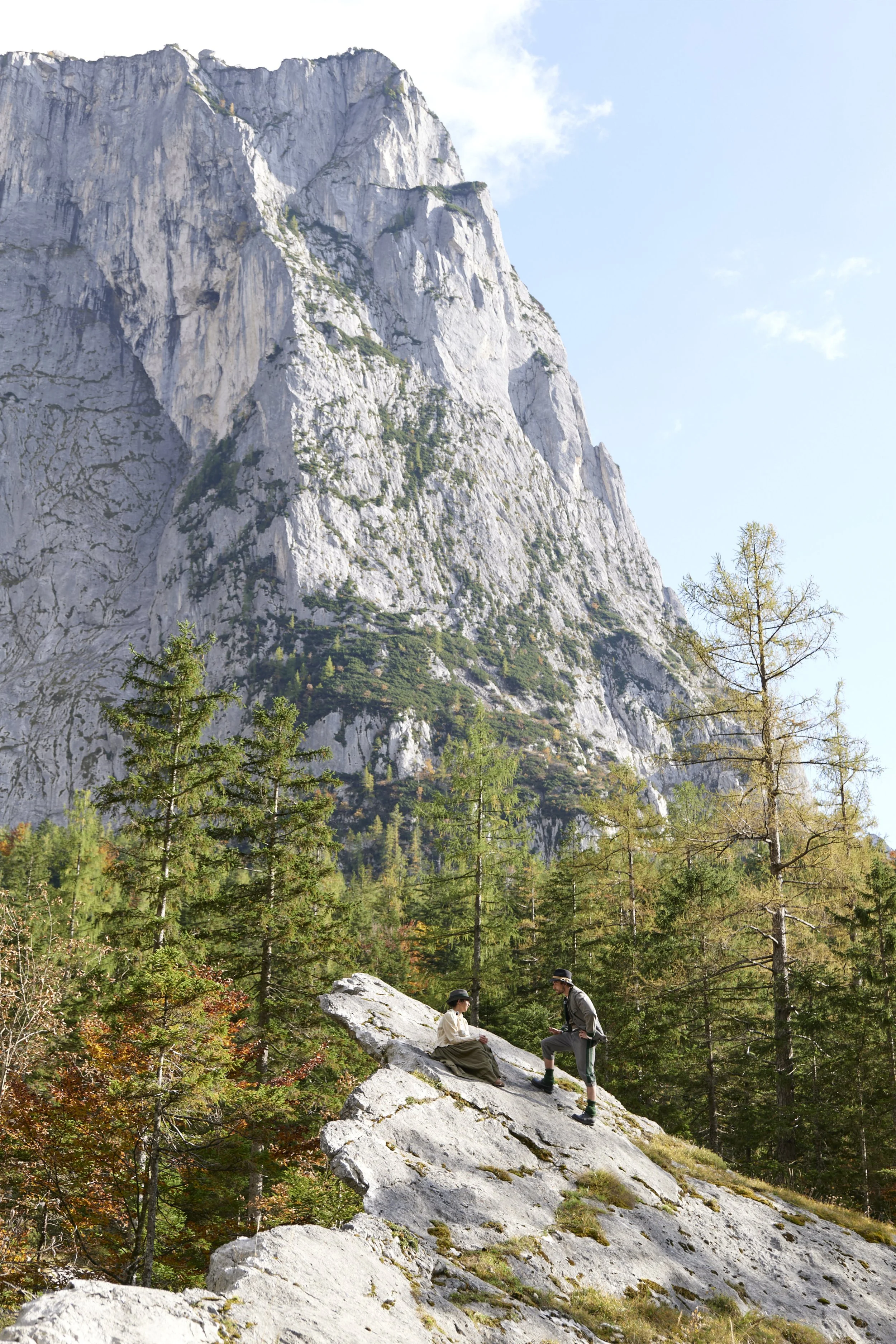
Was aussieht wie eine Wandergruppe …
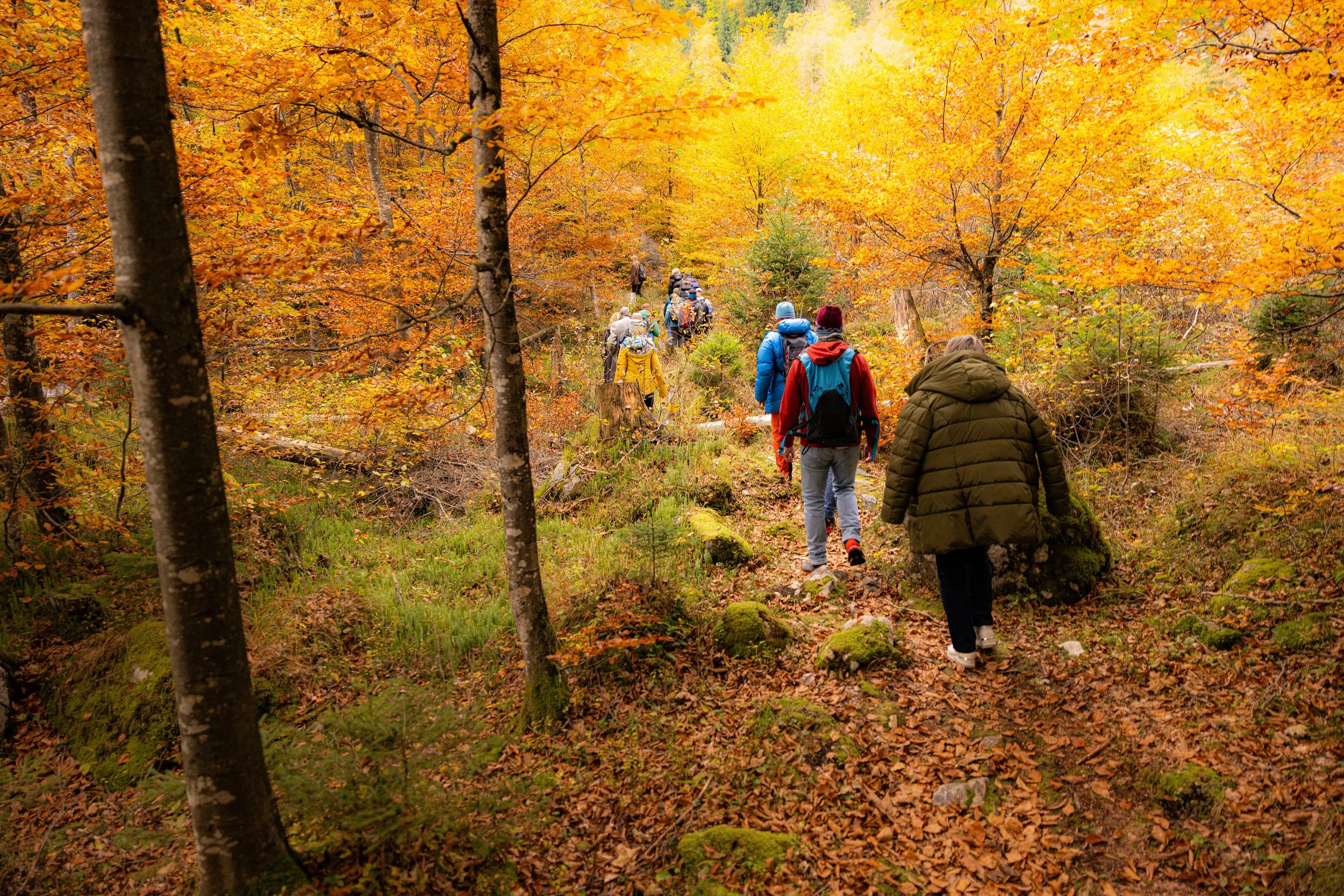
… ist ein Theaterstück.
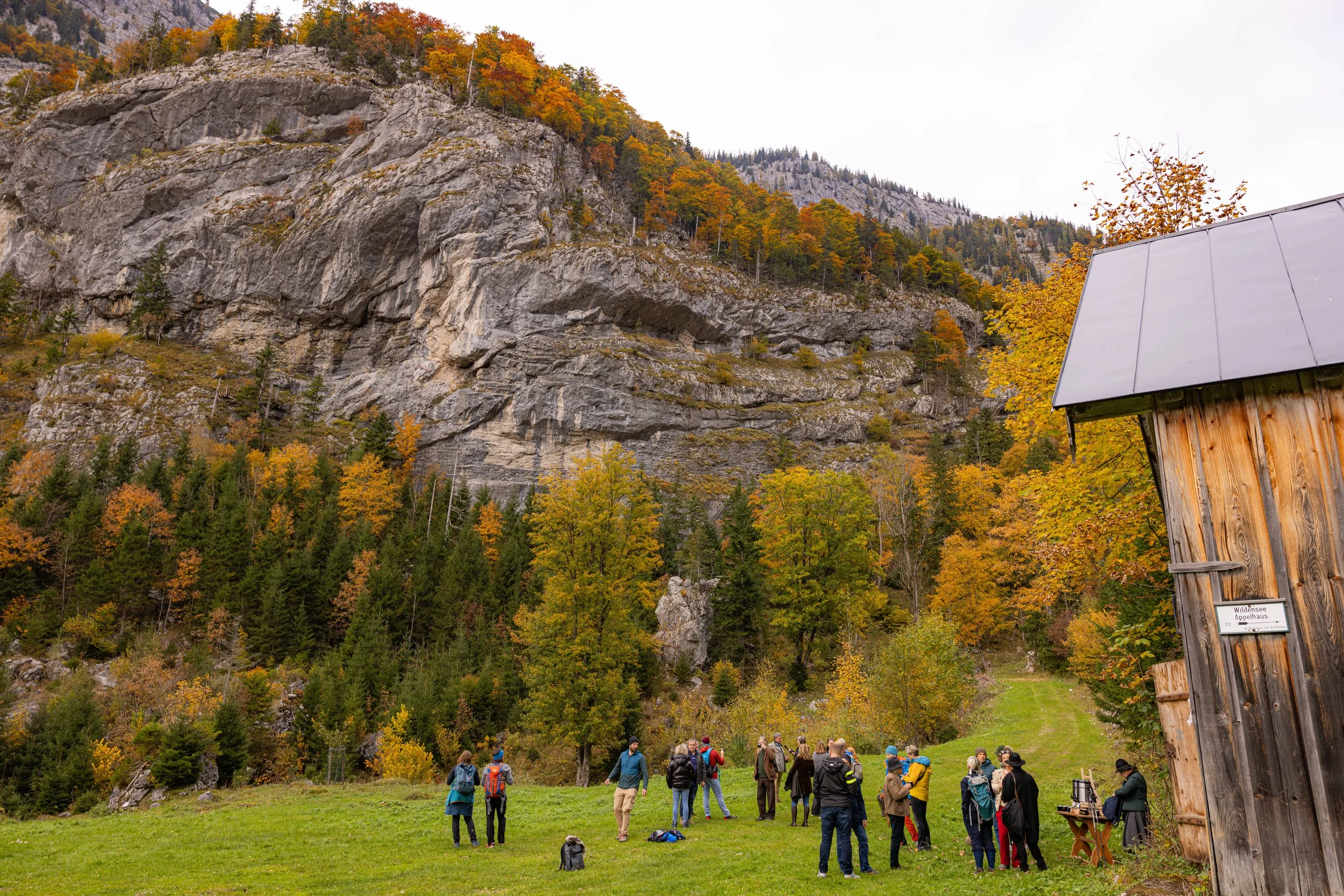
An der Stummernalm.
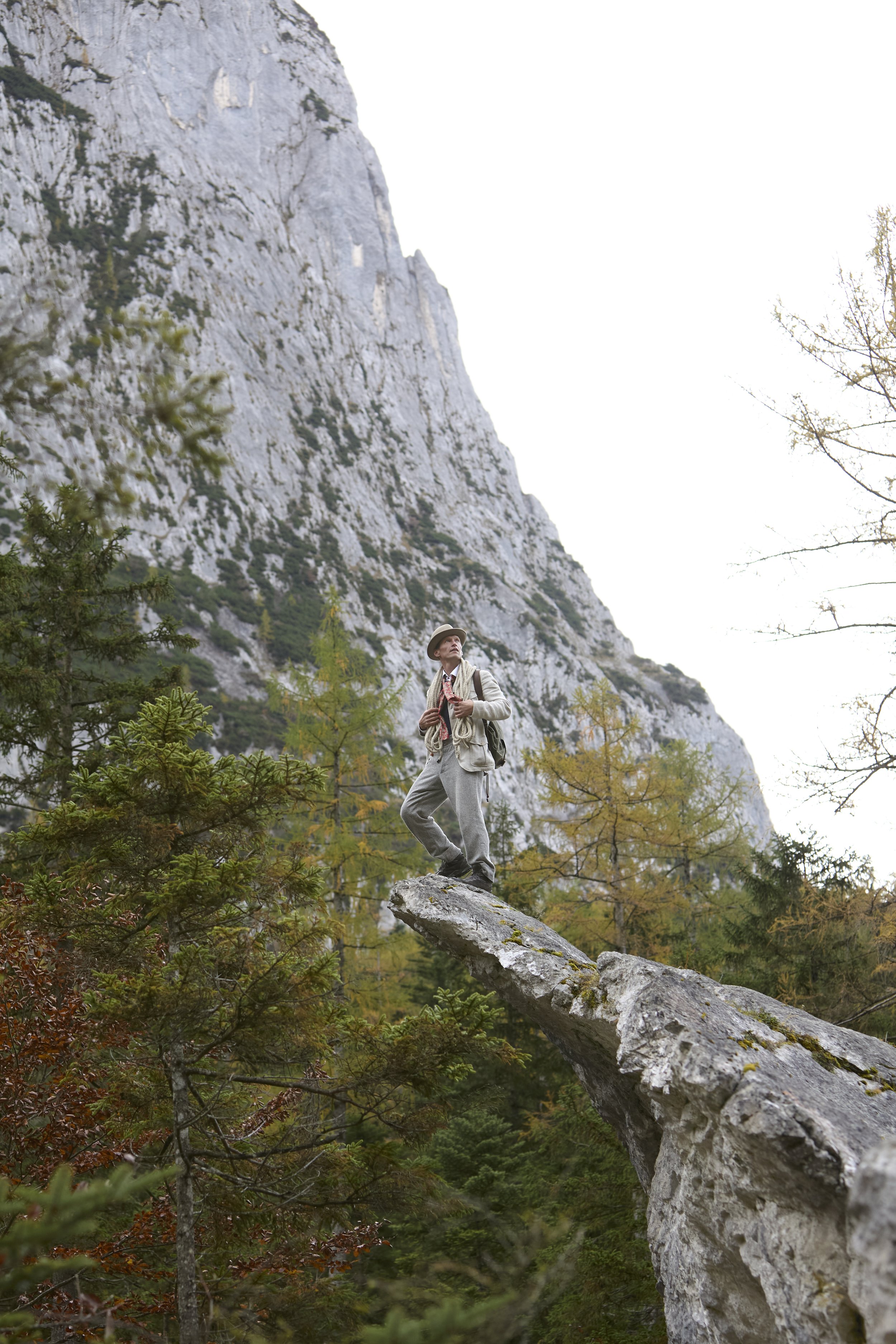
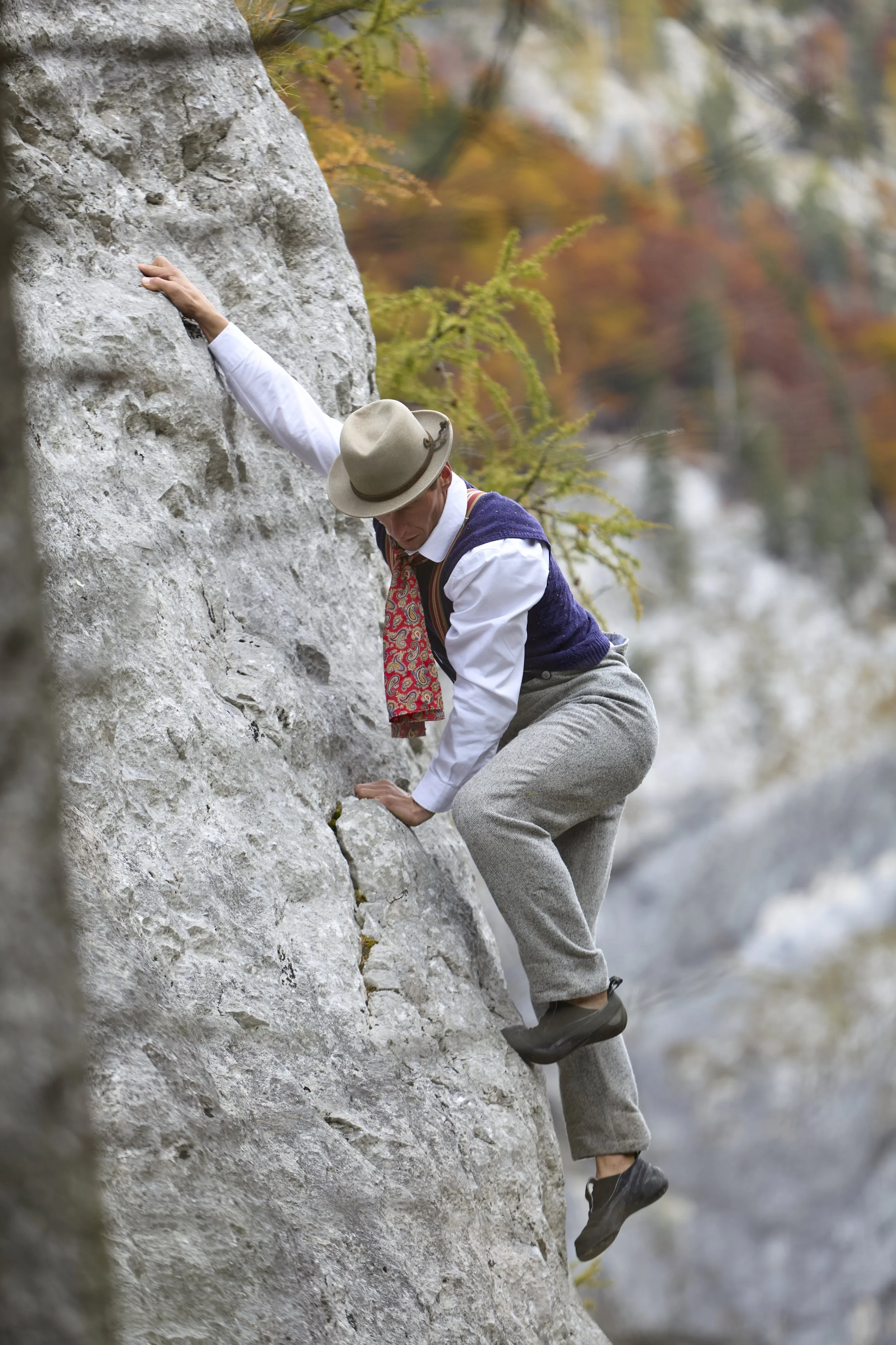
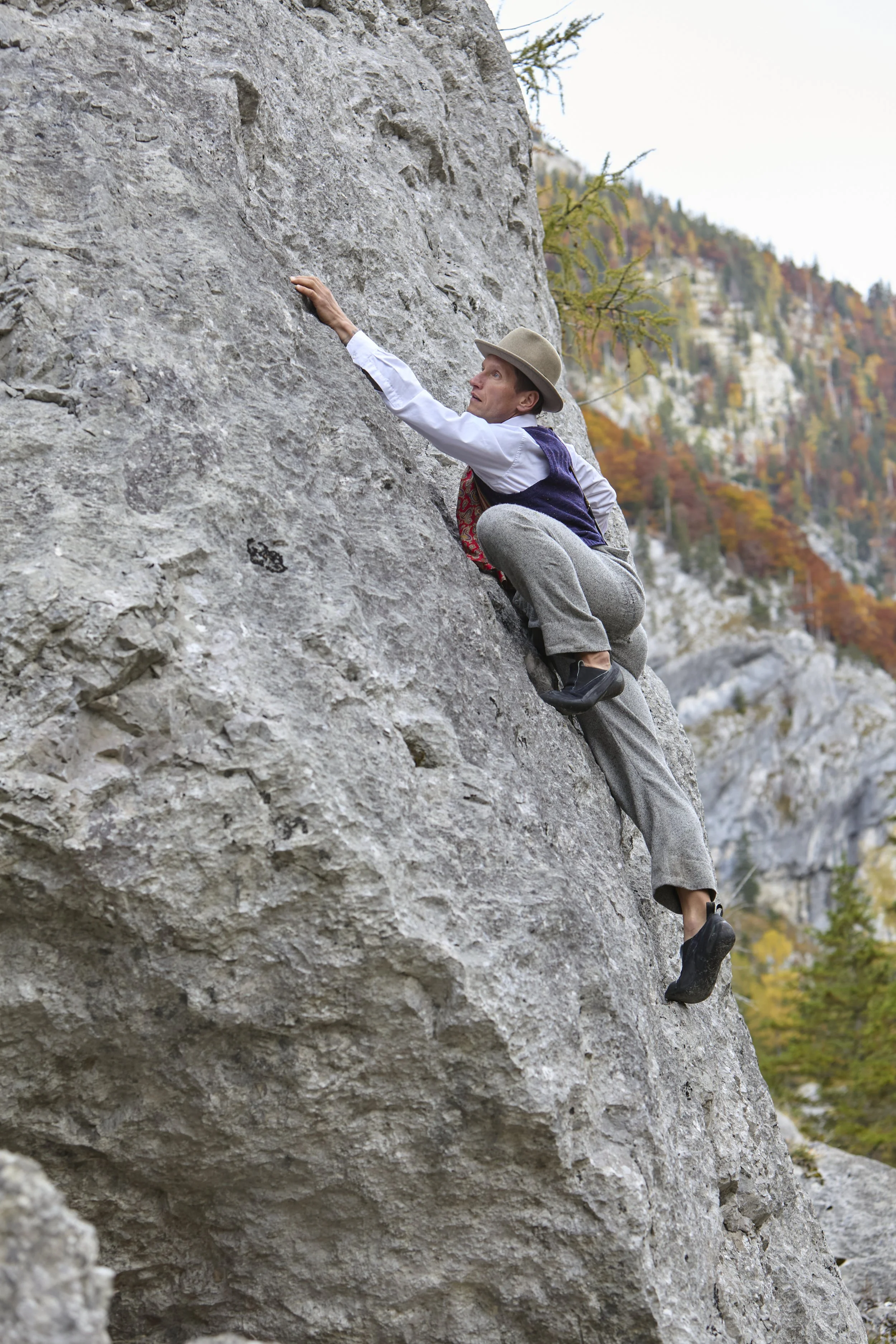
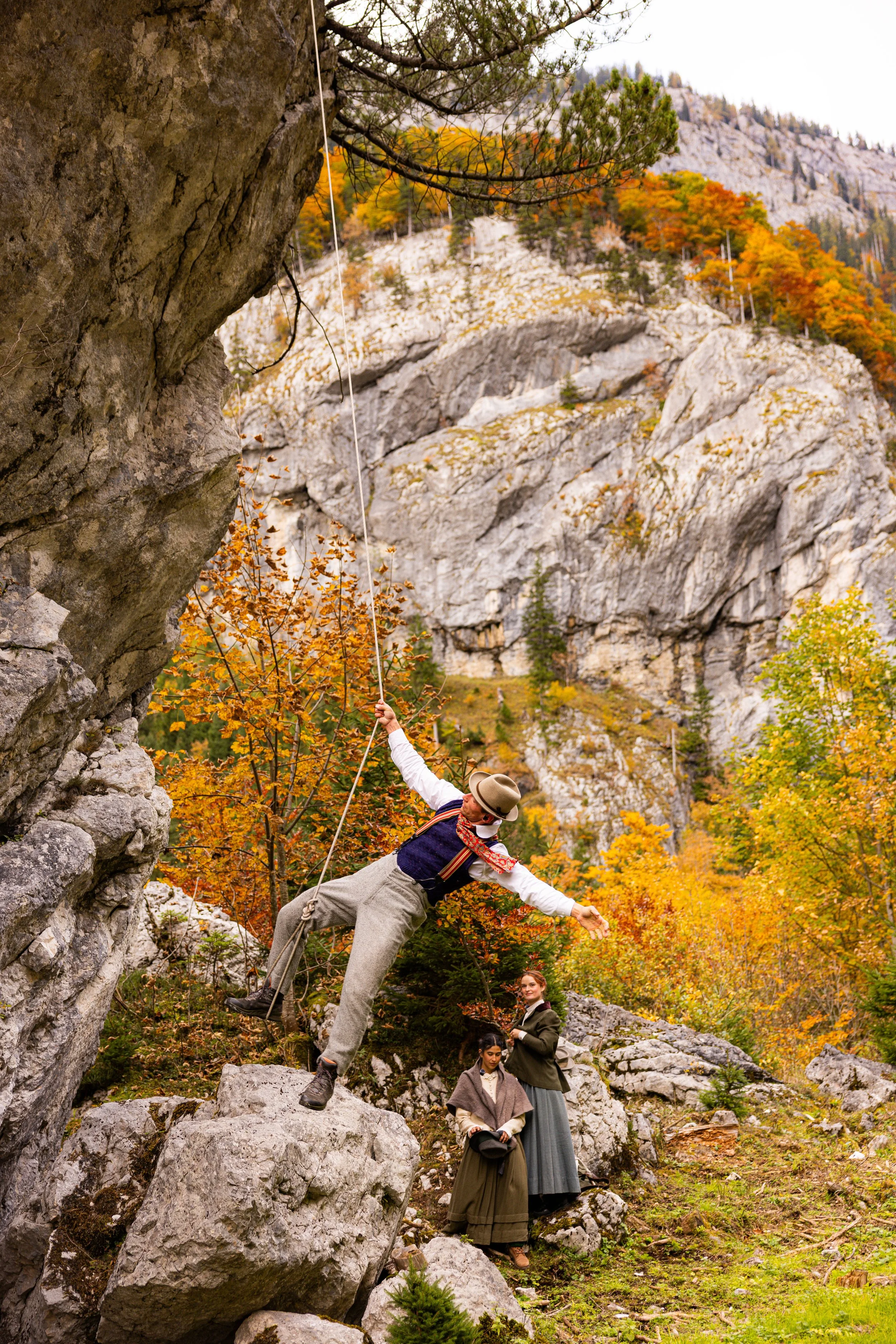
Paul am Felsenbug
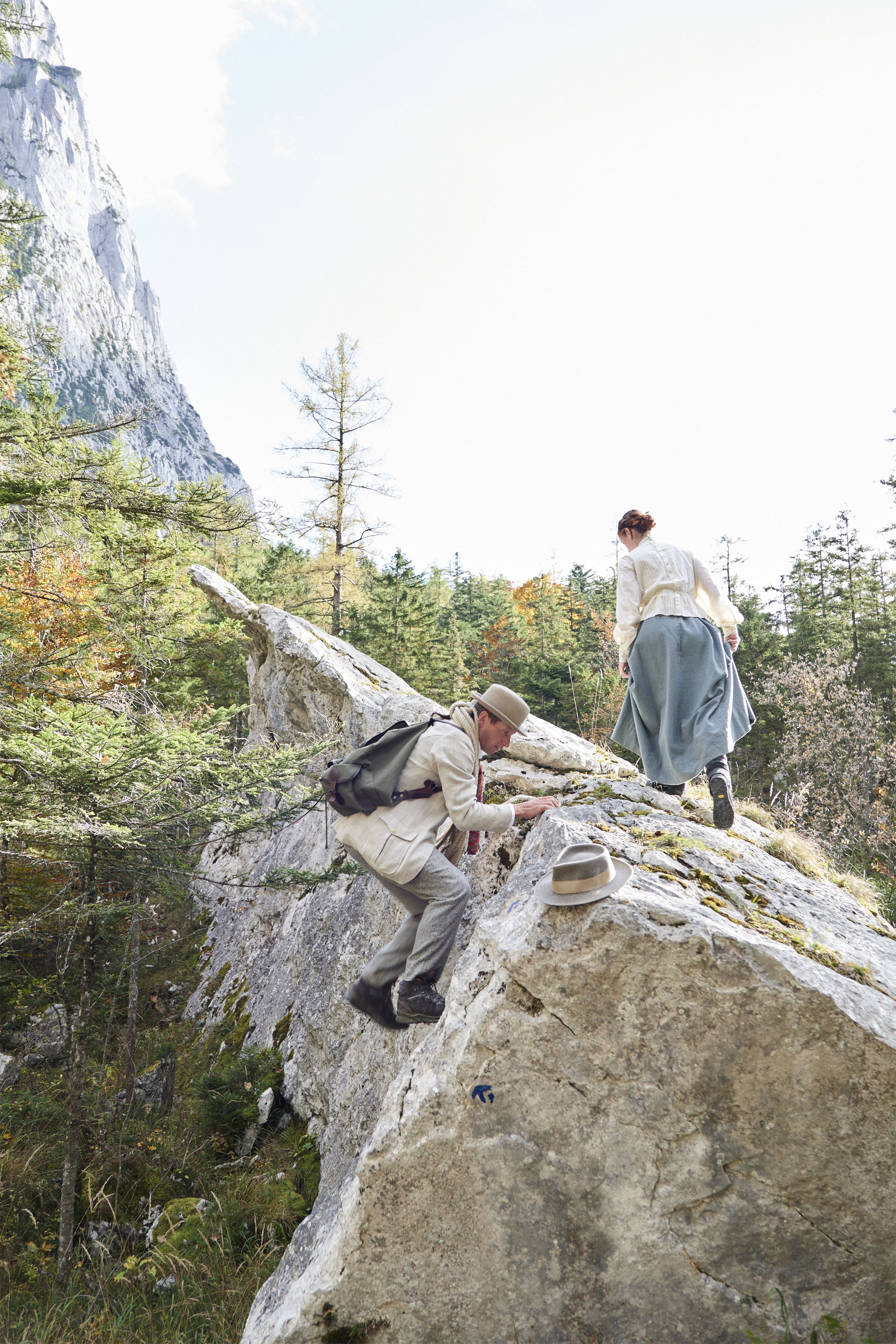
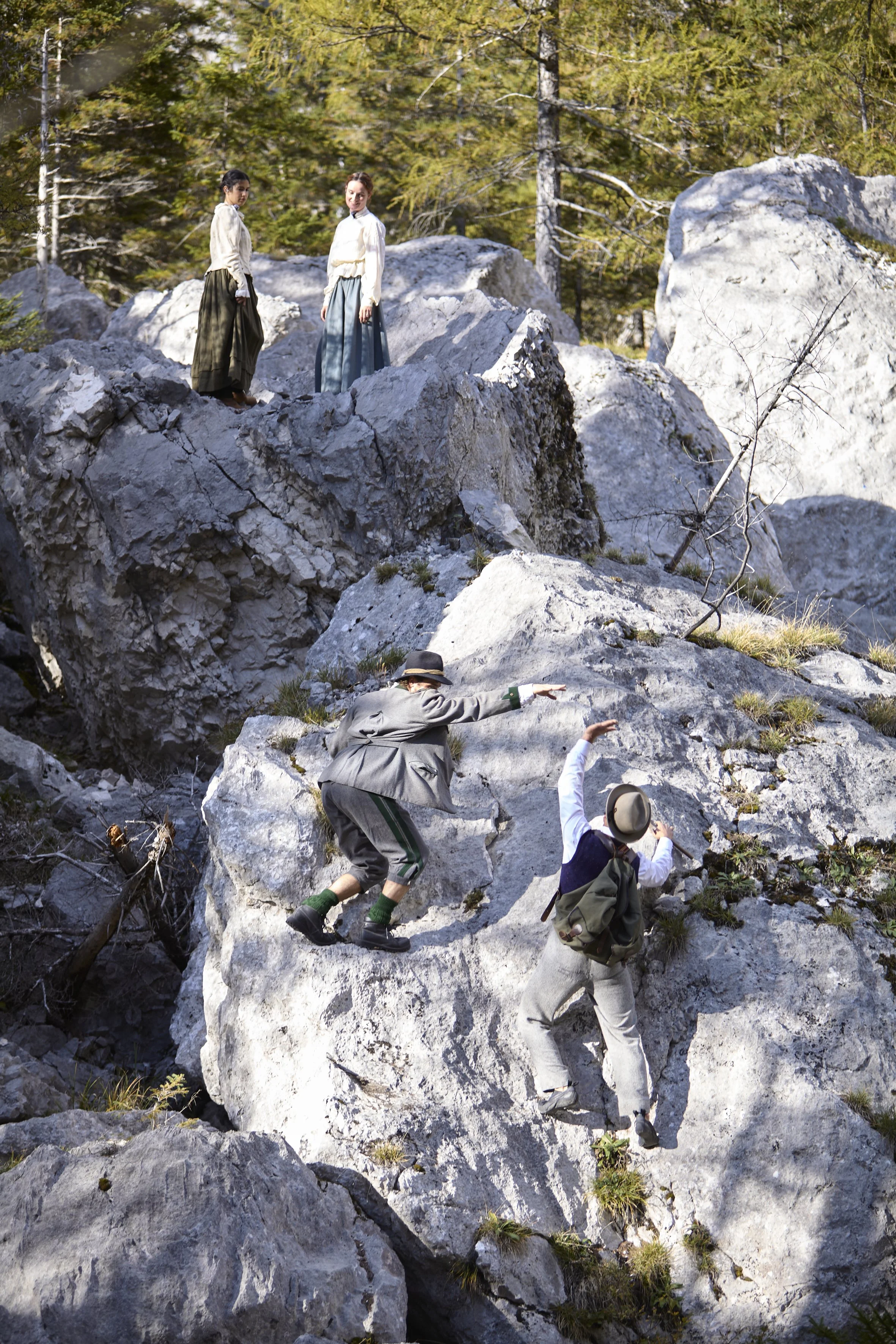
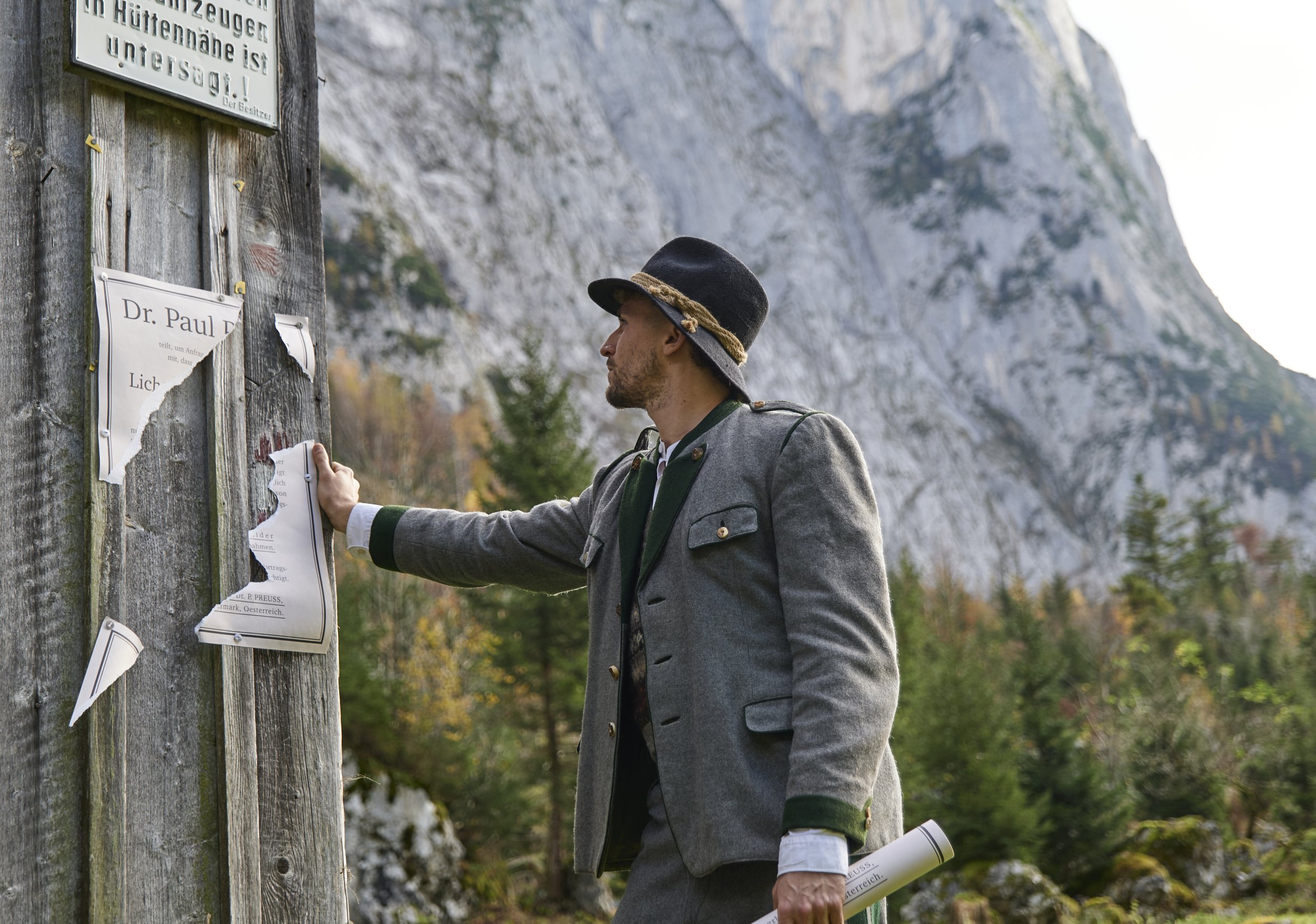
Relly am abgerissenen Plakat an der Wand der Stummernalm.
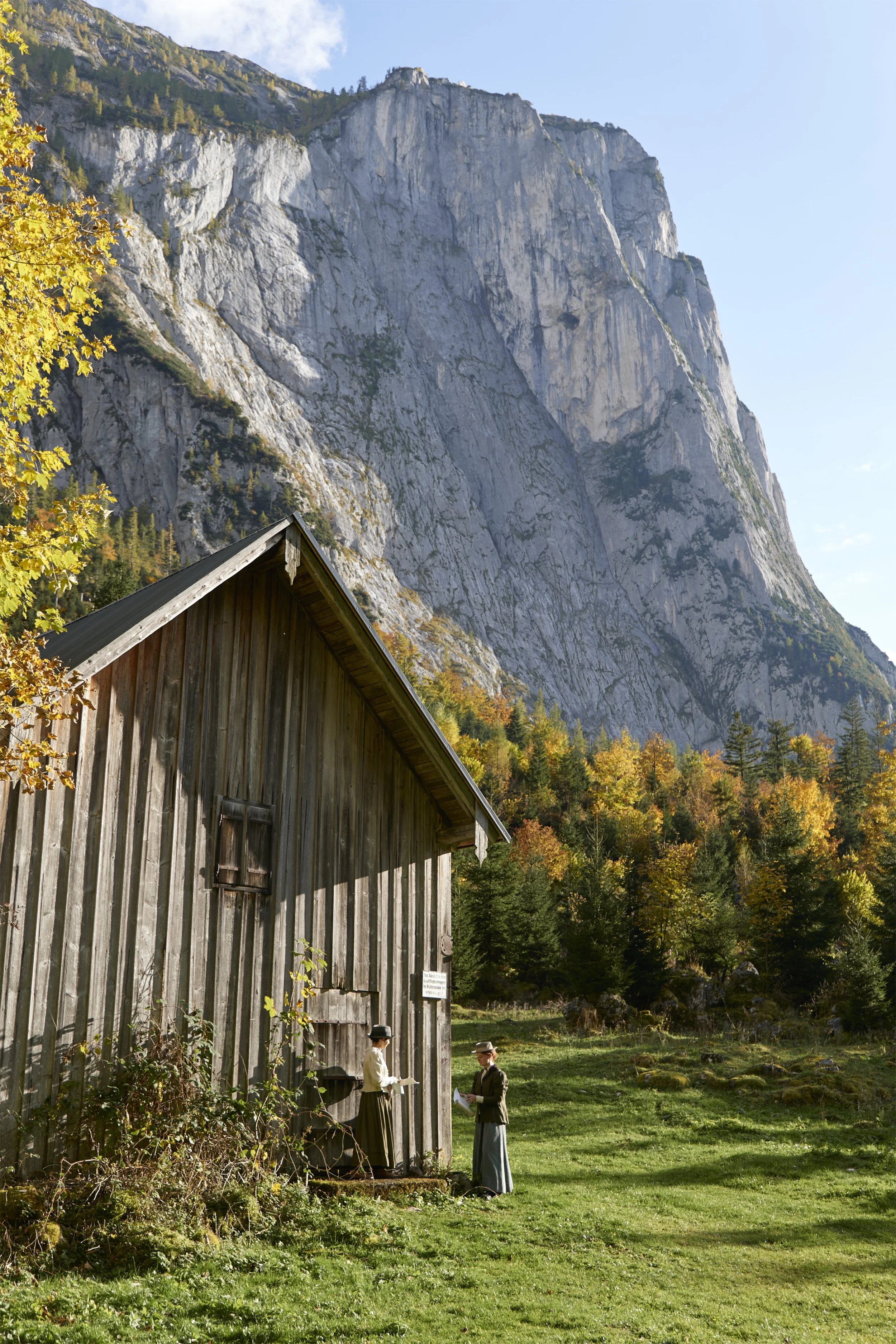
Hannah und Emmy an der Stummernalm.
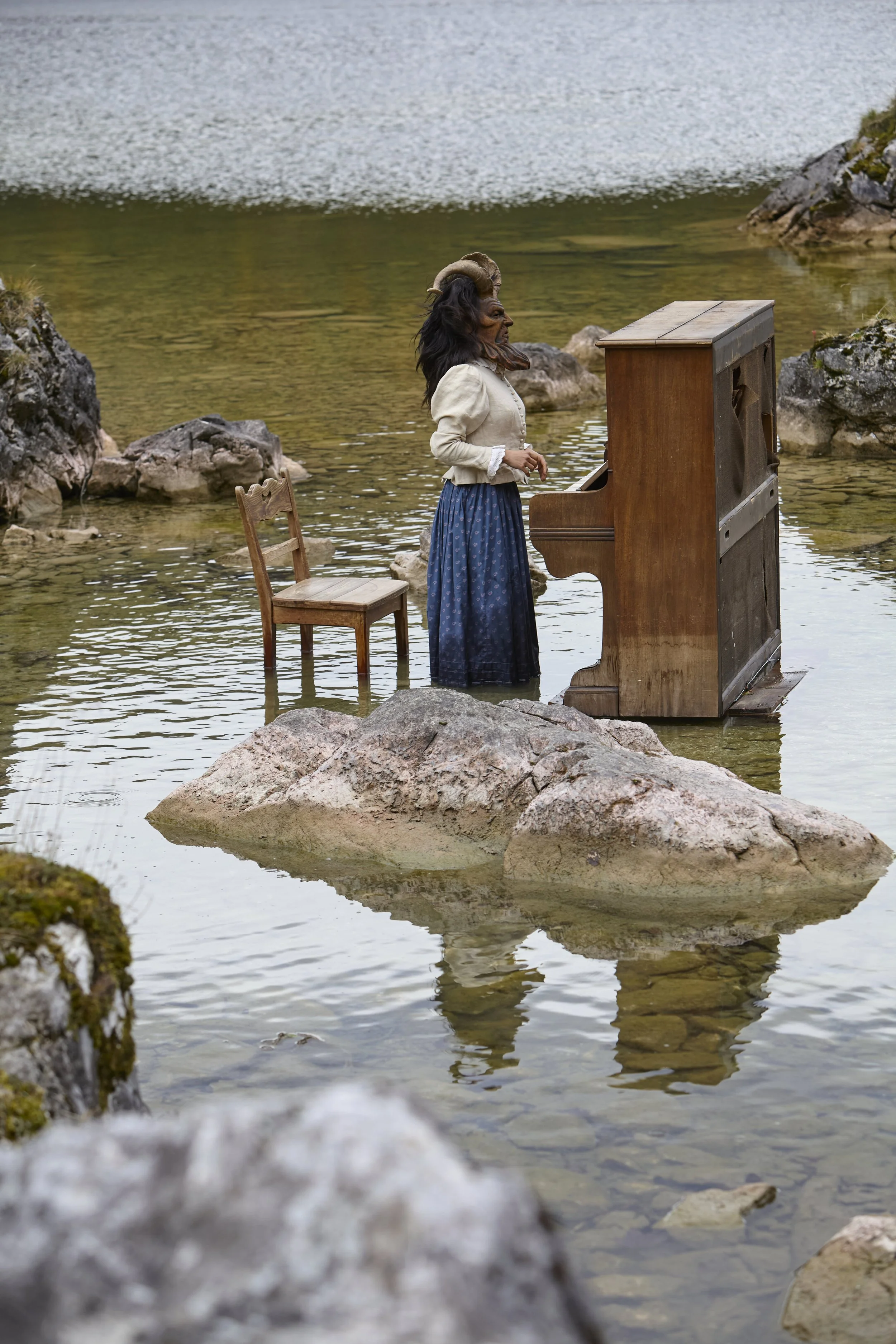
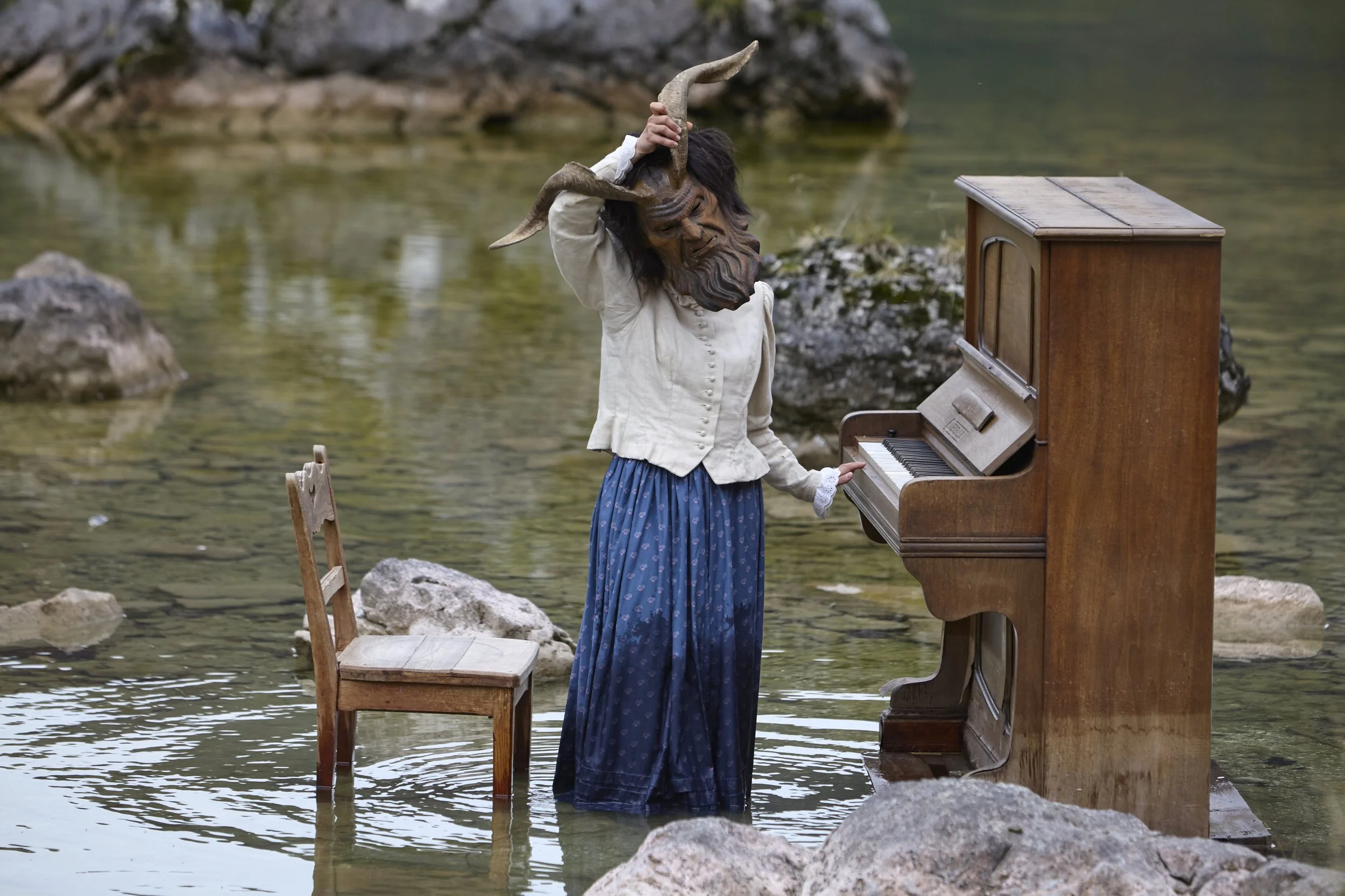
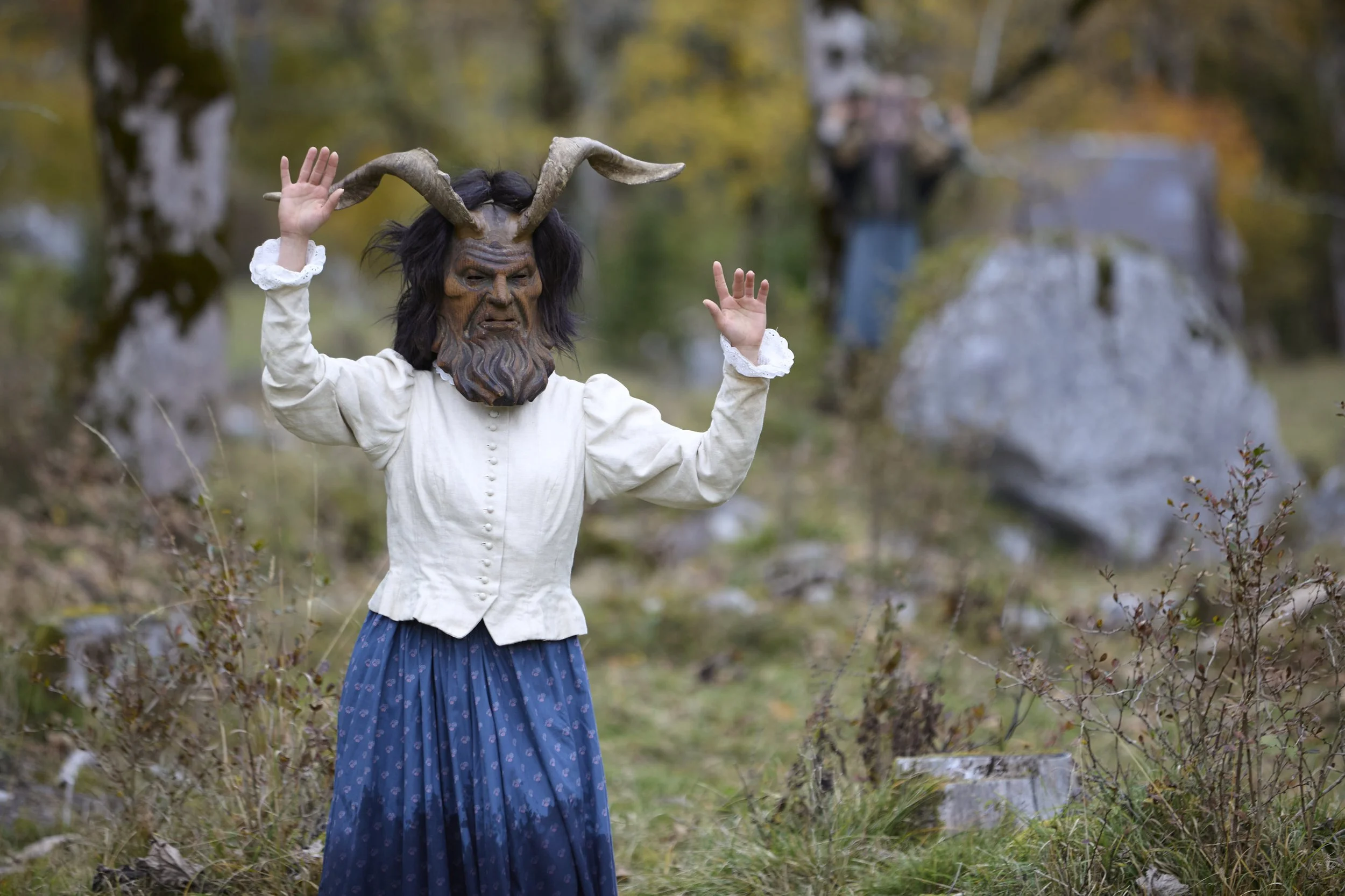
Hannah with her mask at the Cage-Piano.